QUESTION IMAGE
Question
prometheus unbound
percy bysshe shelley
monarch of gods and demons, and all spirits
but one, who throng those bright and rolling worlds
which thou and i alone of living things
behold with sleepless eyes! i regard this earth
made multitudinous with thy slaves, whom thou 5
instalest for knee - worship, prayer, and praise,
and toll, and hecatombs of broken hearts
with fear and self - contempt and barren hope,
whilst me, who am thy foe, eyeless in hate,
hast thou made reign and triumph, to thy scorn. 10
our mine own misery and thy vain revenge,
these thousand years of sleep - unbroken hours,
and moments dyed by keen pangs
of holy, hopeless years, torture and solitude,
pain and despair, — these are mine empire — 15
more glorious far than that which thou surveyest
from thine unenvied throne, o mighty god!
nemesis, thou hast deigned to share the shame
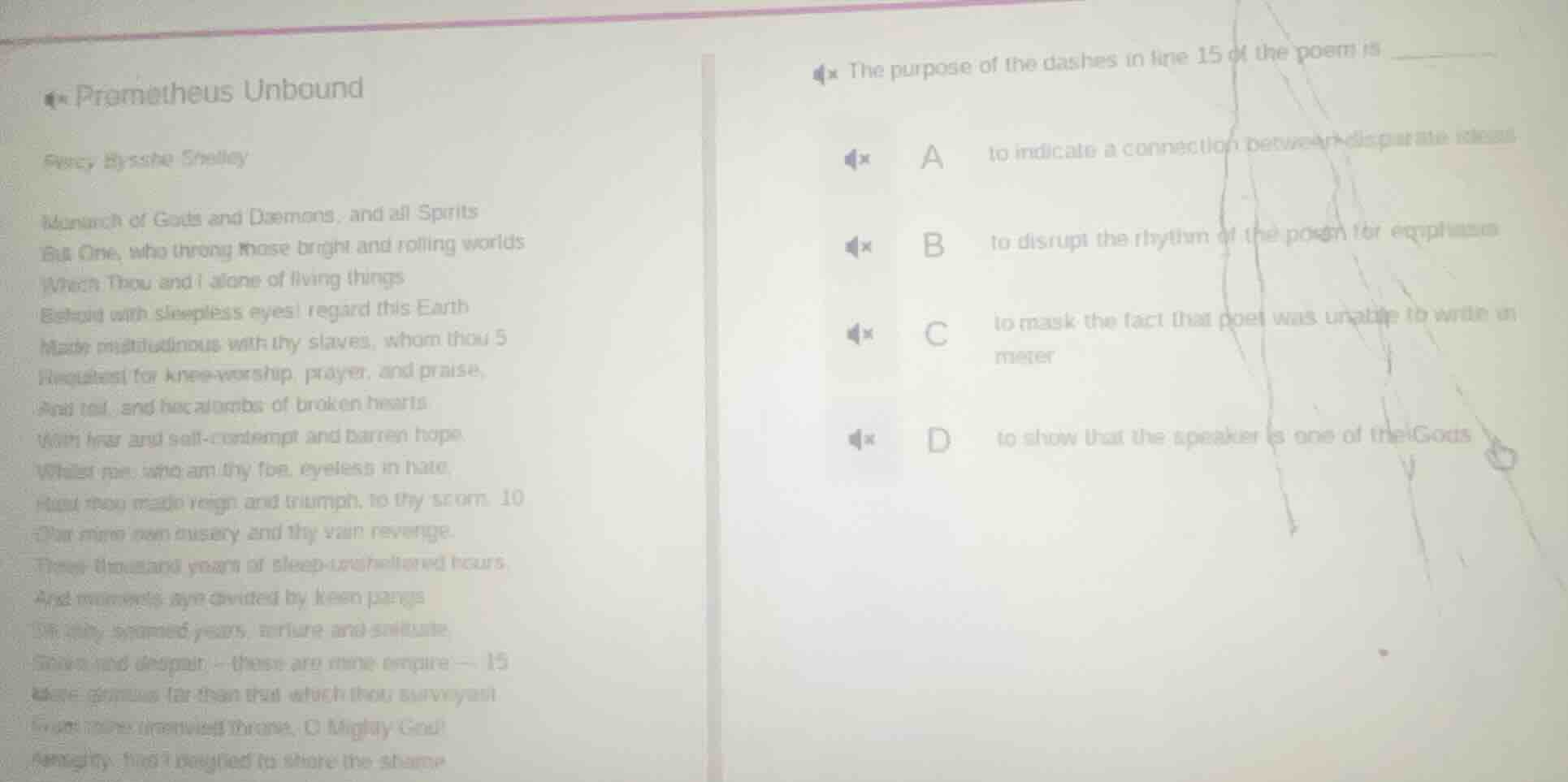
the purpose of the dashes in line 15 of the poem is
a to indicate a connection between disparate ideas
b to disrupt the rhythm of the poem for emphasis
c to mask the fact that poet was unable to write in meter
d to show that the speaker is one of the gods
Line 15 uses dashes to set off the climactic declaration "these are mine empire," breaking the poem's regular flow to emphasize the speaker's claim of ownership over suffering, grief, and despair. This rhythmic disruption draws focus to this pivotal statement. Option A is incorrect because the dashes do not connect unrelated ideas; they highlight a single, forceful assertion. Option C is wrong as there is no evidence the poet struggled with meter. Option D is false because the speaker is Prometheus, a foe of the gods, not one of them.

Snap & solve any problem in the app
Get step-by-step solutions on Sovi AI
Photo-based solutions with guided steps
Explore more problems and detailed explanations
B. to disrupt the rhythm of the poem for emphasis