QUESTION IMAGE
Question
question 2 of 10
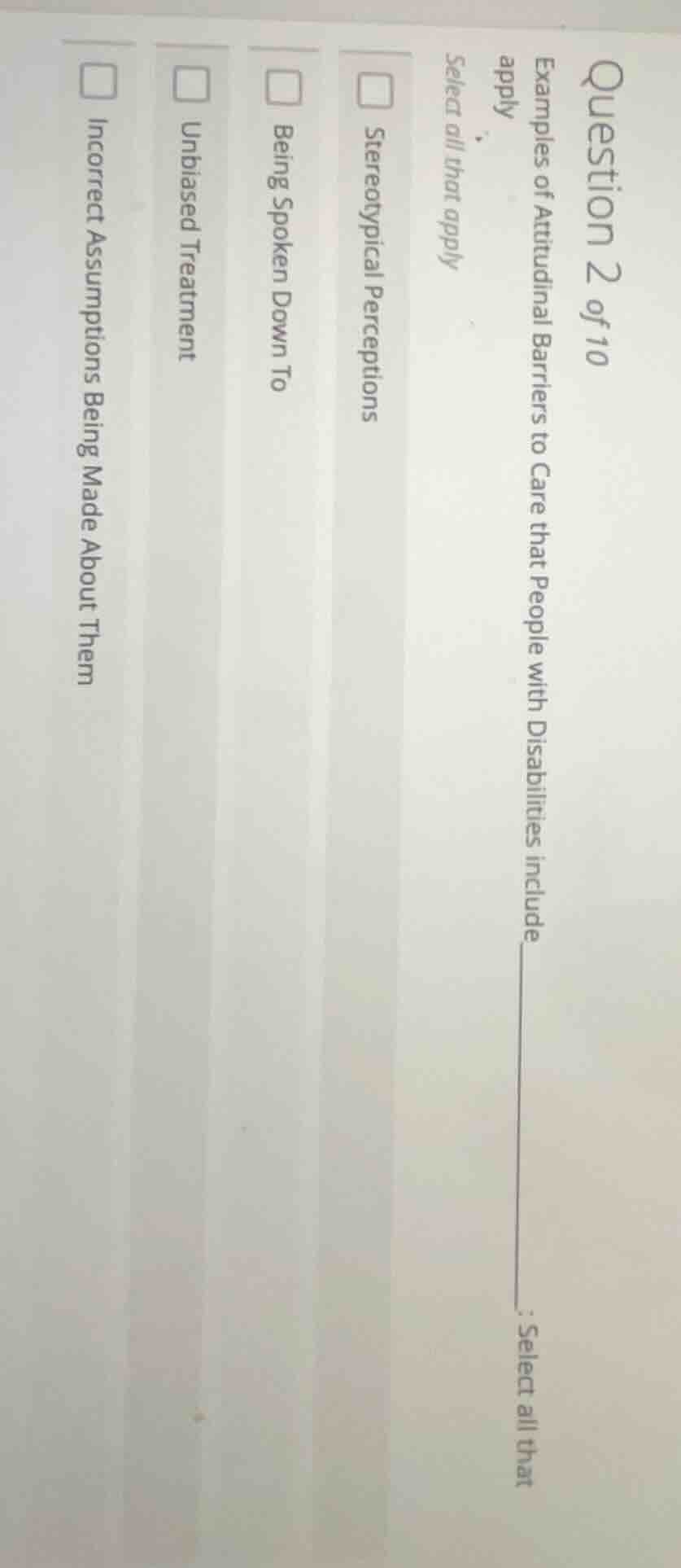
examples of attitudinal barriers to care that people with disabilities include, select all that apply
select all that apply
□ stereotypical perceptions
□ being spoken down to
□ unbiased treatment
□ incorrect assumptions being made about them
Brief Explanations
- Stereotypical Perceptions: People with disabilities often face stereotypes (e.g., being seen as helpless), which is an attitudinal barrier.
- Being Spoken Down To: This reflects a patronizing attitude, treating them as less capable, an attitudinal barrier.
- Incorrect Assumptions Being Made About Them: Assumptions like they can't contribute or need excessive help are attitudinal barriers.
- Unbiased Treatment is not a barrier; it's positive and inclusive, so it's excluded.

Snap & solve any problem in the app
Get step-by-step solutions on Sovi AI
Photo-based solutions with guided steps
Explore more problems and detailed explanations
A. Stereotypical Perceptions
B. Being Spoken Down To
D. Incorrect Assumptions Being Made About Them