QUESTION IMAGE
Question
question 9 of 10
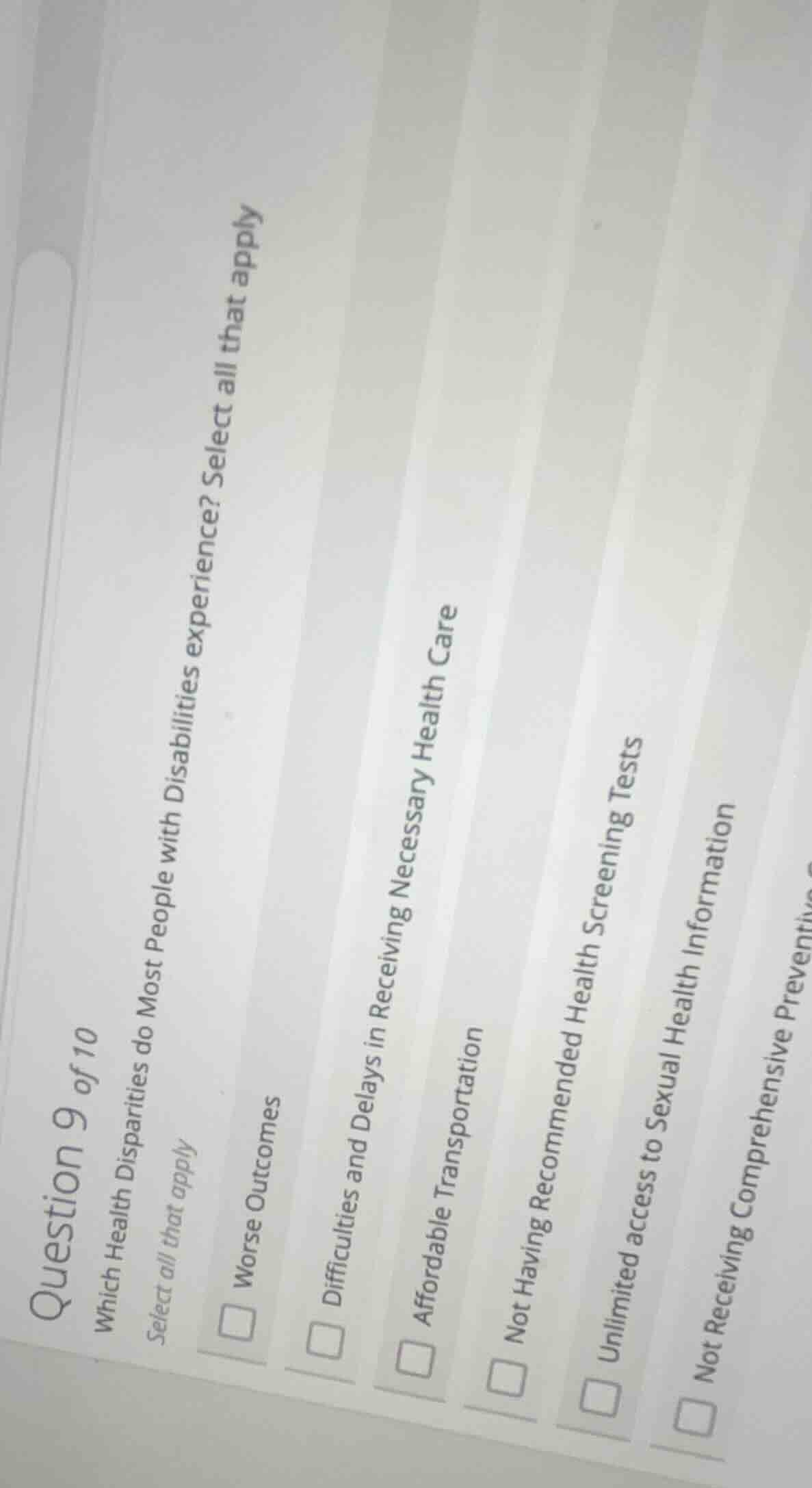
which health disparities do most people with disabilities experience? select all that apply
select all that apply
worse outcomes
difficulties and delays in receiving necessary health care
affordable transportation
not having recommended health screening tests
unlimited access to sexual health information
not receiving comprehensive preventive
Brief Explanations
- Worse Outcomes: People with disabilities often face worse health outcomes due to barriers in care, limited resources, and comorbidities.
- Difficulties and Delays in Receiving Necessary Health Care: Structural and attitudinal barriers (e.g., inaccessible facilities, lack of provider training) cause difficulties and delays in accessing care.
- Affordable Transportation: Lack of affordable or accessible transportation (e.g., wheelchair - accessible options) hinders access to healthcare services.
- Not Having Recommended Health Screening Tests: Barriers like access issues, lack of awareness, or provider neglect lead to missed screenings.
- Not Receiving Comprehensive Preventive Care: Similar to above, barriers prevent them from getting full preventive services.
- "Unlimited access to Sexual Health Information" is incorrect as people with disabilities often face barriers (e.g., inaccessible formats) to sexual health information, so it does not apply.

Snap & solve any problem in the app
Get step-by-step solutions on Sovi AI
Photo-based solutions with guided steps
Explore more problems and detailed explanations
- Worse Outcomes
- Difficulties and Delays in Receiving Necessary Health Care
- Affordable Transportation
- Not Having Recommended Health Screening Tests
- Not Receiving Comprehensive Preventive Care