QUESTION IMAGE
Question
question 19 of 25
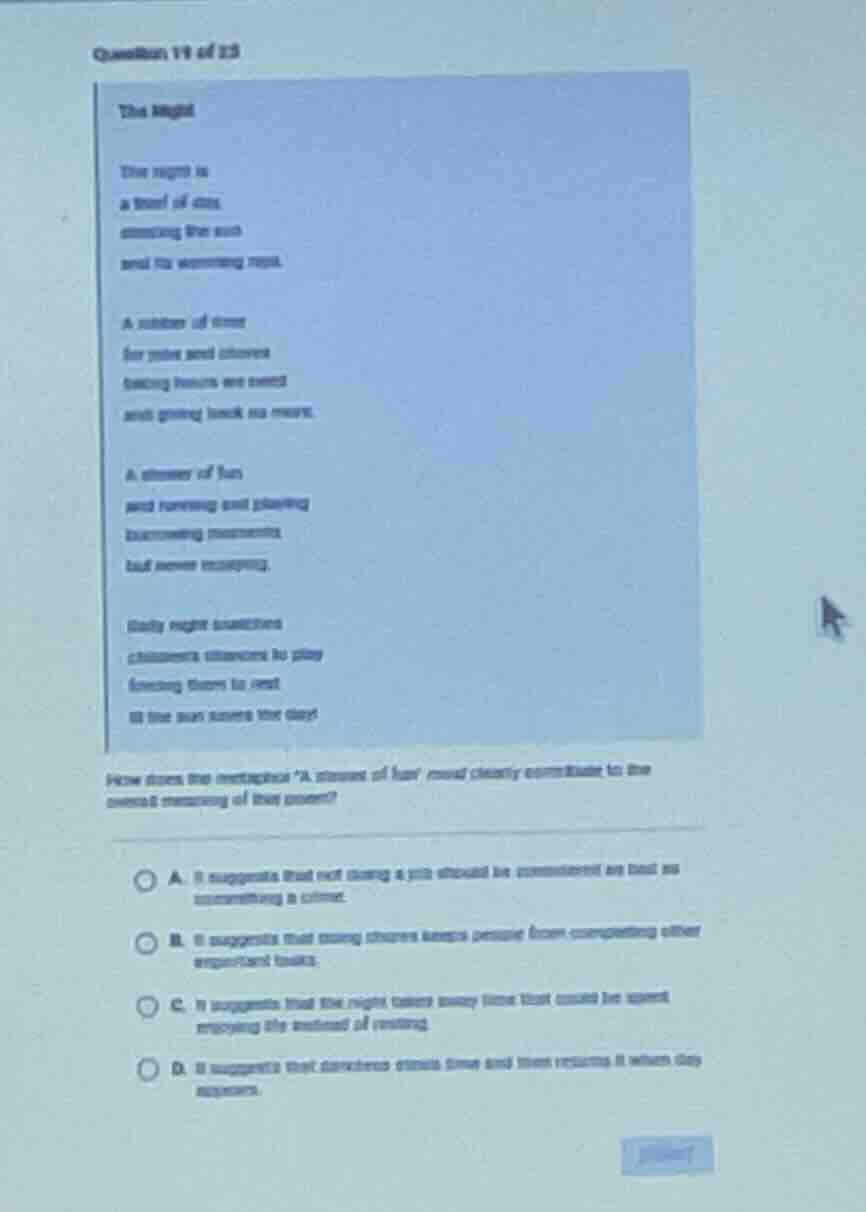
the night
the night is
a thief of days,
stealing the sun
and its warming rays.
a robber of time
for you and others
stealing hours we need
and giving back no marks.
a stealer of fun
and running and playing
borrowing moments
but never repaying.
only night sometimes
cheats cheats cheats to play
forcing them to rest
as the sun starts the day
how does the metaphor \a stealer of fun\ most clearly contribute to the overall meaning of the poem?
a. it suggests that not doing a job should be considered as bad as committing a crime.
b. it suggests that using chores keeps people from completing other important tasks.
c. it suggests that the night takes away time that could be spent enjoying the instead of resting.
d. it suggests that darkness steals time and then returns it when day appears.
The metaphor "a robber of fun" links night to taking away enjoyable, unstructured time (running, playing, laughing) that doesn't involve resting. Option C directly connects this to night stealing time meant for non-restful enjoyment, matching the poem's focus on night forcing rest over playful activities. Other options don't align: A refers to work/crime not in the poem, B focuses on chores which aren't the core of the metaphor, D refers to time extension which isn't the "fun" focus.

Snap & solve any problem in the app
Get step-by-step solutions on Sovi AI
Photo-based solutions with guided steps
Explore more problems and detailed explanations
C. It suggests that the night takes away time that could be spent enjoying the instead of resting.