QUESTION IMAGE
Question
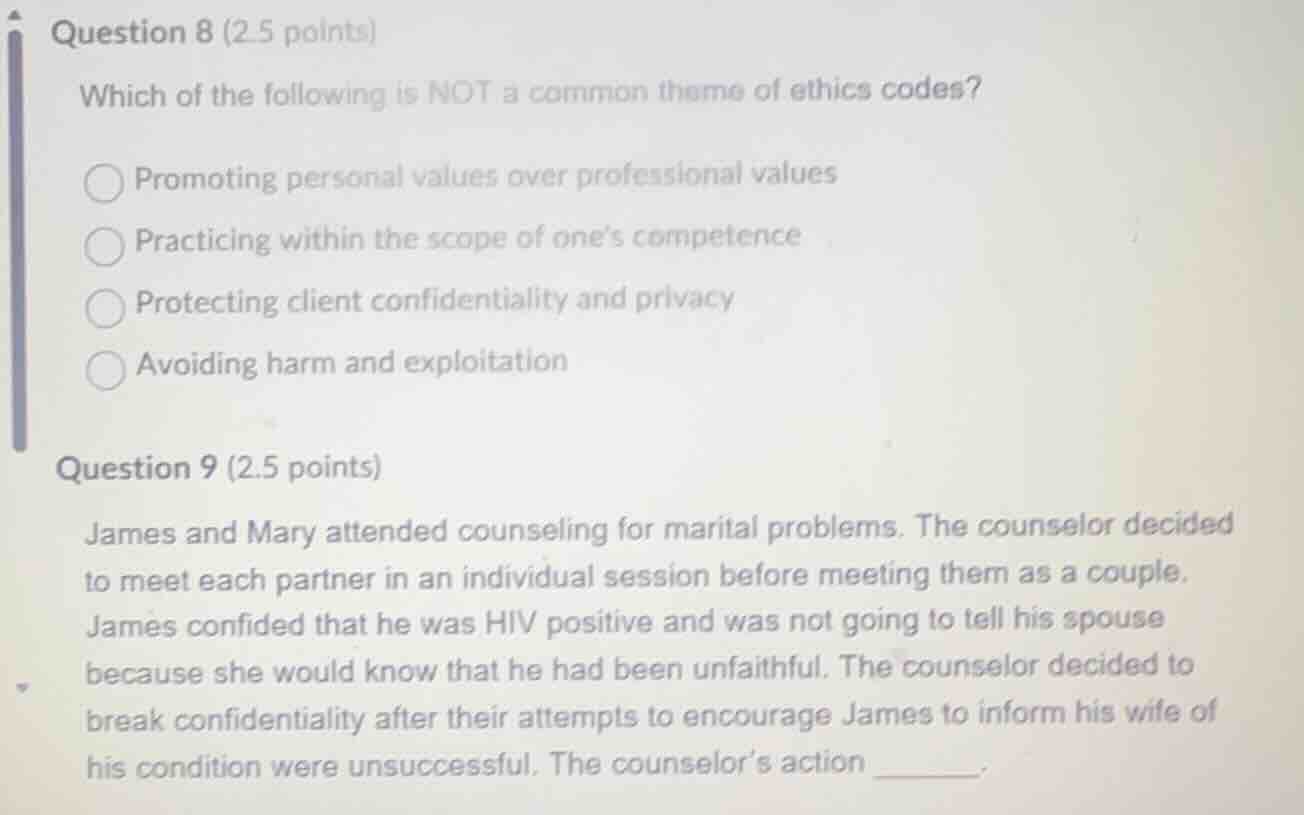
question 8 (2.5 points)
which of the following is not a common theme of ethics codes?
promoting personal values over professional values
practicing within the scope of one’s competence
protecting client confidentiality and privacy
avoiding harm and exploitation
question 9 (2.5 points)
james and mary attended counseling for marital problems. the counselor decided to meet each partner in an individual session before meeting them as a couple. james confided that he was hiv positive and was not going to tell his spouse because she would know that he had been unfaithful. the counselor decided to break confidentiality after their attempts to encourage james to inform his wife of his condition were unsuccessful. the counselor’s action ______.
Question 8
Ethics codes in professions (like counseling, healthcare, etc.) emphasize professional values, competence, client confidentiality, and avoiding harm. Promoting personal values over professional values goes against ethical standards as professions require adhering to professional ethics, not prioritizing personal values. The other options (practicing within competence, protecting confidentiality, avoiding harm) are common ethical themes.
In counseling ethics, there are exceptions to confidentiality when there is a serious threat to the client or others. James not disclosing his HIV - positive status to his spouse poses a serious health risk to Mary. The counselor, after trying to get James to disclose, broke confidentiality to protect Mary from potential harm (HIV transmission). This action is typically considered ethical as it follows the principle of "duty to warn" or "duty to protect" in ethical codes, where the welfare of the potential victim (Mary) overrides confidentiality in such a high - risk situation.

Snap & solve any problem in the app
Get step-by-step solutions on Sovi AI
Photo-based solutions with guided steps
Explore more problems and detailed explanations
A. Promoting personal values over professional values