QUESTION IMAGE
Question
1.1.3 quiz: understanding causation and argumentation in u.s. history
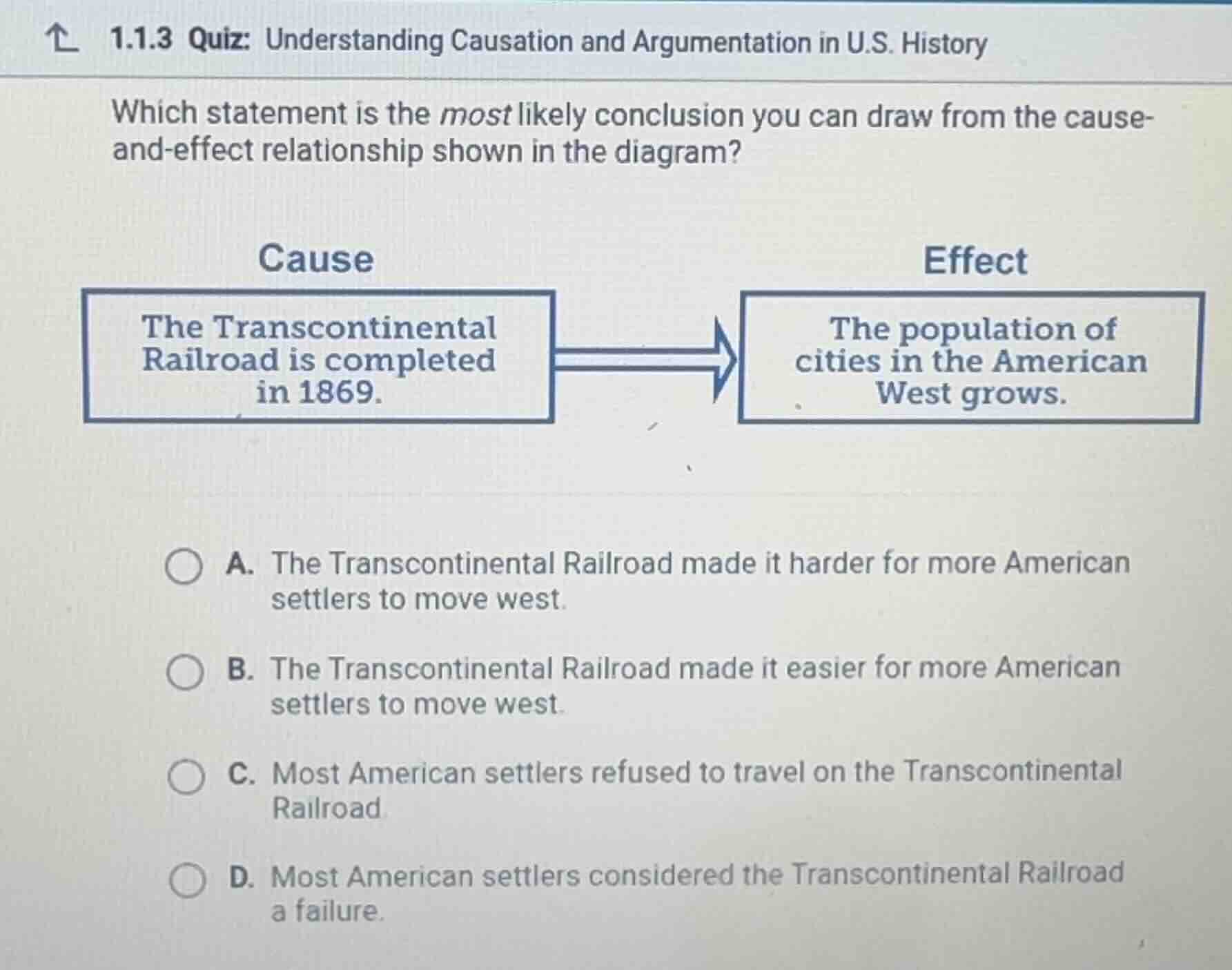
which statement is the most likely conclusion you can draw from the cause-and-effect relationship shown in the diagram?
cause
the transcontinental railroad is completed in 1869.
effect
the population of cities in the american west grows.
a. the transcontinental railroad made it harder for more american settlers to move west.
b. the transcontinental railroad made it easier for more american settlers to move west.
c. most american settlers refused to travel on the transcontinental railroad.
d. most american settlers considered the transcontinental railroad a failure.
To determine the correct conclusion, we analyze the cause - effect relationship. The cause is the completion of the Transcontinental Railroad in 1869, and the effect is the growth of city populations in the American West.
- Option A says the railroad made it harder for settlers to move west. If that were true, the population of western cities would not grow, so A is incorrect.
- Option B states the railroad made it easier for settlers to move west. Easier transportation would encourage more people to move west, leading to an increase in city populations, which matches the given effect.
- Option C claims most settlers refused to travel on the railroad. If they refused, the railroad would not contribute to population growth in the West, so C is wrong.
- Option D says most settlers considered the railroad a failure. A failed railroad would not lead to population growth in western cities, so D is incorrect.

Snap & solve any problem in the app
Get step-by-step solutions on Sovi AI
Photo-based solutions with guided steps
Explore more problems and detailed explanations
B. The Transcontinental Railroad made it easier for more American settlers to move west.