QUESTION IMAGE
Question
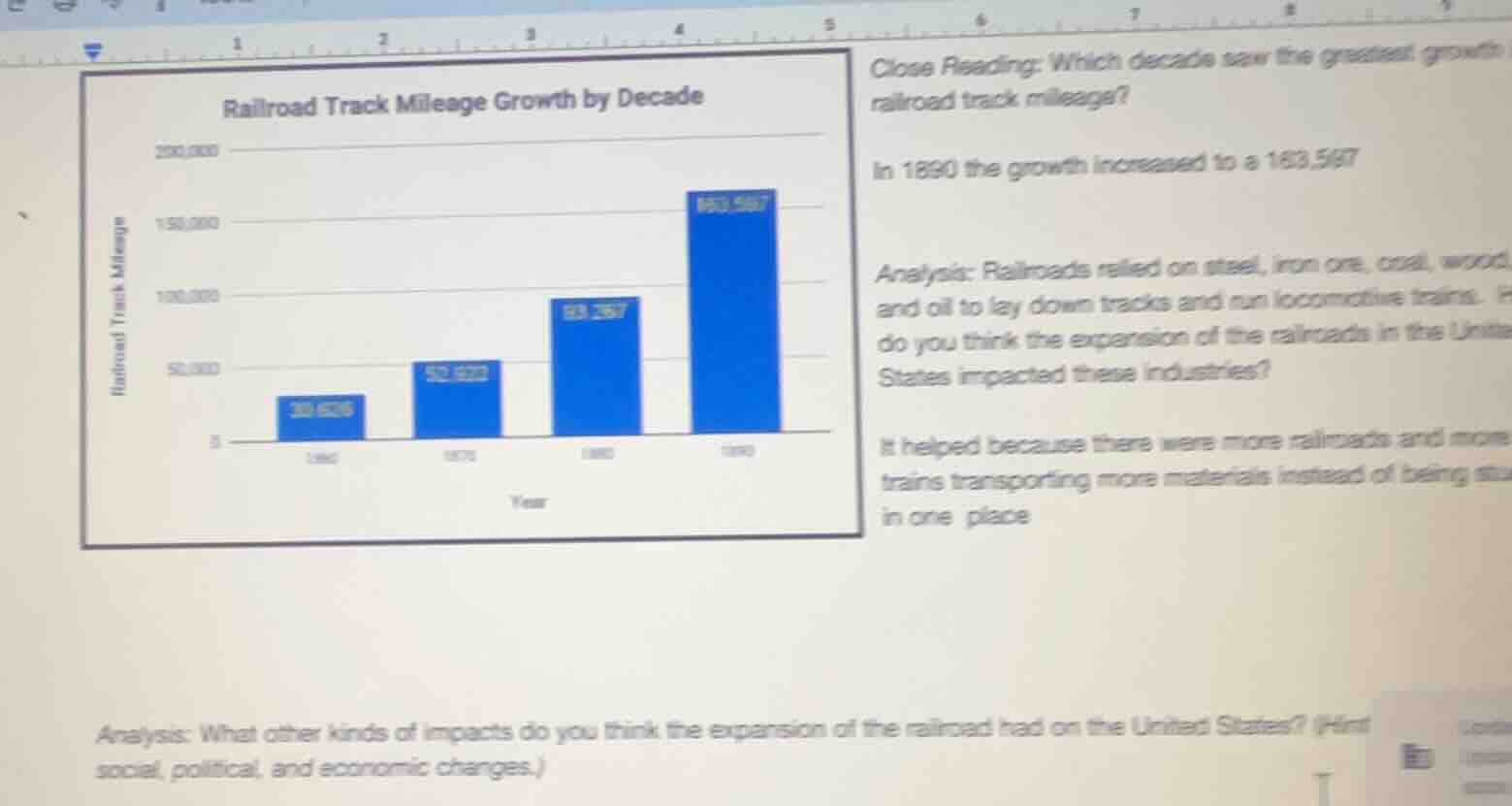
railroad track mileage growth by decade
close reading: which decade saw the greatest growth in railroad track mileage?
in 1890 the growth increased to a 183,567
analysis: railroads relied on steel, iron ore, coal, wood, and oil to lay down tracks and run locomotive trains. how do you think the expansion of the railroads in the united states impacted these industries?
it helped because there were more railroads and more trains transporting more materials instead of being stuck in one place
analysis: what other kinds of impacts do you think the expansion of the railroad had on the united states? (hint: social, political, and economic changes.)
- For the first question, compare the mileage growth of each decade from the bar graph: 1860 (30,626), 1870 (52,922), 1880 (93,267), 1890 (163,567). The largest value corresponds to the 1880-1890 decade.
- For the industry impact question: Railroad expansion created massive, sustained demand for steel (tracks), iron ore (steel input), coal (locomotive fuel), wood (ties, cars), and oil (later locomotives), spurring production, mining, and business growth in these sectors.
- For broader US impacts:
- Economic: Enabled national trade, lowered shipping costs, boosted agriculture/industry by connecting markets, and stimulated urbanization in rail hubs.
- Social: Facilitated faster migration west, reduced regional isolation, and spread cultural practices across the country.
- Political: Strengthened federal power by unifying the nation, supported policies for western expansion, and led to regulations for railroad industry practices.

Snap & solve any problem in the app
Get step-by-step solutions on Sovi AI
Photo-based solutions with guided steps
Explore more problems and detailed explanations
- The decade from 1880 to 1890 saw the greatest growth in railroad track mileage.
- Railroad expansion significantly benefited these industries by creating massive, consistent demand for their products: it increased production, mining, and business opportunities for steel, iron ore, coal, wood, and oil sectors as railroads required large volumes of these materials for construction and operation.
- Additional impacts on the United States:
- Economic: Enabled efficient national trade, reduced shipping costs, connected rural and urban markets, and drove growth in agriculture and manufacturing.
- Social: Facilitated westward migration, reduced regional cultural isolation, and supported the growth of new towns and cities along rail lines.
- Political: Strengthened national unity, supported federal policies for western expansion, and led to the development of regulations to oversee railroad operations and fair pricing.