QUESTION IMAGE
Question
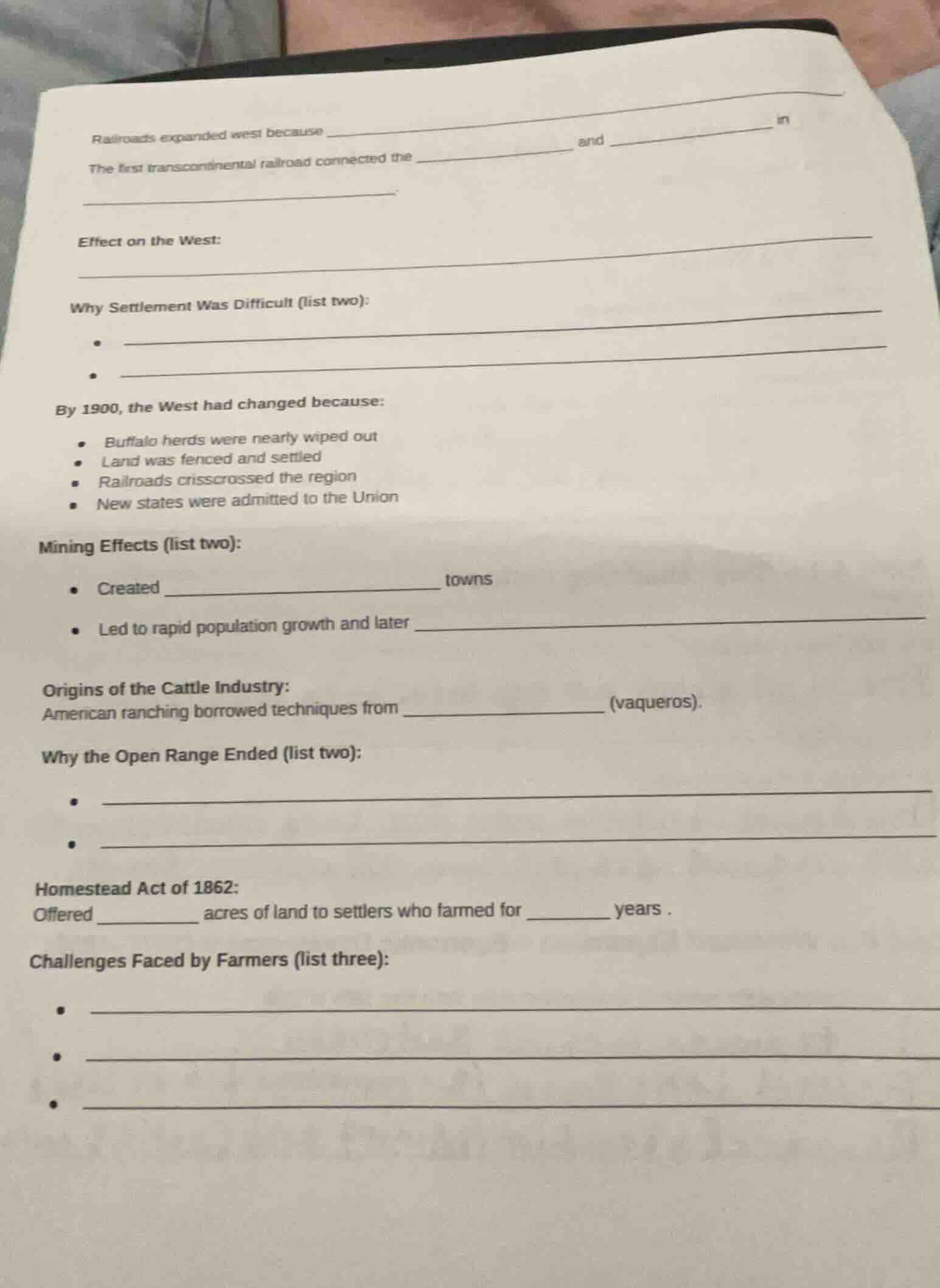
railroads expanded west because _______________
the first transcontinental railroad connected the _____________ and ___________ in _____________.
effect on the west:
_______________
why settlement was difficult (list two):
- _______________
- _______________
by 1900, the west had changed because:
- buffalo herds were nearly wiped out
- land was fenced and settled
- railroads crisscrossed the region
- new states were admitted to the union
mining effects (list two):
- created _______________ towns
- led to rapid population growth and later _______________
origins of the cattle industry:
american ranching borrowed techniques from _______________ (vaqueros).
why the open range ended (list two):
- _______________
- _______________
homestead act of 1862:
offered _____________ acres of land to settlers who farmed for _____________ years.
challenges faced by farmers (list three):
- _______________
- _______________
- _______________
All answers are based on key historical facts about the American West expansion in the 19th century.
- Railroads expanded west to access natural resources and enable faster transport of goods/people.
- The first transcontinental railroad linked the East Coast (specifically Omaha, Nebraska) and West Coast (Sacramento, California) in 1869.
- Railroads spurred economic growth and migration to the West.
- Settlement was hard due to harsh climate and conflict with Indigenous peoples.
- Mining created boom-and-bust towns and later left environmental damage when mines were abandoned.
- American ranching borrowed techniques from Mexican vaqueros.
- The open range ended due to barbed wire fencing and overgrazing that depleted grasslands.
- The Homestead Act offered 160 acres to settlers who farmed the land for 5 years.
- Farmers faced droughts, high railroad shipping costs, and pest infestations.

Snap & solve any problem in the app
Get step-by-step solutions on Sovi AI
Photo-based solutions with guided steps
Explore more problems and detailed explanations
- Railroads expanded west because of demand for natural resources and faster transport
- The first transcontinental railroad connected the East Coast (Omaha, Nebraska) and West Coast (Sacramento, California) in 1869
- Effect on the West: Spurred rapid migration and economic development
- Why Settlement Was Difficult (list two):
- Harsh, arid climate conditions
- Violent conflict with Indigenous nations
- Mining Effects (list two):
- Created boom-and-bust towns
- Led to rapid population growth and later environmental degradation (toxic runoff, deforestation)
- Origins of the Cattle Industry:
American ranching borrowed techniques from Mexican (vaqueros)
- Why the Open Range Ended (list two):
- Widespread use of barbed wire fencing
- Overgrazing that destroyed grasslands
- Homestead Act of 1862:
Offered 160 acres of land to settlers who farmed for 5 years
- Challenges Faced by Farmers (list three):
- Prolonged droughts and crop failure
- Exorbitant railroad shipping fees
- Infestations of grasshoppers and other pests