QUESTION IMAGE
Question
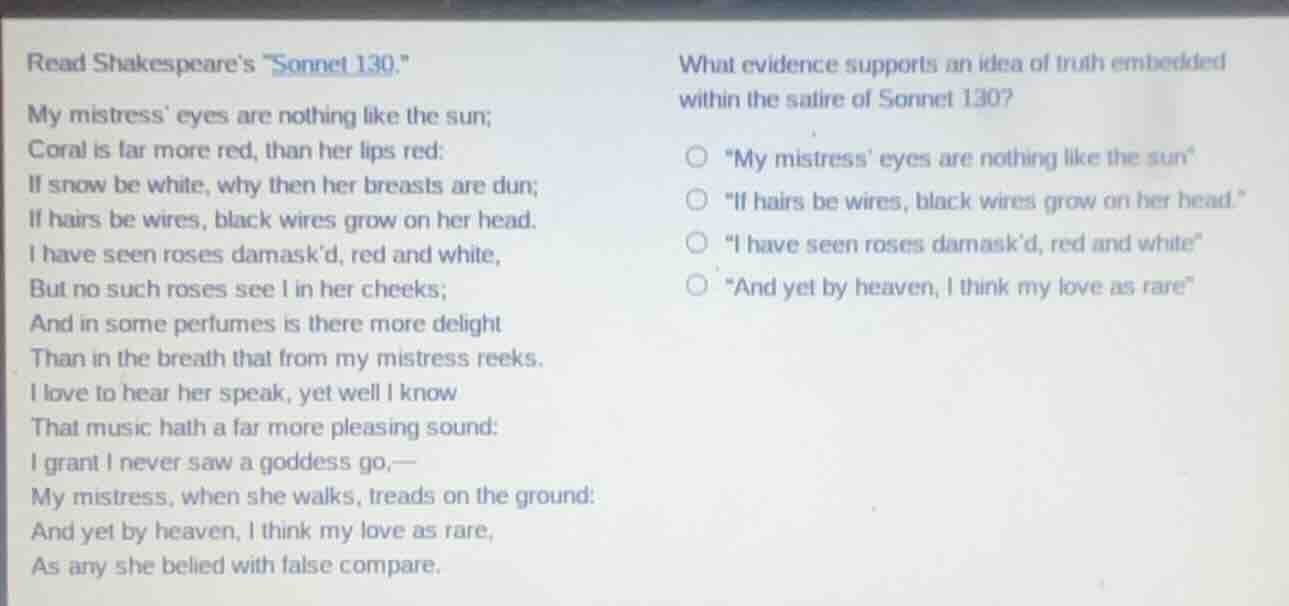
read shakespeare’s “sonnet 130.”
my mistress’ eyes are nothing like the sun;
coral is far more red, than her lips red:
if snow be white, why then her breasts are dun;
if hairs be wires, black wires grow on her head.
i have seen roses damask’d, red and white,
but no such roses see i in her cheeks;
and in some perfumes is there more delight
than in the breath that from my mistress reeks.
i love to hear her speak, yet well i know
that music hath a far more pleasing sound:
i grant i never saw a goddess go,—
my mistress, when she walks, treads on the ground:
and yet by heaven, i think my love as rare,
as any she belied with false compare.
what evidence supports an idea of truth embedded within the satire of sonnet 130?
- “my mistress’ eyes are nothing like the sun”
- “if hairs be wires, black wires grow on her head.”
- “i have seen roses damask’d, red and white”
- “and yet by heaven, i think my love as rare”
To determine the evidence for truth in the satire of "Sonnet 130", we analyze each option:
- The first three options ("My mistress’ eyes are nothing like the sun", "If hairs be wires, black wires grow on her head", "I have seen roses damask’d, red and white") are part of the satirical comparisons that highlight the mistress's non - idealized features, not the truth of the speaker's love.
- The line "And yet by heaven, I think my love as rare" reveals the truth of the speaker's sincere and deep love for his mistress, despite the satirical descriptions of her appearance. This line shows that beneath the satire, there is a genuine and rare love, which is the truth embedded in the sonnet.

Snap & solve any problem in the app
Get step-by-step solutions on Sovi AI
Photo-based solutions with guided steps
Explore more problems and detailed explanations
D. "And yet by heaven, I think my love as rare"