QUESTION IMAGE
Question
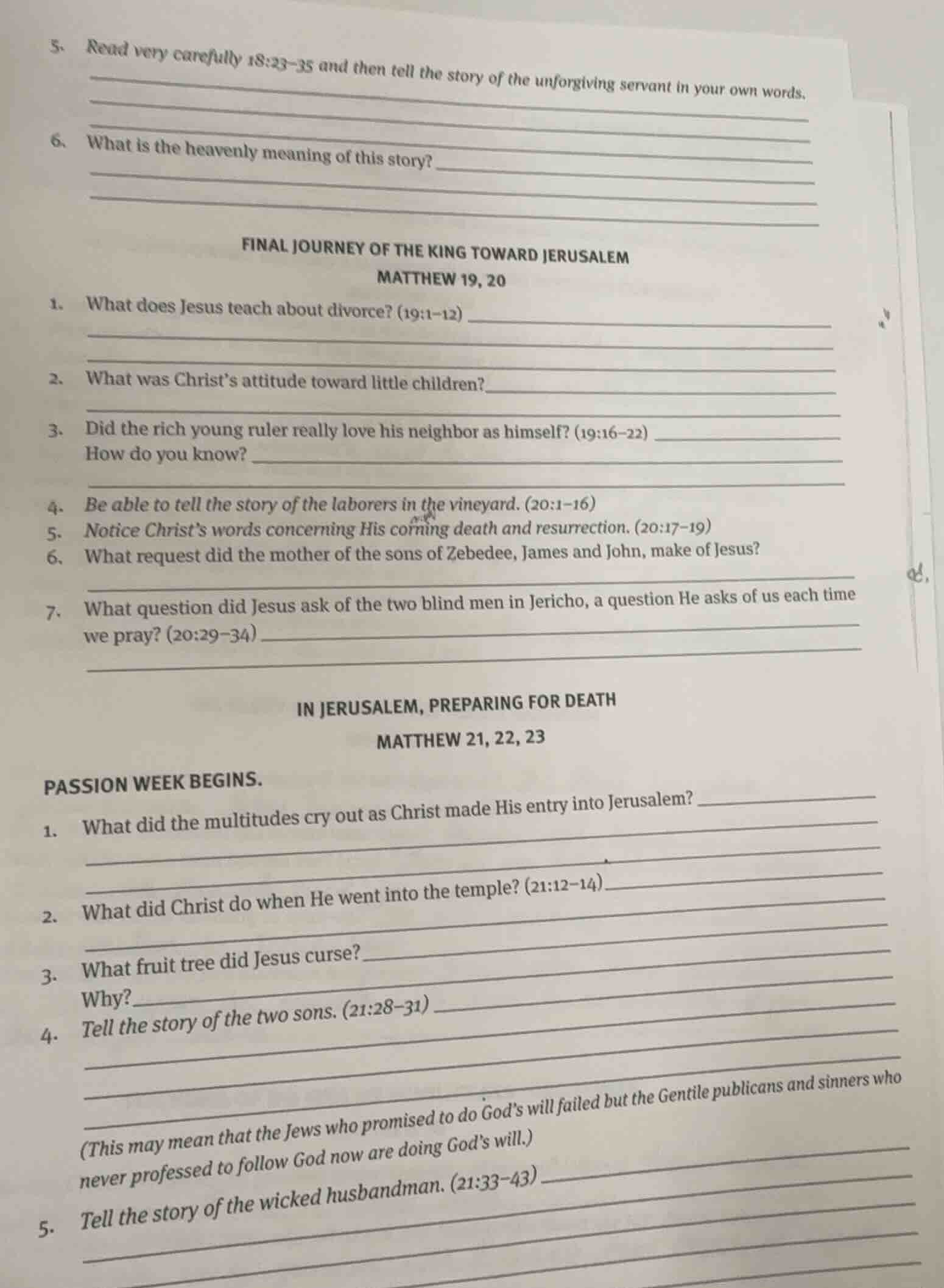
- read very carefully 18:23-35 and then tell the story of the unforgiving servant in your own words.
- what is the heavenly meaning of this story?
final journey of the king toward jerusalem
matthew 19, 20
- what does jesus teach about divorce? (19:1-12)
- what was christ’s attitude toward little children?
- did the rich young ruler really love his neighbor as himself? (19:16-22) how do you know?
- be able to tell the story of the laborers in the vineyard. (20:1-16)
- notice christ’s words concerning his coming death and resurrection. (20:17-19)
- what request did the mother of the sons of zebedee, james and john, make of jesus?
- what question did jesus ask of the two blind men in jericho, a question he asks of us each time we pray? (20:29-34)
in jerusalem, preparing for death
matthew 21, 22, 23
passion week begins.
- what did the multitudes cry out as christ made his entry into jerusalem?
- what did christ do when he went into the temple? (21:12-14)
- what fruit tree did jesus curse? why?
- tell the story of the two sons. (21:28-31)
(this may mean that the jews who promised to do god’s will failed but the gentile publicans and sinners who never professed to follow god now are doing god’s will.)
- tell the story of the wicked husbandman. (21:33-43)
Brief Explanations
Section 1 (Matthew 18)
- Unforgiving Servant Story: A servant owed a king an enormous debt, begged for mercy, and the king canceled it. But this servant refused to forgive a small debt owed to him by a fellow servant. The king found out, revoked the servant's forgiveness, and punished him.
- Heavenly Meaning: God freely forgives humans' great sins against Him, so humans must forgive the small wrongs others do to them; refusing to forgive breaks God's forgiveness.
Section 2: Final Journey of the King Toward Jerusalem (Matthew 19, 20)
- Jesus on Divorce: God made marriage lifelong, so divorce is not allowed except for marital unfaithfulness. Those who divorce and remarry commit adultery.
- Christ's Attitude Toward Children: He loved them, said the kingdom of heaven belongs to those like them, and commanded others not to hinder children from coming to Him.
- Rich Young Ruler: No, he did not. When Jesus told him to sell his possessions and give to the poor, he refused, showing he loved his wealth more than following God or loving his neighbor.
- Laborers in the Vineyard Story: A landowner hired workers at different times of the day (early morning, midday, late afternoon, near sunset). At the end of the day, he paid all workers the same full day's wage. The workers hired early complained, but the landowner said he could be generous with his own money.
- Christ's Words on Death/Resurrection: He told His disciples He would go to Jerusalem, suffer greatly from the elders, chief priests, and teachers of the law, be killed, and rise again on the third day.
- Mother of James and John's Request: She asked Jesus to let her two sons sit, one at His right hand and one at His left, in His kingdom.
- Jesus' Question to Blind Men: "What do you want me to do for you?"
Section 3: In Jerusalem, Preparing for Death (Matthew 21, 22, 23)
- Multitudes' Cry on Jerusalem Entry: "Hosanna to the Son of David! Blessed is he who comes in the name of the Lord! Hosanna in the highest heaven!"
- Christ in the Temple: He drove out the merchants and money changers who were making the temple a marketplace, overturned their tables, and said the temple should be a house of prayer, not a den of robbers.
- Cursed Fruit Tree: A fig tree. He cursed it because it had leaves but no fruit, symbolizing Israel's outward religious appearance without true righteous fruit.
- Two Sons Story: A father asked his two sons to go work in his vineyard. The first son said he would not, but later changed his mind and went. The second son said he would go, but did not. Jesus told this to show that tax collectors and sinners (like the first son) were repenting and entering God's kingdom, while the religious leaders (like the second son) were not acting on their outward promises to follow God.
- Wicked Husbandman Story: A landowner planted a vineyard, rented it to farmers, and sent servants to collect fruit. The farmers beat, killed, or stoned the servants. Finally, the landowner sent his beloved son, thinking they would respect him, but the farmers killed him to steal the vineyard. Jesus said the landowner would destroy the farmers and give the vineyard to others who would produce fruit, referring to God rejecting the religious leaders and opening the kingdom to others.

Snap & solve any problem in the app
Get step-by-step solutions on Sovi AI
Photo-based solutions with guided steps
Explore more problems and detailed explanations
Section 1 (Matthew 18)
- A servant owed a king an impossible debt, begged for mercy, and the king canceled it. But this servant refused to forgive a small debt from a fellow servant. The king learned of this, revoked the servant's forgiveness, and punished him.
- God forgives our great sins freely, so we must forgive others' small wrongs; refusing to forgive forfeits God's forgiveness.
Section 2: Final Journey of the King Toward Jerusalem (Matthew 19, 20)
- God intended marriage to be lifelong. Divorce is only permitted for marital unfaithfulness; those who divorce and remarry commit adultery.
- He cherished children, stated the kingdom of heaven belongs to those with childlike faith, and forbade others from keeping children from Him.
- No, he did not. He refused to sell his wealth to give to the poor, showing he loved his possessions more than loving his neighbor or following God.
- A landowner hired workers at different times of the day. At day's end, he paid every worker the same full day's wage. Early-hired workers complained, but the landowner said he could be generous with his own money.
- He told disciples He would go to Jerusalem, suffer from religious leaders, be killed, and rise on the third day.
- She asked Jesus to let James and John sit at His right and left hands in His kingdom.
- "What do you want me to do for you?"
Section 3: In Jerusalem, Preparing for Death (Matthew 21, 22, 23)
- "Hosanna to the Son of David! Blessed is he who comes in the name of the Lord! Hosanna in the highest heaven!"
- He drove out merchants and money changers from the temple, overturned their tables, and declared the temple should be a house of prayer, not a marketplace.
- A fig tree. It had leaves but no fruit, symbolizing Israel's outward religious pretense without true righteous actions.
- A father asked two sons to work in his vineyard. The first son said no but later obeyed; the second said yes but did not go. Jesus used this to show tax collectors and sinners were repenting and entering the kingdom, while religious leaders were not acting on their promises.
- A landowner rented his vineyard to farmers. The farmers attacked and killed his servants sent to collect fruit, then killed his beloved son to steal the vineyard. Jesus said the landowner would destroy the farmers and give the vineyard to those who would produce fruit, meaning God would reject unfaithful religious leaders and give the kingdom to others.