QUESTION IMAGE
Question
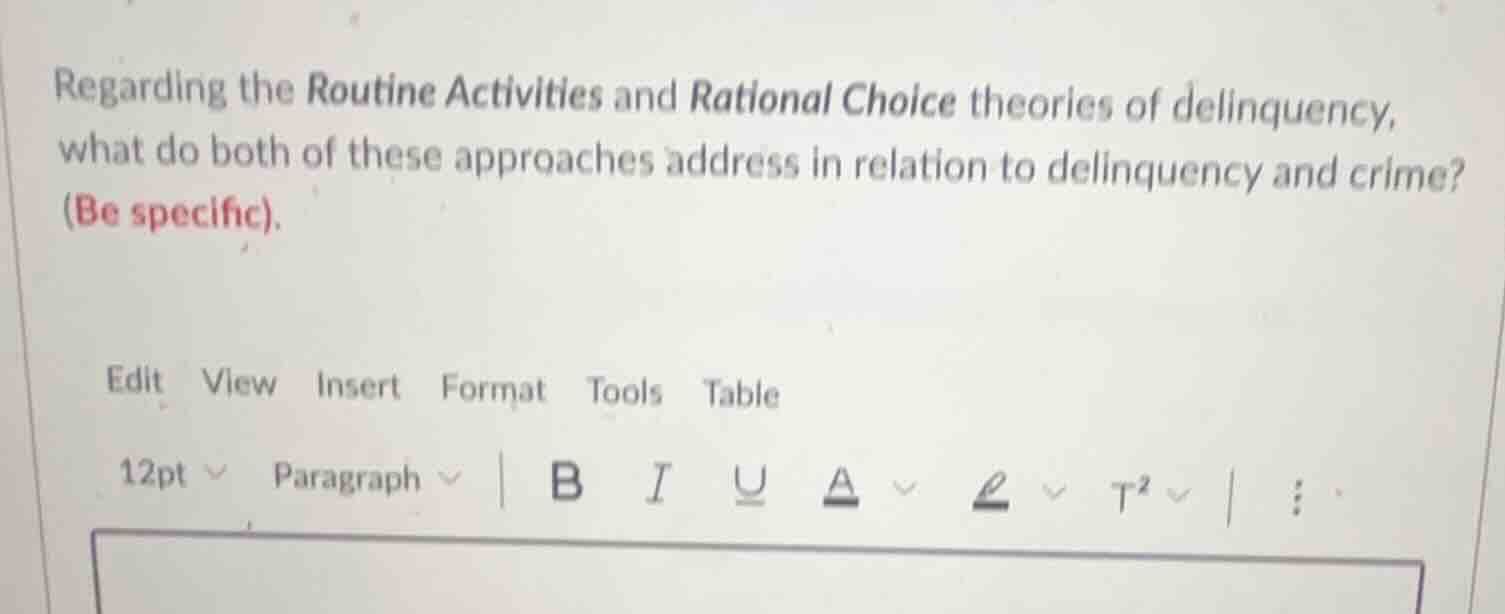
regarding the routine activities and rational choice theories of delinquency, what do both of these approaches address in relation to delinquency and crime? (be specific).
Both theories focus on the situational and decision-making factors that lead to delinquency and crime, rather than just individual traits. Rational Choice Theory centers on offenders weighing the potential costs (like punishment) and benefits (like material gain) of a criminal act before choosing to commit it. Routine Activities Theory focuses on the confluence of three necessary elements for a crime to occur: a motivated offender, a suitable target (person or property), and the absence of a capable guardian (someone or something that can prevent the crime). Together, they address how opportunities and cost-benefit calculations drive criminal/delinquent acts, shifting focus from inherent offender characteristics to the context and choices around the act.

Snap & solve any problem in the app
Get step-by-step solutions on Sovi AI
Photo-based solutions with guided steps
Explore more problems and detailed explanations
Both the Routine Activities and Rational Choice theories address the situational, opportunity-based, and decision-making factors that facilitate delinquency and crime:
- Rational Choice Theory addresses how potential offenders make deliberate, cost-benefit calculations: they weigh the perceived rewards (e.g., financial gain, status) of a criminal act against the perceived risks (e.g., arrest, punishment) and choose to offend if they determine the benefits outweigh the costs.
- Routine Activities Theory addresses the specific situational conditions that must align for a crime to happen: the presence of a motivated offender, the availability of a suitable target (person or property), and the absence of a capable guardian (individual or system that can intervene to stop the crime).
In short, both approaches focus on the context and choices surrounding the criminal act rather than solely on inherent traits of offenders to explain delinquency and crime.