QUESTION IMAGE
Question
scenario 1
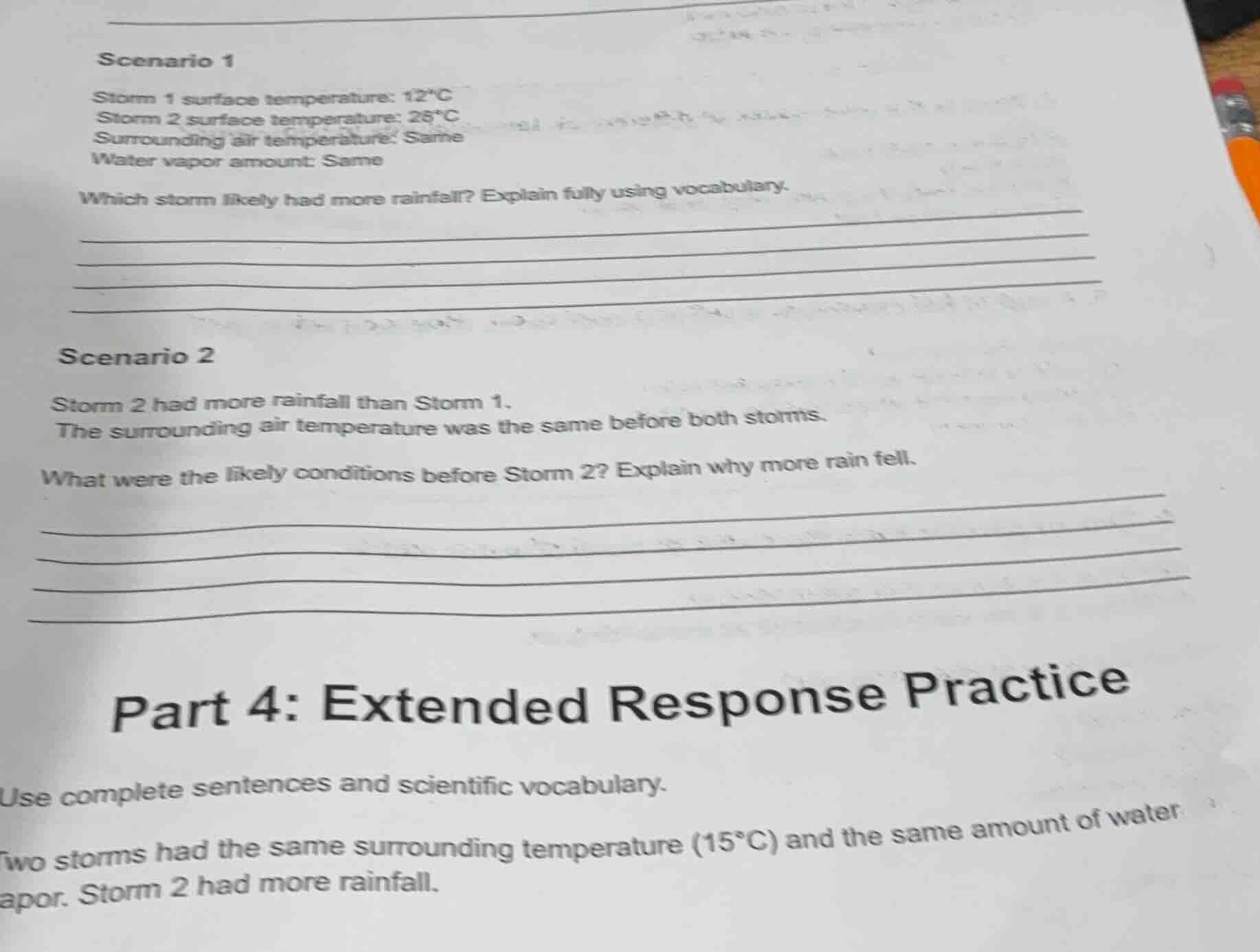
storm 1 surface temperature: 12℃
storm 2 surface temperature: 26℃
surrounding air temperature: same
water vapor amount: same
which storm likely had more rainfall? explain fully using vocabulary.
scenario 2
storm 2 had more rainfall than storm 1.
the surrounding air temperature was the same before both storms.
what were the likely conditions before storm 2? explain why more rain fell.
part 4: extended response practice
use complete sentences and scientific vocabulary.
two storms had the same surrounding temperature (15℃) and the same amount of water vapor. storm 2 had more rainfall.
Scenario 1:
Warmer air can hold more water vapor (per the Clausius-Clapeyron relationship). Storm 2 has a higher surface temperature (26°C vs. 12°C) with the same initial water vapor and surrounding air temp. The warmer surface evaporates more moisture into the storm system, leading to more condensation and heavier rainfall when the air rises and cools.
Scenario 2:
Before Storm 2, the surface temperature was likely higher than Storm 1's, or there was a greater amount of available water vapor (e.g., from a warmer ocean surface). Higher surface temps increase evaporation, adding more water vapor to the storm. When this moist air rises, it condenses more heavily, producing more rainfall, even with the same surrounding air temperature initially.
Part 4:
Storm 2 likely formed over a warmer surface (e.g., ocean or land) than Storm 1. Even with the same surrounding air temperature and initial water vapor, the warmer surface provides more energy (sensible heat) to drive stronger upward motion in the storm. This stronger lift causes more water vapor to condense at a faster rate, resulting in greater total rainfall.

Snap & solve any problem in the app
Get step-by-step solutions on Sovi AI
Photo-based solutions with guided steps
Explore more problems and detailed explanations
Scenario 1:
Storm 2 likely had more rainfall. Warmer surface temperatures (26°C vs. 12°C) increase evaporation, adding more moisture to the storm system. With the same surrounding air temperature and initial water vapor, the extra moisture in Storm 2 leads to more condensation and heavier precipitation when the air rises and cools.
Scenario 2:
Before Storm 2, the surface was likely warmer than Storm 1's, or there was a higher concentration of pre-existing water vapor. A warmer surface drives more evaporation, increasing the storm's moisture content. When this moist air rises and condenses, it produces more rainfall than Storm 1, even with identical initial surrounding air temperatures.
Part 4:
Storm 2 likely formed over a warmer surface. The extra surface heat enhances upward air motion, causing more of the available water vapor to condense rapidly. This increased condensation rate results in greater total rainfall compared to Storm 1, despite the same surrounding air temperature and initial water vapor levels.