QUESTION IMAGE
Question
scene 1
line 34-64
#2
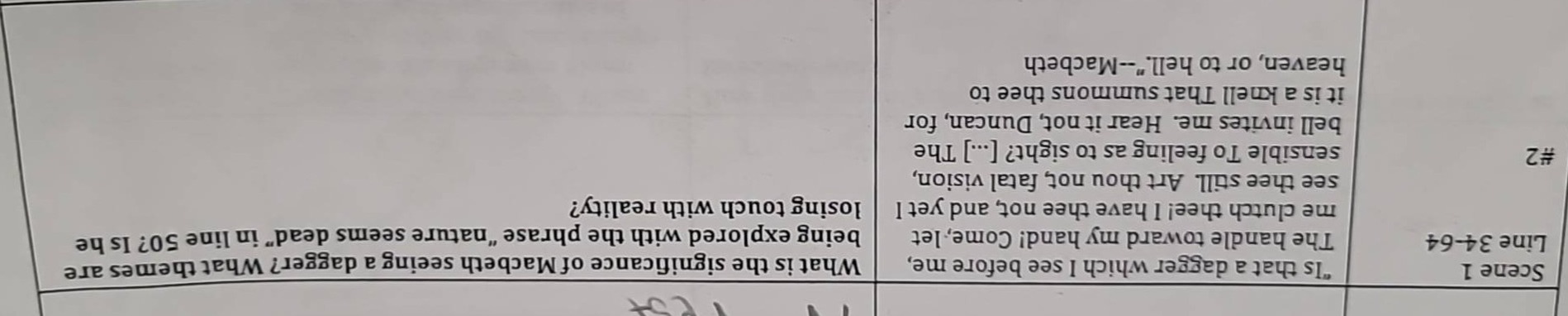
\is that a dagger which i see before me,
the handle toward my hand? come, let
me clutch thee! i have thee not, and yet i
see thee still. art thou not, fatal vision,
sensible to feeling as to sight? ... the
bell invites me. hear it not, duncan, for
it is a knell that summons thee to
heaven, or to hell.\--macbeth
what is the significance of macbeth seeing a dagger? what themes are being explored with the phrase
ature seems dead\ in line 50? is he losing touch with reality?
Brief Explanations
- The dagger is a hallucination, a projection of Macbeth's inner turmoil: his ambition drives him to murder, but his conscience creates this spectral vision to torment him.
- "Nature seems dead" reflects the inversion of the natural moral order (kingship is a natural, divinely ordained role, so killing Duncan violates this) and mirrors Macbeth's own fractured mental state, as he disconnects from rational, "natural" thought to pursue his violent goal.
- The themes tie directly to Macbeth's psychological breakdown and the play's core exploration of how ambition destroys morality and sanity.

Snap & solve any problem in the app
Get step-by-step solutions on Sovi AI
Photo-based solutions with guided steps
Explore more problems and detailed explanations
- The hallucination of the dagger symbolizes Macbeth's spiraling guilt, ambition, and descent into madness, as it is a product of his anxious mind grappling with the violent act he is about to commit (murdering Duncan).
- The key themes explored are: the corrupting nature of unchecked ambition, the blurring of reality and illusion, and the overwhelming weight of guilt. The phrase "nature seems dead" in line 50 reinforces the disruption of moral and natural order caused by Macbeth's murderous intent, and it signals that he is losing touch with reality as his mind is consumed by his violent, unnatural plan.