QUESTION IMAGE
Question
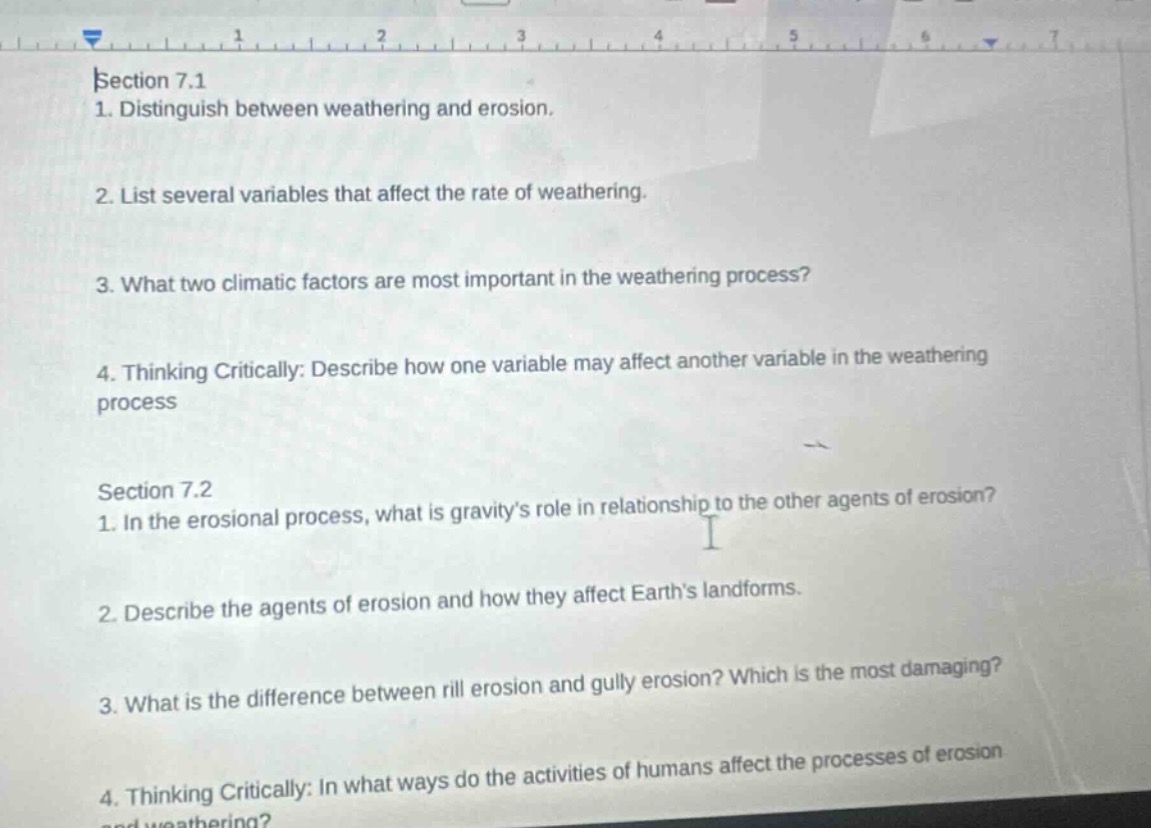
section 7.1
- distinguish between weathering and erosion.
- list several variables that affect the rate of weathering.
- what two climatic factors are most important in the weathering process?
- thinking critically: describe how one variable may affect another variable in the weathering process
section 7.2
- in the erosional process, what is gravity’s role in relationship to the other agents of erosion?
- describe the agents of erosion and how they affect earth’s landforms.
- what is the difference between rill erosion and gully erosion? which is the most damaging?
- thinking critically: in what ways do the activities of humans affect the processes of erosion and weathering?
Brief Explanations
Section 7.1
- Se distinguen por la movilidad del material: la meteorización descompone la roca en el lugar, mientras que la erosión traslada los fragmentos descompuestos.
- Las variables que influyen incluyen la composición de la roca, el clima, la topografía, la vegetación y el tiempo.
- Los dos factores climáticos más relevantes son la precipitación y la temperatura.
- Por ejemplo, la temperatura acelera la actividad microbiana, que a su vez incrementa la meteorización química de las rocas.
Section 7.2
- La gravedad es el agente impulsor fundamental: permite que otros agentes (agua, viento, hielo) puedan trasladar los materiales erosionados.
- Los agentes son:
- Agua: Causa erosión en ríos (profundiza valles), playas (desgasta costas) y lluvias (erosión laminar).
- Viento: Desgasta superficies y traslada sedimentos finos (formando dunas).
- Hielo: Los glaciares desgastan y arrastran rocas, creando valles en U.
- Seres vivos: La actividad de plantas y animales altera el suelo y las rocas.
- La erosión por surcos (rill erosion) forma pequeños surcos superficiales; la erosión por barrancas (gully erosion) crea depresiones profundas y permanentes. La más dañina es la de barrancas, ya que modifica irreversiblemente el paisaje y pierde suelo fértil.
- Los seres humanos aceleran ambos procesos: por la deforestación (quita la protección vegetal), la agricultura intensiva (degrada el suelo), la construcción (alterar la topografía) y la minería (exponen rocas y suelos sin protección).

Snap & solve any problem in the app
Get step-by-step solutions on Sovi AI
Photo-based solutions with guided steps
Explore more problems and detailed explanations
Section 7.1
- Weathering: Breaks rock in place; Erosion: Moves broken rock.
- Rock composition, climate, topography, vegetation, time.
- Precipitation and temperature.
- E.g., higher temp boosts microbial activity, increasing chemical weathering.
Section 7.2
- Gravity drives other erosion agents (water, wind, ice) to move sediment.
- - Water: Carves river valleys, erodes coasts, causes sheet erosion.
- Wind: Abrades surfaces, transports fine sediment to form dunes.
- Glaciers: Grind and carry rock, creating U-shaped valleys.
- Biota: Plant roots and animal activity break soil/rock.
- Rill erosion: Small, shallow surface channels; Gully erosion: Deep, permanent channels. Gully erosion is more damaging.
- Deforestation, intensive farming, construction, and mining remove vegetation, expose soil/rock, and speed up weathering and erosion.