QUESTION IMAGE
Question
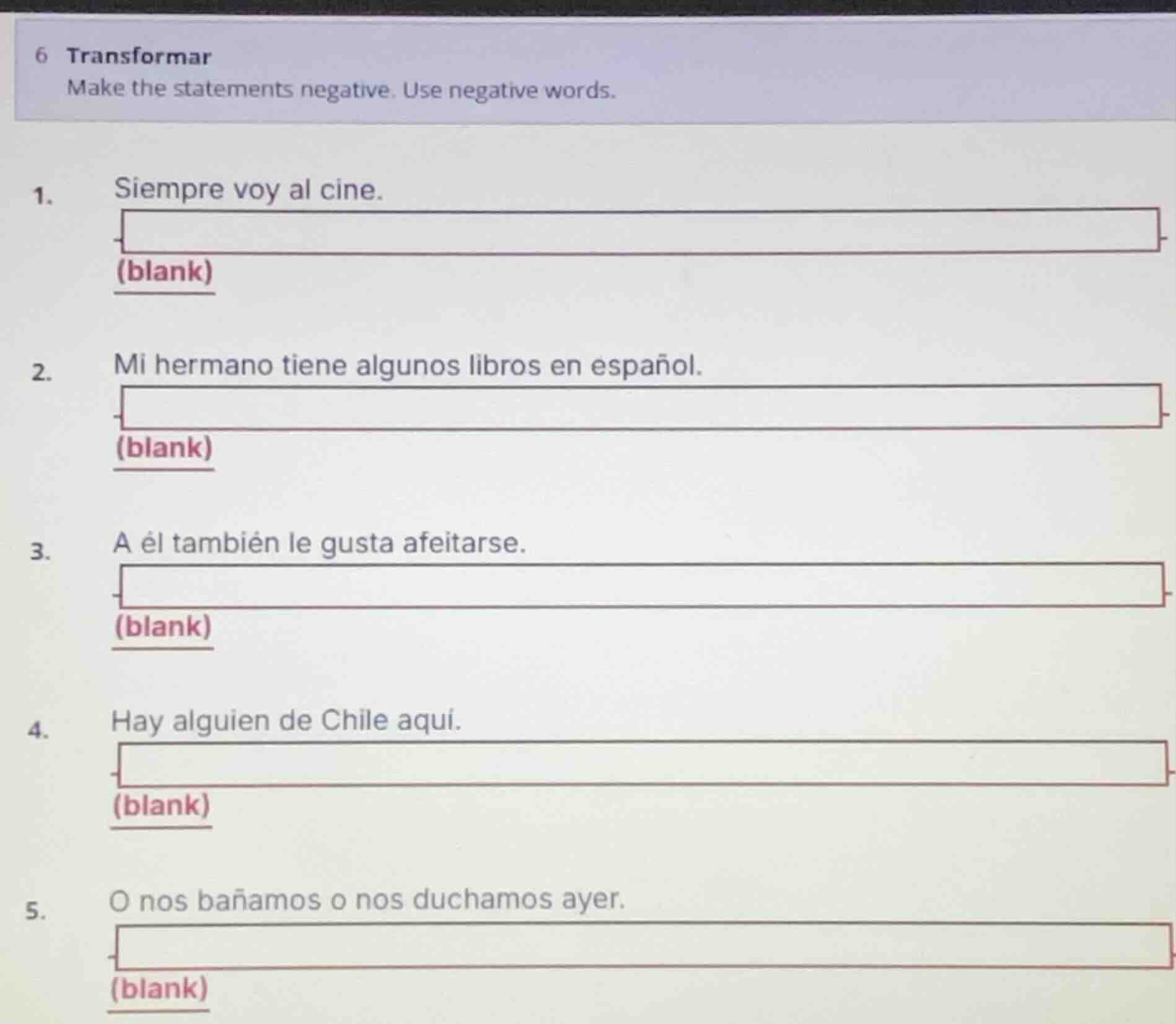
6 transformar
make the statements negative. use negative words.
- siempre voy al cine.
(blank)
- mi hermano tiene algunos libros en español.
(blank)
- a él también le gusta afeitarse.
(blank)
- hay alguien de chile aquí.
(blank)
- o nos bañamos o nos duchamos ayer.
(blank)
1.
To make "Siempre voy al cine" negative, we replace "siempre" (always) with "nunca" (never) and ensure the verb conjugation is correct. The verb "voy" (I go) remains as is in the negative context here.
For "Mi hermano tiene algunos libros en español", we need to make the verb negative (add "no" before the verb "tiene") and replace "algunos" (some) with "ningún" (no, used with singular nouns; since "libros" is plural, we use "ningunos" but in the negative sentence structure, it's "no...ningunos" or more commonly, we adjust to "Mi hermano no tiene ningún libro en español" (using singular "libro" with "ningún" for agreement, or "ningunos" with plural "libros" as "Mi hermano no tiene ningunos libros en español").
To negate "A él también le gusta afeitarse", we replace "también" (also) with "tampoco" (neither, not either) and adjust the structure. The verb "gusta" is part of the "gustar" structure, so we add "no" before the indirect object phrase: "A él tampoco le gusta afeitarse".

Snap & solve any problem in the app
Get step-by-step solutions on Sovi AI
Photo-based solutions with guided steps
Explore more problems and detailed explanations
Nunca voy al cine.