QUESTION IMAGE
Question
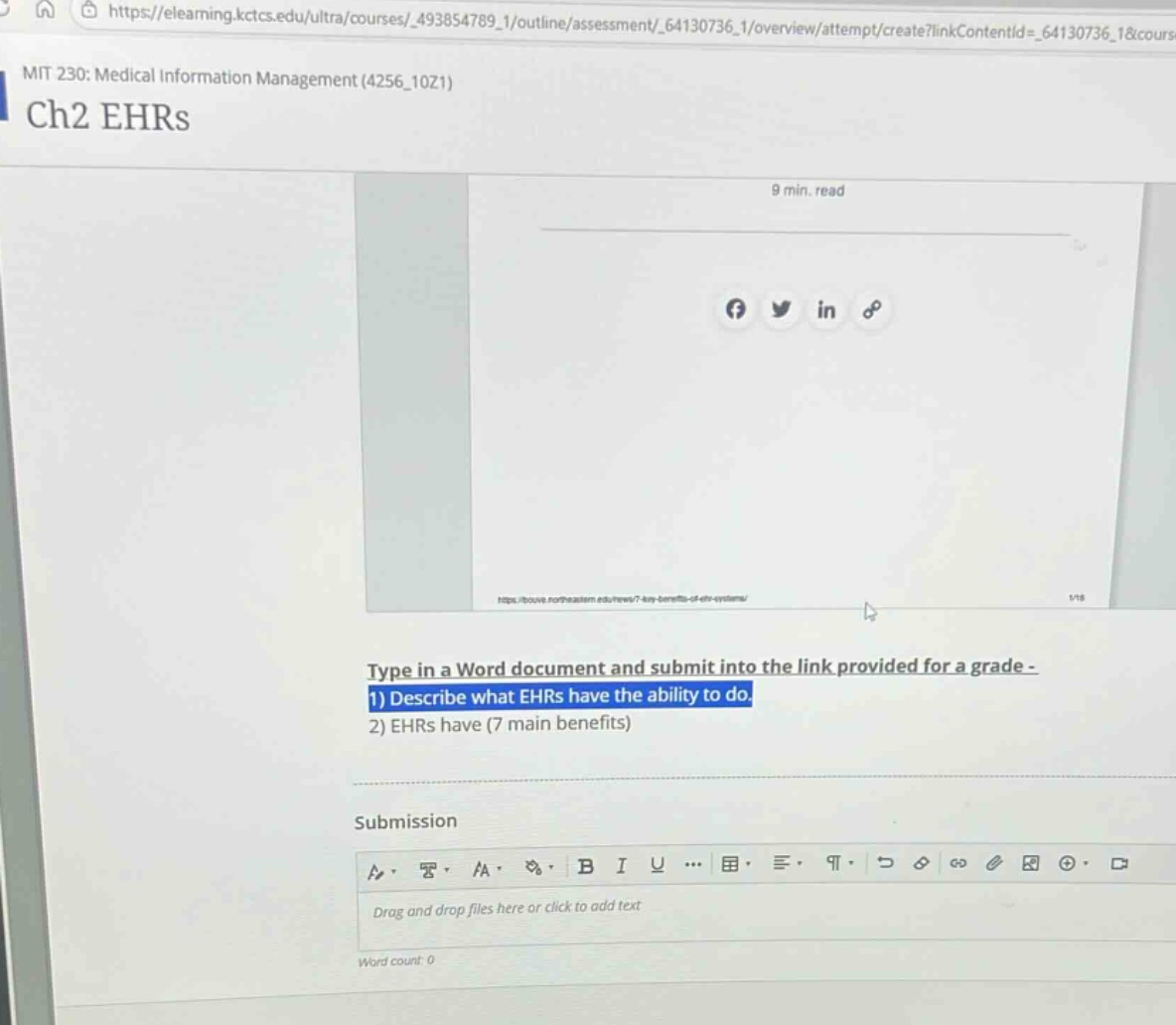
type in a word document and submit into the link provided for a grade -
- describe what ehrs have the ability to do.
- ehrs have (7 main benefits)
Electronic Health Records (EHRs) are digital versions of patients' medical histories. They can capture, store, and manage patient health information like medical history, diagnoses, medications, allergies, test results, and treatment plans. EHRs enable healthcare providers to access and update patient data securely, support clinical decision - making (e.g., through alerts for drug interactions or preventive care reminders), facilitate communication and information sharing among different healthcare providers (e.g., between primary care physicians and specialists), and allow for population health management (analyzing data for trends in diseases or health outcomes). They also support patient engagement by giving patients access to their own health information.

Snap & solve any problem in the app
Get step-by-step solutions on Sovi AI
Photo-based solutions with guided steps
Explore more problems and detailed explanations
EHRs (Electronic Health Records) have the ability to:
- Capture, store, and organize comprehensive patient health information including medical history, diagnoses, medications, allergies, laboratory test results, and treatment plans.
- Enable secure access and updating of patient data by authorized healthcare providers, ensuring that the most current information is available for clinical decision - making.
- Support clinical decision - making through features like drug - drug interaction alerts, allergy warnings, and reminders for preventive care (such as vaccinations or cancer screenings).
- Facilitate communication and information sharing among different healthcare entities (e.g., hospitals, clinics, laboratories, and pharmacies) to ensure coordinated care for patients.
- Provide patients with access to their own health records, promoting patient engagement and empowerment in managing their health.
- Support population health management by allowing healthcare organizations to analyze aggregated patient data to identify health trends, disease patterns, and areas for quality improvement.
- Streamline administrative tasks such as billing, insurance claims processing, and reporting of public health data (e.g., notifiable diseases to public health agencies).