QUESTION IMAGE
Question
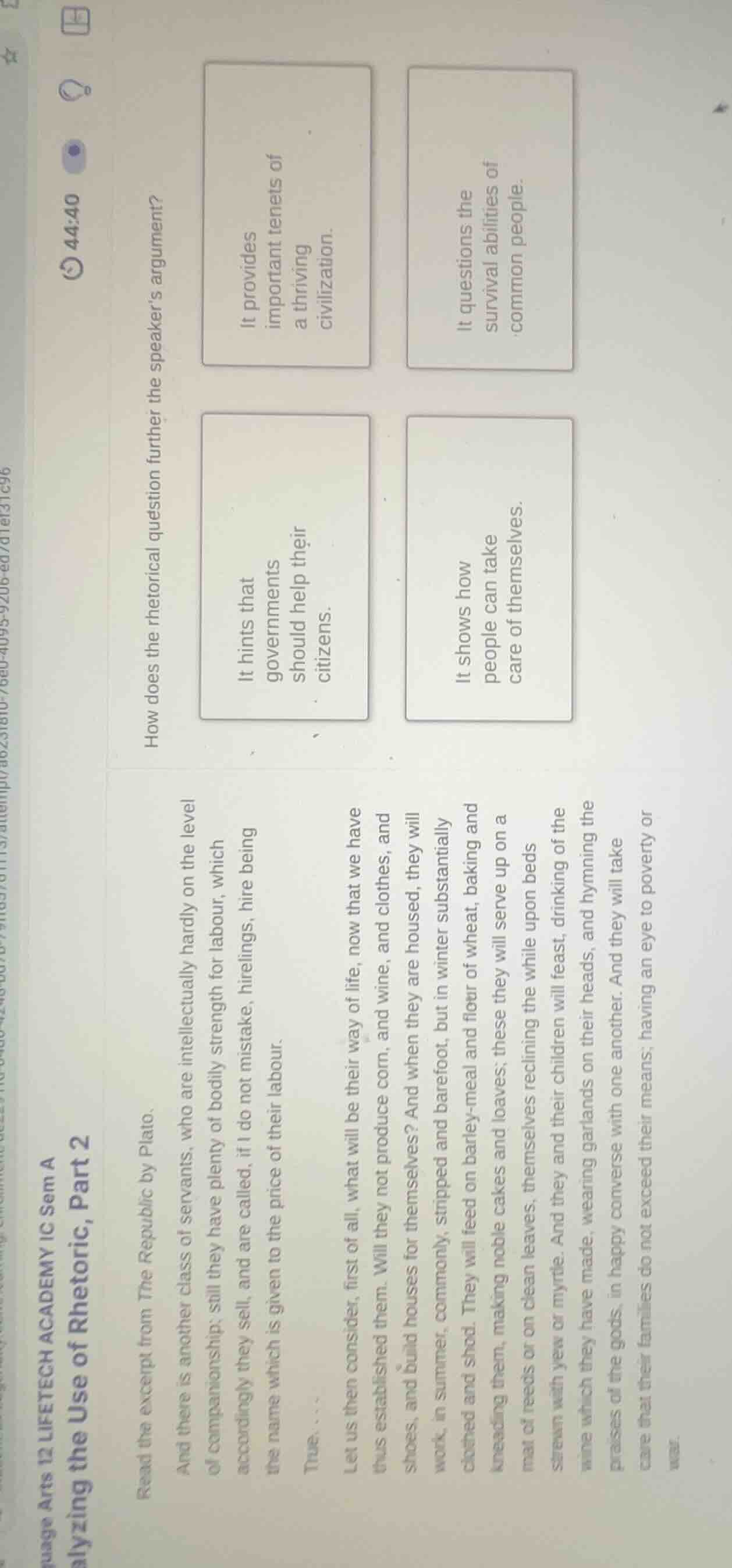
uage arts 12 lifetech academy ic sem aalyzing the use of rhetoric, part 2read the excerpt from the republic by plato.and there is another class of servants, who are intellectually hardly on the level of companionship; still they have plenty of bodily strength for labour, which accordingly they sell, and are called, if i do not mistake, hirelings, hire being the name which is given to the price of their labour.true. . . .let us then consider, first of all, what will be their way of life, now that we have thus established them. will they not produce corn, and wine, and clothes, and shoes, and build houses for themselves? and when they are housed, they will work, in summer, commonly, stripped and barefoot, but in winter substantially clothed and shod. they will feed on barley-meal and flour of wheat, baking and kneading them, making noble cakes and loaves; these they will serve up on a mat of reeds or on clean leaves, themselves reclining the while upon beds strewn with yew or myrtle. and they and their children will feast, drinking of the wine which they have made, wearing garlands on their heads, and hymning the praises of the gods, in happy converse with one another. and they will take care that their families do not exceed their means; having an eye to poverty or war.how does the rhetorical question further the speakers argument?it provides important tenets of a thriving civilization.it hints that governments should help their citizens.it questions the survival abilities of common people.it shows how people can take care of themselves.
The rhetorical question ("Will they not produce corn, and wine, and clothes, and shoes, and build houses for themselves?") is followed by a detailed description of how the common people will grow food, make goods, and sustain their own lives independently. This directly illustrates their ability to care for themselves, which supports the speaker's argument about their self-sufficiency.

Snap & solve any problem in the app
Get step-by-step solutions on Sovi AI
Photo-based solutions with guided steps
Explore more problems and detailed explanations
It shows how people can take care of themselves.