QUESTION IMAGE
Question
unit 2 - physical science
science standards and concepts: ps.b.1, ps.b.2
what are some reasons why people might not want to rely on solar energy?
magnetism
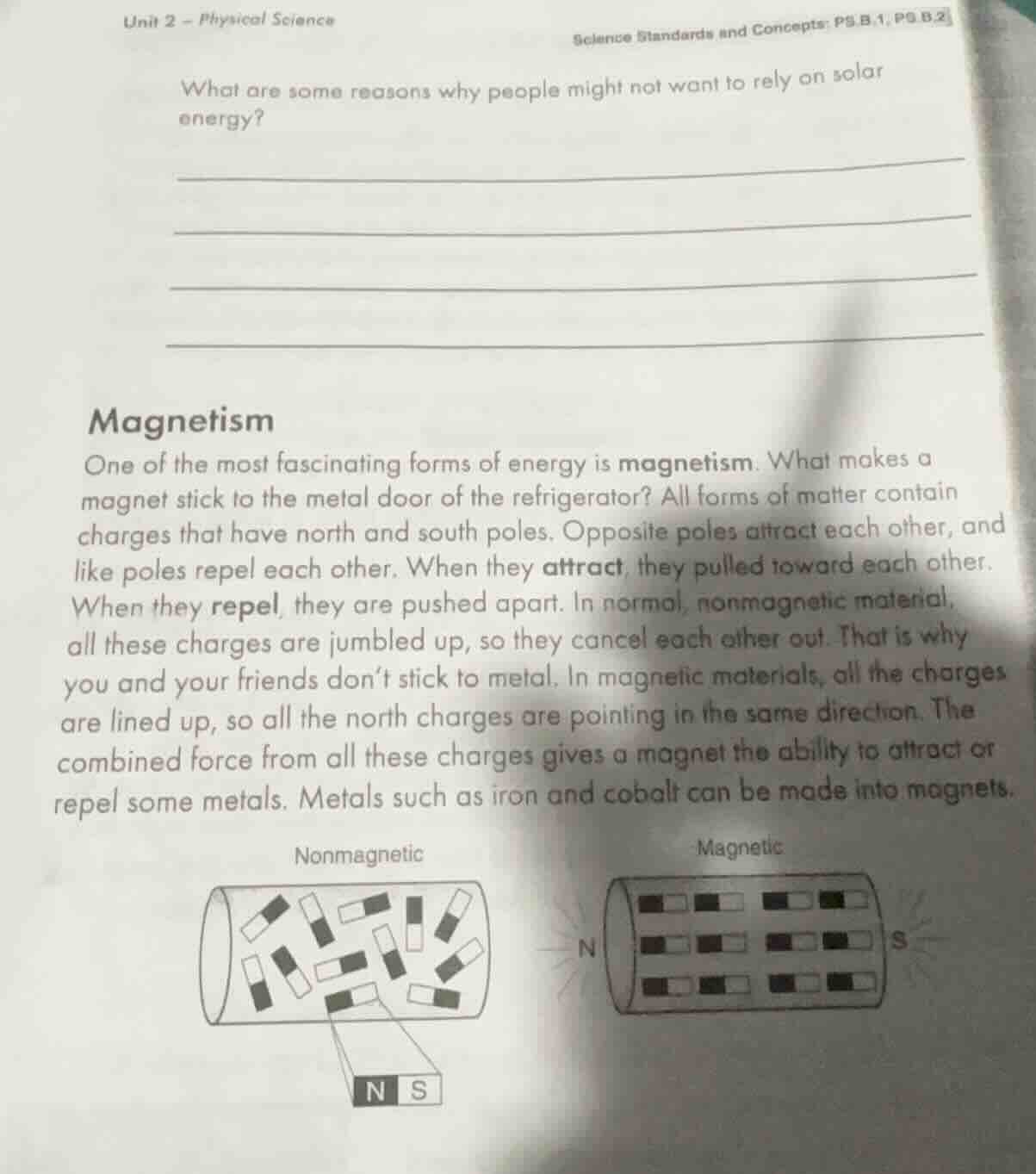
one of the most fascinating forms of energy is magnetism. what makes a magnet stick to the metal door of the refrigerator? all forms of matter contain charges that have north and south poles. opposite poles attract each other, and like poles repel each other. when they attract, they pulled toward each other. when they repel, they are pushed apart. in normal, nonmagnetic material, all these charges are jumbled up, so they cancel each other out. that is why you and your friends don’t stick to metal. in magnetic materials, all the charges are lined up, so all the north charges are pointing in the same direction. the combined force from all these charges gives a magnet the ability to attract or repel some metals. metals such as iron and cobalt can be made into magnets.
image of nonmagnetic and magnetic materials charge arrangements
To determine why people might not rely on solar energy, we analyze factors like cost, weather dependence, and infrastructure. High initial costs for solar panels and installation are a barrier. Solar energy production depends on sunlight, so cloudy days, night, or bad weather reduce output. Also, energy storage (like batteries) is expensive and less efficient, and some areas have low solar irradiance. Additionally, the aesthetic impact (panels on roofs) or lack of suitable roof space, and the time - consuming installation and permitting processes can discourage reliance on solar energy.

Snap & solve any problem in the app
Get step-by-step solutions on Sovi AI
Photo-based solutions with guided steps
Explore more problems and detailed explanations
- High Initial Cost: The cost of purchasing and installing solar panels is relatively high. For example, a residential solar panel system can cost thousands of dollars upfront, which is a significant financial burden for many people.
- Weather Dependence: Solar energy production is highly dependent on sunlight. On cloudy days, during the night, or in areas with frequent bad weather, the amount of energy generated by solar panels drops significantly. In regions with long winters and short days, solar energy may not be a reliable primary energy source.
- Energy Storage Limitations: Storing the solar energy produced for use during non - sunny periods (like at night) requires batteries. However, battery technology is still relatively expensive, and the energy storage capacity and efficiency are not yet at an ideal level. For instance, the cost of a home battery system can add a large amount to the overall cost of a solar energy setup.
- Low Solar Irradiance in Some Areas: In regions that are often overcast, or far from the equator with less direct sunlight, the amount of solar energy that can be harnessed is limited. This makes solar energy less viable as a major energy source in such areas.
- Aesthetic and Space Concerns: Some people may not like the appearance of solar panels on their roofs. Also, not all properties have enough suitable roof space or land area to install a sufficient number of solar panels to meet their energy needs.
- Installation and Permitting Issues: The process of installing solar panels can be complex, involving permits from local authorities. The paperwork and regulations can be time - consuming and may vary from one location to another, discouraging potential users.