QUESTION IMAGE
Question
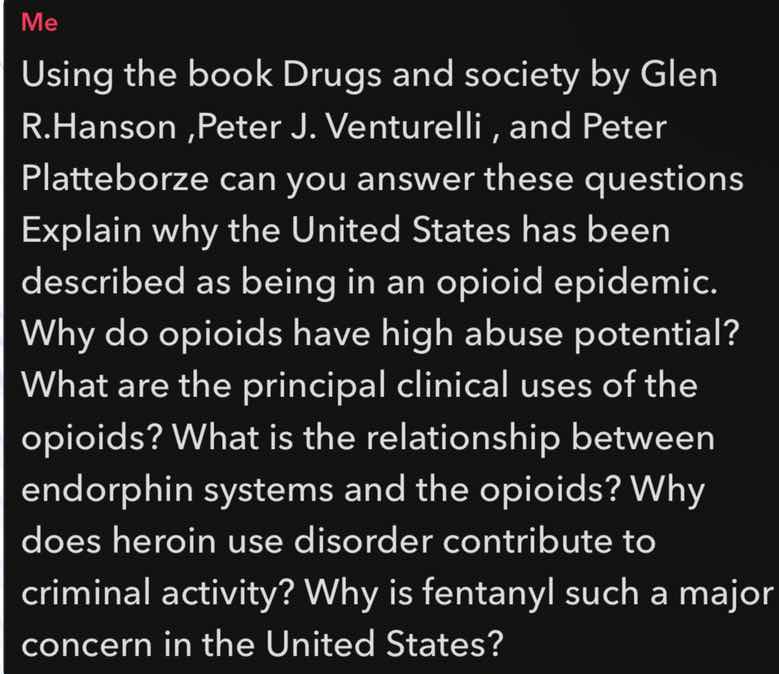
using the book drugs and society by glen r.hanson,peter j. venturelli, and peter platteborze can you answer these questions explain why the united states has been described as being in an opioid epidemic. why do opioids have high abuse potential? what are the principal clinical uses of the opioids? what is the relationship between endorphin systems and the opioids? why does heroin use disorder contribute to criminal activity? why is fentanyl such a major concern in the united states?
Brief Explanations
- Opioid epidemic in the U.S.: Post-1990s overprescription of legal opioids created a large population of dependent users, who later turned to cheaper illicit opioids like heroin and fentanyl. This led to skyrocketing overdose deaths (tens of thousands annually) and widespread public health disruption.
- High abuse potential: Opioids trigger a surge of dopamine in the brain's reward center, producing intense euphoria. Users quickly build tolerance, requiring higher doses to feel the same effect, leading to physical and psychological dependence.
- Clinical uses: Opioids are gold-standard treatments for acute severe pain (e.g., post-surgery, trauma) and chronic pain in select cases. They also act as antitussives (codeine) and antidiarrheals (loperamide, a mild opioid).
- Endorphin-opioid relationship: Endorphins are the body's natural pain-relieving, mood-regulating neurotransmitters that bind to opioid receptors. Synthetic/plant-based opioids bind to these same receptors, producing stronger, longer-lasting versions of endorphin effects.
- Heroin use and crime: Heroin is illegal and expensive, so dependent users often engage in theft, drug trafficking, or other criminal acts to secure funds for their daily dose to avoid withdrawal symptoms.
- Fentanyl concern: Fentanyl is 50-100 times more potent than morphine; even a tiny, accidental dose can cause fatal respiratory depression. It is often mixed into other illicit drugs (cocaine, heroin) without users' knowledge, leading to a sharp rise in accidental overdoses.

Snap & solve any problem in the app
Get step-by-step solutions on Sovi AI
Photo-based solutions with guided steps
Explore more problems and detailed explanations
- The U.S. is in an opioid epidemic due to overprescription, illicit supply growth, and high overdose rates.
- Opioids have high abuse potential because of intense euphoria and rapid tolerance/dependence.
- Principal clinical uses of opioids are pain management, cough suppression, and diarrhea treatment.
- Opioids bind to the same brain receptors as endorphins, mimicking their pain-relieving, mood-boosting effects.
- Heroin use disorder drives criminal activity to fund expensive, addictive habits.
- Fentanyl is a major U.S. concern due to its extreme potency, high overdose risk, and widespread illicit distribution.