QUESTION IMAGE
Question
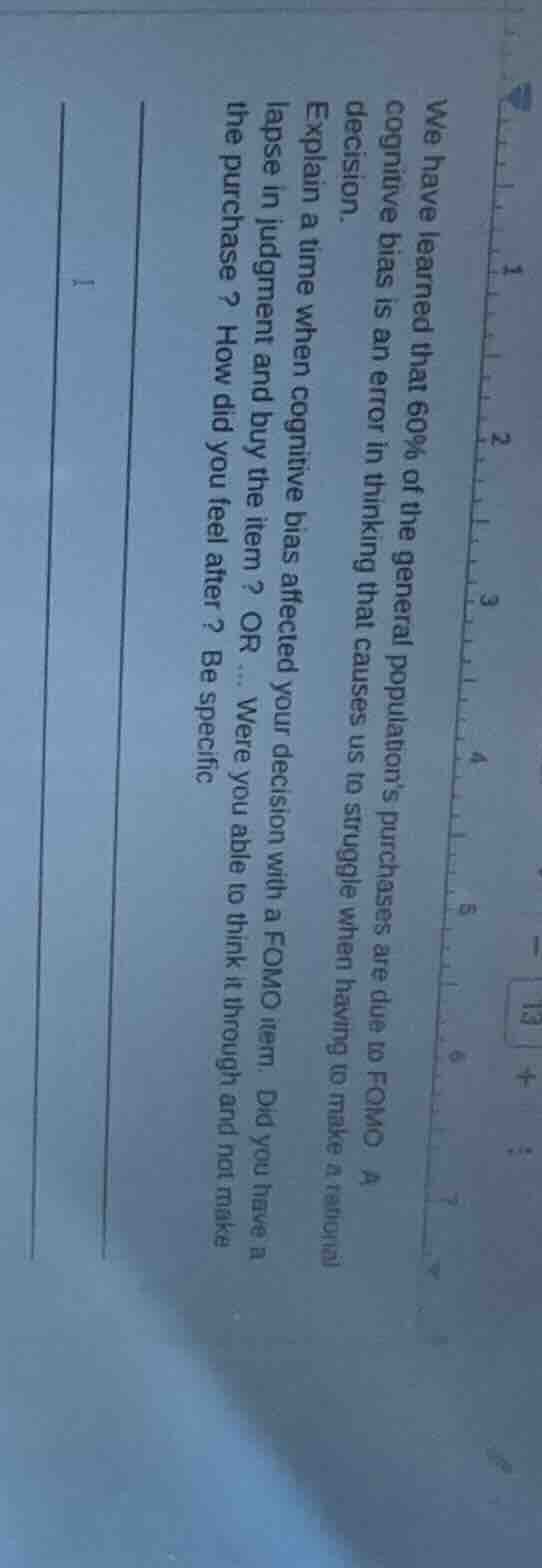
we have learned that 60% of the general population’s purchases are due to fomo. a cognitive bias is an error in thinking that causes us to struggle when having to make a rational decision. explain a time when cognitive bias affected your decision with a fomo item. did you have a lapse in judgment and buy the item? or … were you able to think it through and not make the purchase? how did you feel after? be specific
FOMO (Fear of Missing Out) is a cognitive bias that drives impulsive decisions. For a personal example: Last year, a limited-edition sneaker was promoted as a "one-time only release" on social media, with posts showing others already getting the shoes. I felt anxious about being left out of the trend, so I bought the $180 pair without checking if they fit my budget or if I actually needed another pair of sneakers. After the purchase, I realized I rarely wore them because they were uncomfortable, and I regretted overspending on an item I didn't truly need, as I could have used the money for a necessary new backpack.

Snap & solve any problem in the app
Get step-by-step solutions on Sovi AI
Photo-based solutions with guided steps
Explore more problems and detailed explanations
A specific example: Last year, a brand advertised a limited-edition sneaker as a "never-to-be-restocked" item, with social media posts showing peers posting about their purchases. Driven by FOMO, I immediately bought the $180 sneakers without checking my monthly budget or considering I already had 3 pairs of casual sneakers. I had a clear lapse in judgment— I didn't take time to weigh the pros and cons. After the purchase, I wore the sneakers only twice because they were stiff and uncomfortable. I felt frustrated and regretful, as I wasted money on an unnecessary item that could have gone toward a new laptop charger I actually needed.