QUESTION IMAGE
Question
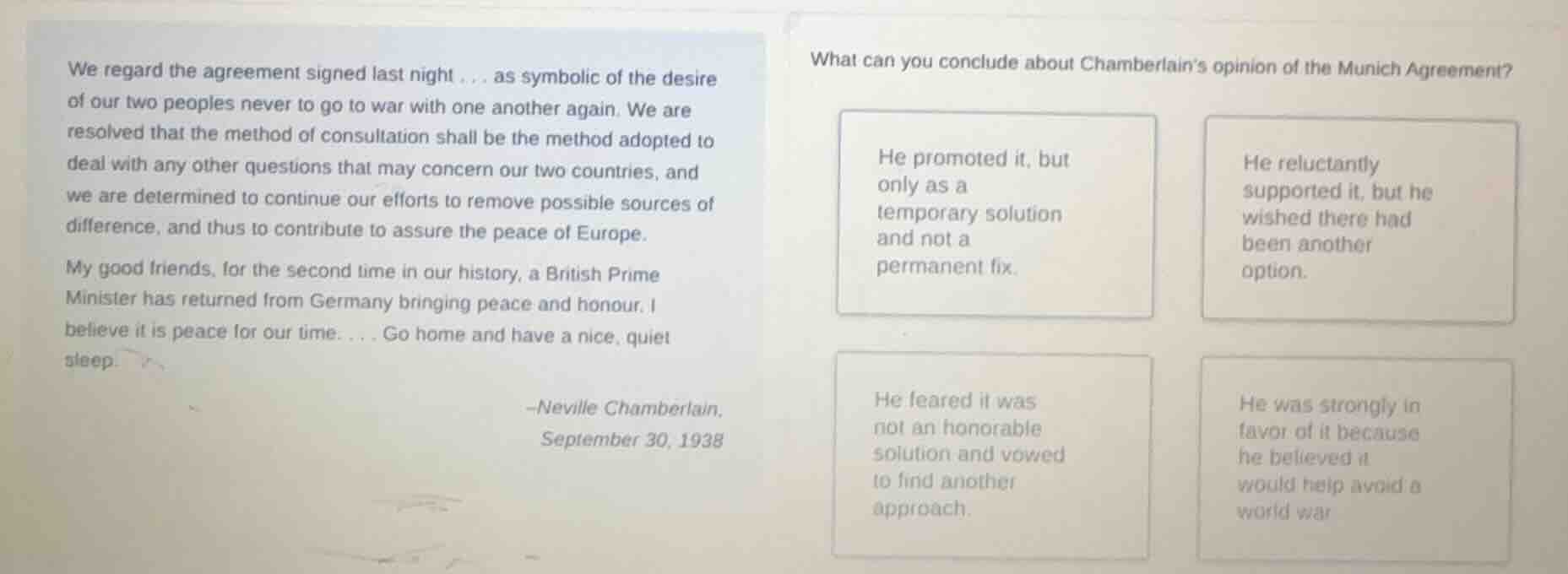
we regard the agreement signed last night . . . as symbolic of the desire of our two peoples never to go to war with one another again. we are resolved that the method of consultation shall be the method adopted to deal with any other questions that may concern our two countries, and we are determined to continue our efforts to remove possible sources of difference, and thus to contribute to assure the peace of europe.
my good friends, for the second time in our history, a british prime minister has returned from germany bringing peace and honour. i believe it is peace for our time. . . . go home and have a nice, quiet sleep.
-neville chamberlain,
september 30, 1938
what can you conclude about chamberlains opinion of the munich agreement?
he promoted it, but only as a temporary solution and not a permanent fix.
he reluctantly supported it, but he wished there had been another option.
he feared it was not an honorable solution and vowed to find another approach.
he was strongly in favor of it because he believed it would help avoid a world war
Chamberlain describes the Munich Agreement as bringing "peace and honour" and states "I believe it is peace for our time," framing it as a positive step to prevent war between the two peoples and secure European peace. His language expresses strong support tied to the belief it would avoid conflict.

Snap & solve any problem in the app
Get step-by-step solutions on Sovi AI
Photo-based solutions with guided steps
Explore more problems and detailed explanations
He was strongly in favor of it because he believed it would help avoid a world war