QUESTION IMAGE
Question
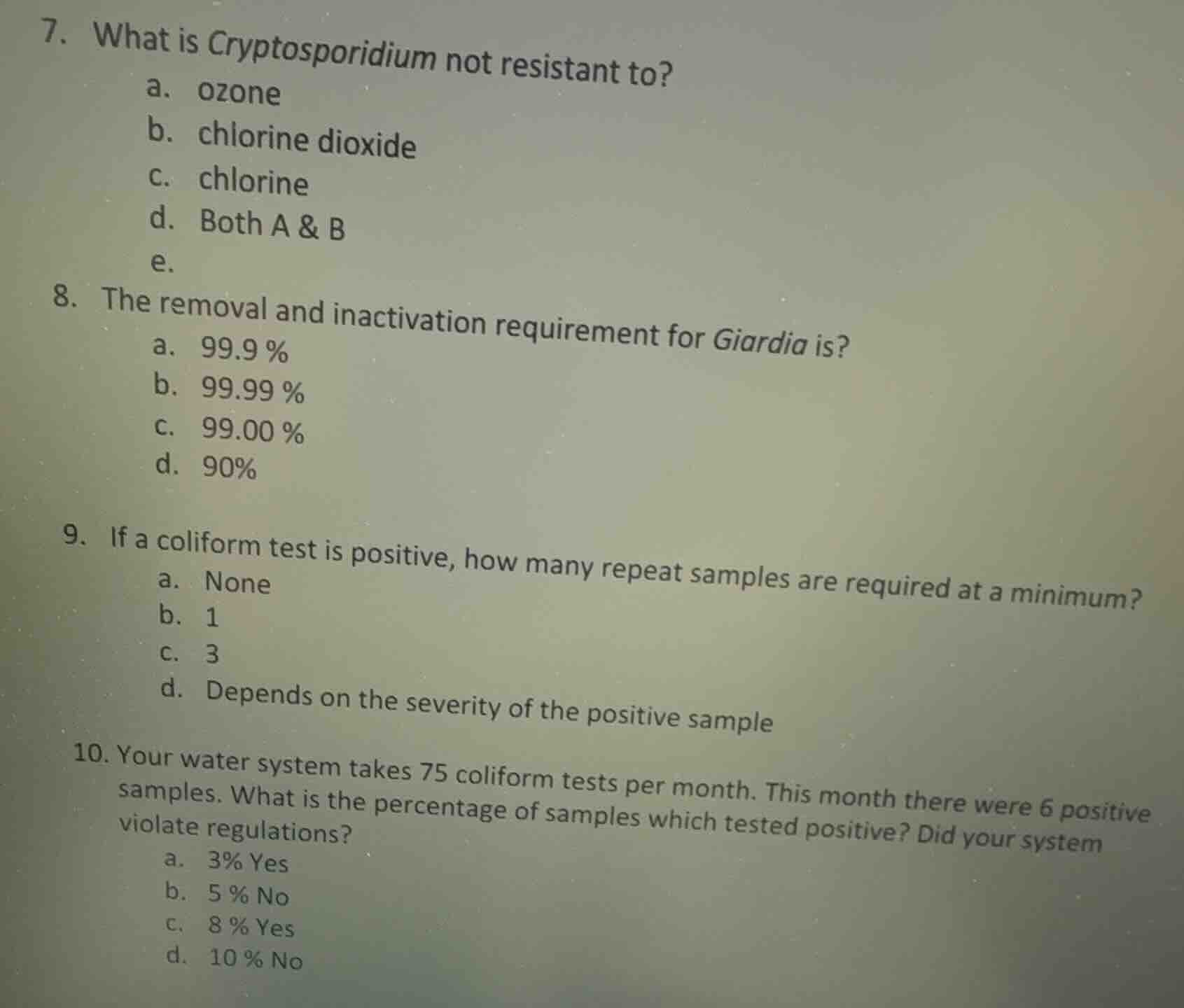
- what is cryptosporidium not resistant to?
a. ozone
b. chlorine dioxide
c. chlorine
d. both a & b
e.
- the removal and inactivation requirement for giardia is?
a. 99.9 %
b. 99.99 %
c. 99.00 %
d. 90%
- if a coliform test is positive, how many repeat samples are required at a minimum?
a. none
b. 1
c. 3
d. depends on the severity of the positive sample
- your water system takes 75 coliform tests per month. this month there were 6 positive samples. what is the percentage of samples which tested positive? did your system violate regulations?
a. 3% yes
b. 5 % no
c. 8 % yes
d. 10 % no
Brief Explanations
- Cryptosporidium is highly resistant to chlorine, but ozone and chlorine dioxide are effective at inactivating it, so it is not resistant to both.
- Standard water treatment requirements specify a 99.9% (3-log) removal/inactivation for Giardia.
- When a coliform test is positive, the minimum requirement is to collect 1 repeat sample to confirm the result.
- Calculate the positive percentage: $\frac{6}{75} \times 100 = 8\%$. Regulatory limits typically allow no more than 5% positive samples per month, so 8% violates regulations.

Snap & solve any problem in the app
Get step-by-step solutions on Sovi AI
Photo-based solutions with guided steps
Explore more problems and detailed explanations
- d. Both A & B
- a. 99.9 %
- b. 1
- c. 8 % Yes