QUESTION IMAGE
Question
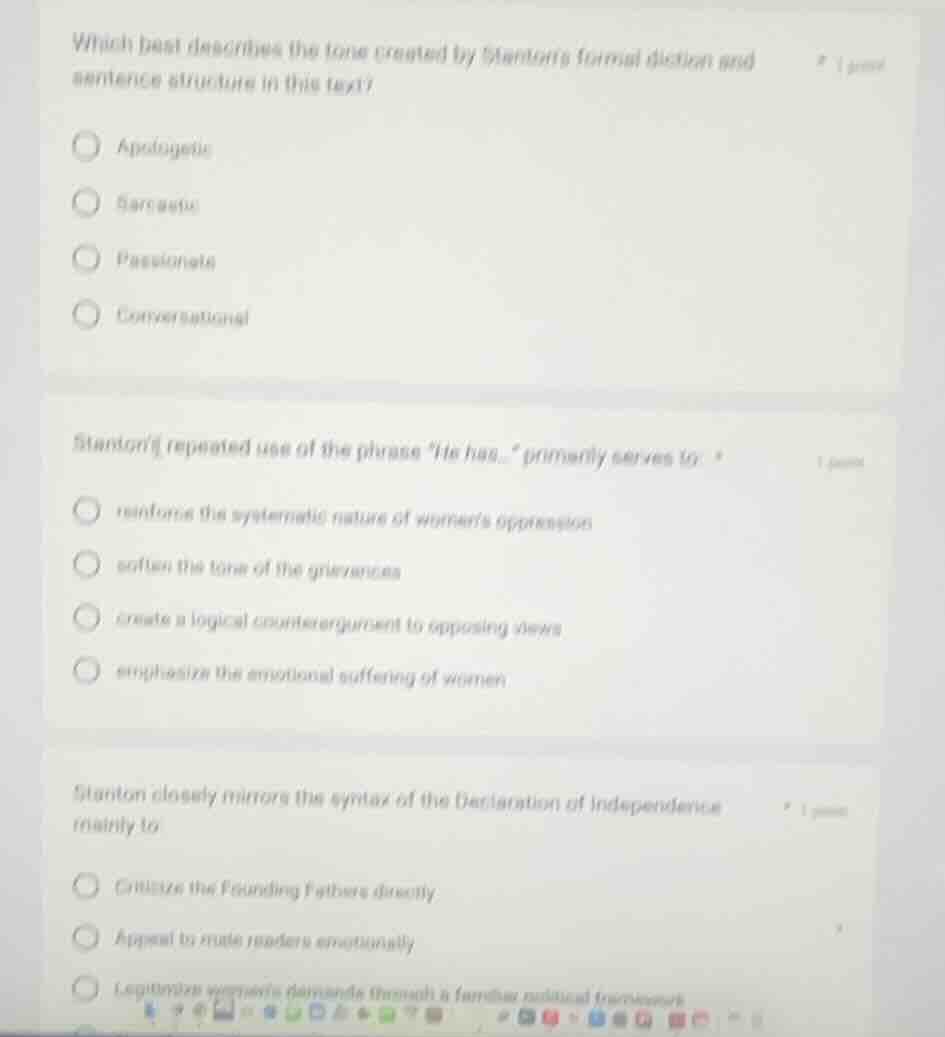
which best describes the tone created by stanton’s formal diction and sentence structure in this text?
apologetic
sarcastic
passionate
conversational
stanton’s repeated use of the phrase “he has...” primarily serves to
reinforce the systematic nature of women’s oppression
soften the tone of the grievances
create a logical counterargument to opposing views
emphasize the emotional suffering of women
stanton closely mirrors the syntax of the declaration of independence mainly to
criticize the founding fathers directly
appeal to male readers emotionally
legitimize women’s demands through a familiar political framework
First Question (Tone from Formal Diction/Sentence Structure)
Formal diction and sentence structure (like in Stanton’s work, e.g., "Declaration of Sentiments" - style) create a passionate tone as she argues for women’s rights with serious, forceful language. Apologetic is wrong (no apology), sarcastic (no irony), conversational (too formal for that). So passionate fits.
Stanton’s "He has..." (mirroring Declaration of Independence’s "He has" against King George) lists systemic oppressions of women. So it reinforces the systematic nature of women’s oppression. Soften tone? No, it’s forceful. Counterargument? No, it’s listing grievances. Emotional suffering? No, it’s about systemic acts, not emotions.
Mirroring the Declaration’s syntax (e.g., "We hold these truths..." structure) legitimizes women’s demands by using a familiar political framework (the founding document’s style) to frame their rights as equal. Criticize Founding Fathers directly? No, it’s about women’s rights, not attacking them. Appeal emotionally? Syntax is logical/political, not emotional. So "Legitimize women’s demands through a familiar political framework" is correct.

Snap & solve any problem in the app
Get step-by-step solutions on Sovi AI
Photo-based solutions with guided steps
Explore more problems and detailed explanations
Passionate (the option with "Passionate")