QUESTION IMAGE
Question
and by which branch—they are an example of. drag each description to the correct spot on the diag
judicial
the supreme court
can declare laws
unconstitutional
legislative
u.s. capitol
legislative
u.s. capitol
can declare executive
actions unconstitutional
executive
the white house
judicial
the supreme court
can override
a presidential veto
executive
the white house
Brief Explanations
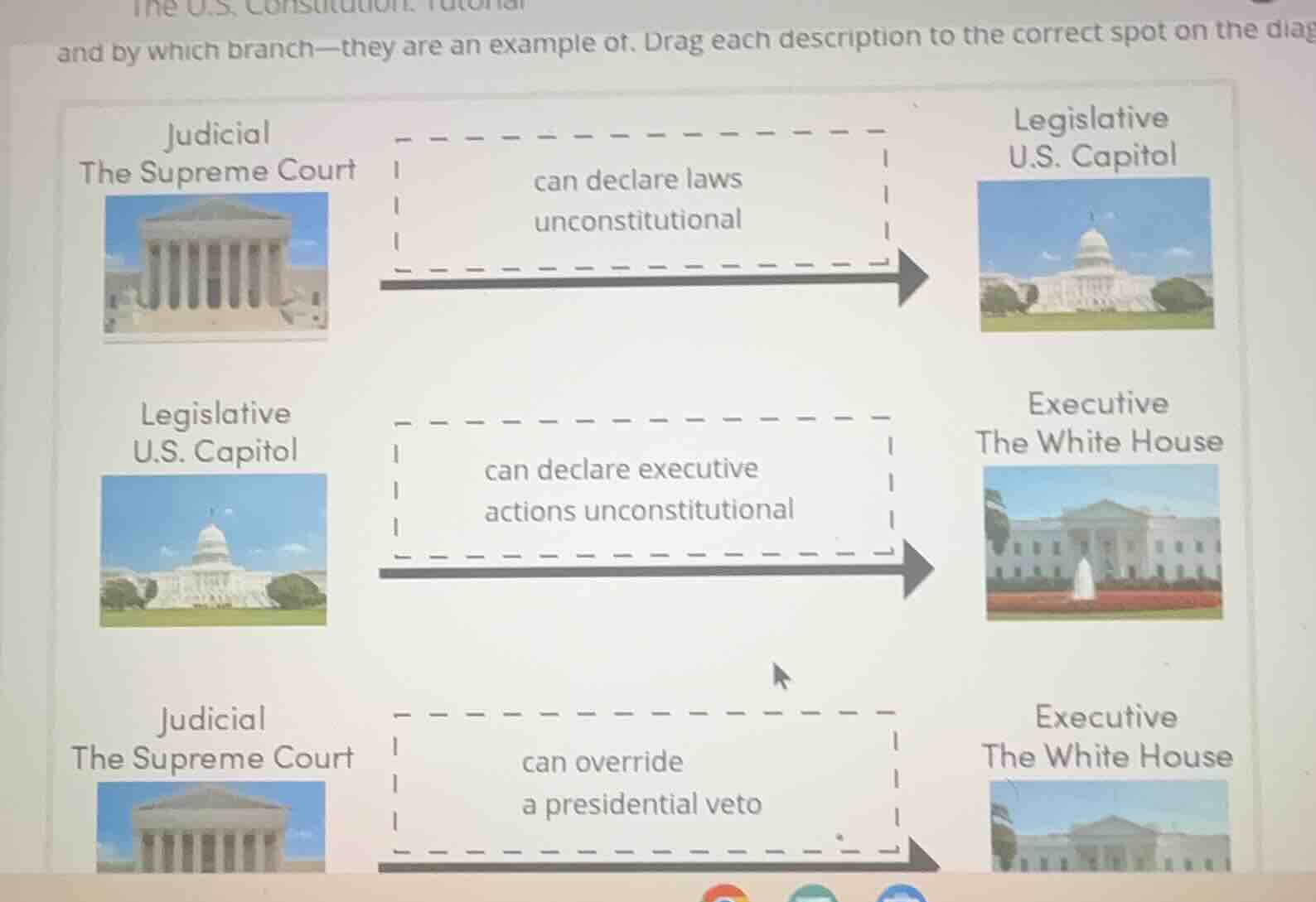
These are checks and balances of the U.S. government. The Judicial branch (Supreme Court) reviews actions of the other two branches. The Legislative branch (Congress) has power over presidential vetoes.
- The Supreme Court (Judicial) can declare laws made by the Legislative branch unconstitutional, so this description links Judicial → Legislative.
- The Supreme Court (Judicial) can declare executive actions from the Executive branch unconstitutional, so this description links Judicial → Executive (the original pairing of Legislative → Executive is incorrect).
- The Legislative branch (Congress) can override a presidential veto from the Executive branch, so this description links Legislative → Executive (the original pairing of Judicial → Executive is incorrect).

Snap & solve any problem in the app
Get step-by-step solutions on Sovi AI
Photo-based solutions with guided steps
Explore more problems and detailed explanations
- Judicial (The Supreme Court) → Legislative (U.S. Capitol): can declare laws unconstitutional
- Judicial (The Supreme Court) → Executive (The White House): can declare executive actions unconstitutional
- Legislative (U.S. Capitol) → Executive (The White House): can override a presidential veto