QUESTION IMAGE
Question
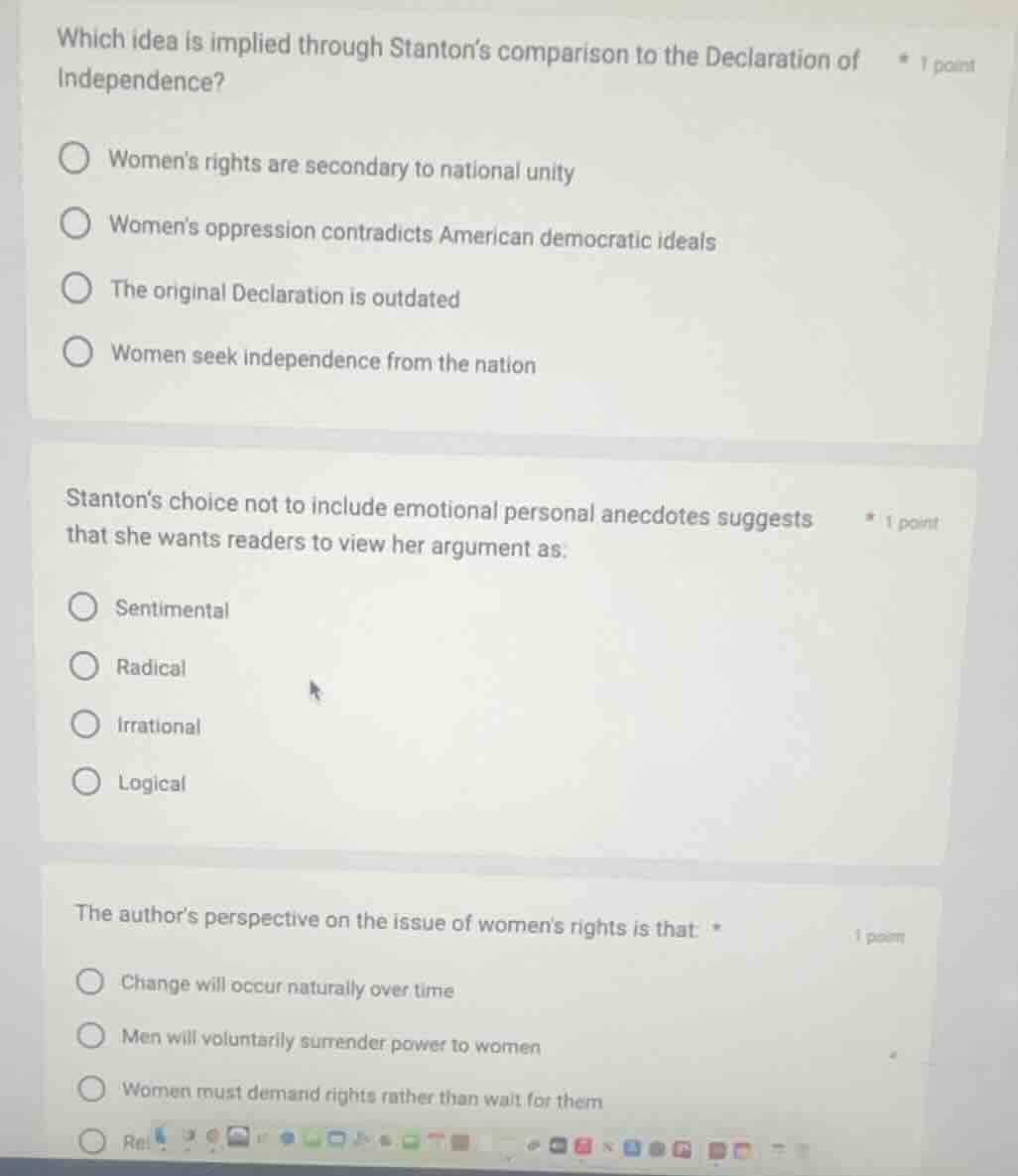
which idea is implied through stanton’s comparison to the declaration of independence?
women’s rights are secondary to national unity
women’s oppression contradicts american democratic ideals
the original declaration is outdated
women seek independence from the nation
stanton’s choice not to include emotional personal anecdotes suggests that she wants readers to view her argument as:
sentimental
radical
irrational
logical
the author’s perspective on the issue of women’s rights is that:
change will occur naturally over time
men will voluntarily surrender power to women
women must demand rights rather than wait for them
rel
First Question (Which idea is implied through Stanton’s comparison to the Declaration of Independence?):
The Declaration of Independence is centered on democratic ideals like equality and rights for people. Stanton comparing women's rights to it implies that oppressing women goes against these American democratic ideals. The other options are incorrect: women's rights being secondary to national unity is not implied, the original Declaration being outdated is not the point of the comparison, and women seeking independence from the nation misinterprets the comparison (it's about rights, not leaving the nation).
By avoiding emotional anecdotes, Stanton is aiming for a logical argument, not one based on sentiment. "Radical" and "irrational" don't fit—she wants a reasoned, logical approach, so "Logical" is correct.
Stanton's work on women's rights emphasizes that women need to actively demand their rights instead of waiting passively. The idea that change occurs naturally or men will voluntarily surrender power is not aligned with her perspective. So the correct option is that women must demand rights rather than wait for them.

Snap & solve any problem in the app
Get step-by-step solutions on Sovi AI
Photo-based solutions with guided steps
Explore more problems and detailed explanations
B. Women’s oppression contradicts American democratic ideals