QUESTION IMAGE
Question
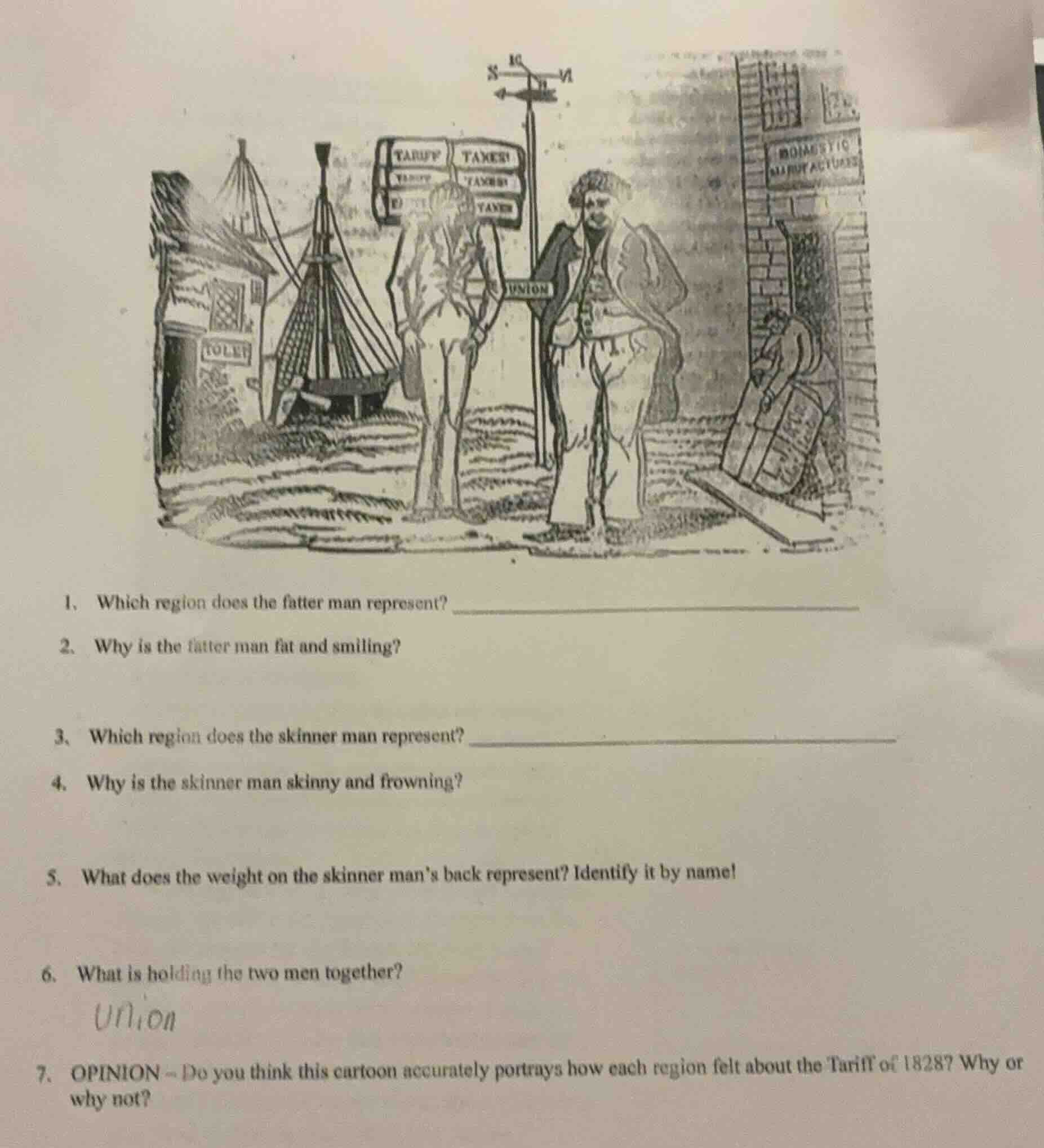
- which region does the fatter man represent?
- why is the fatter man fat and smiling?
- which region does the skinnier man represent?
- why is the skinnier man skinny and frowning?
- what does the weight on the skinnier man’s back represent? identify it by name!
- what is holding the two men together?
union
- opinion - do you think this cartoon accurately portrays how each region felt about the tariff of 1828? why or why not?
Brief Explanations
- The fatter man stands near a "Domestic Manufactures" building, which aligns with the Northern U.S. economy that benefited from protective tariffs.
- Tariffs like the 1828 Tariff raised prices on imported goods, making Northern manufactured products more competitive, leading to economic prosperity for the region.
- The skinnier man stands near a port/ship, representing the Southern U.S., which relied heavily on imported goods and cash crop exports.
- The tariff forced Southerners to pay higher prices for imported goods, and foreign nations retaliated with tariffs on Southern cash crop exports, harming their economy.
- The weight directly references the 1828 Tariff, which Southerners saw as an unfair economic burden.
- The label "UNION" is physically connecting the two figures, representing the United States federal union that binds the regions together despite their conflicts.
- The cartoon captures the core regional divide: the North gained economic benefits while the South faced severe economic harm from the tariff. It simplifies the nuance but accurately reflects the dominant regional sentiments of the time.

Snap & solve any problem in the app
Get step-by-step solutions on Sovi AI
Photo-based solutions with guided steps
Explore more problems and detailed explanations
- The Northern United States (Northeast)
- He benefits from the tariff: higher prices on imports made Northern manufactured goods more profitable, leading to economic growth and wealth for the region.
- The Southern United States
- The tariff harmed his economy: Southerners paid more for imported goods, and foreign countries imposed retaliatory tariffs on Southern cash crop exports, causing financial hardship.
- The Tariff of 1828 (also called the "Tariff of Abominations")
- The Union (the United States federal union)
- Yes, it accurately portrays the core regional split: the North thrived economically under the protective tariff, while the South suffered severe economic consequences, creating bitter resentment. The cartoon effectively visualizes this unequal impact, even if it simplifies the full complexity of regional politics.