QUESTION IMAGE
Question
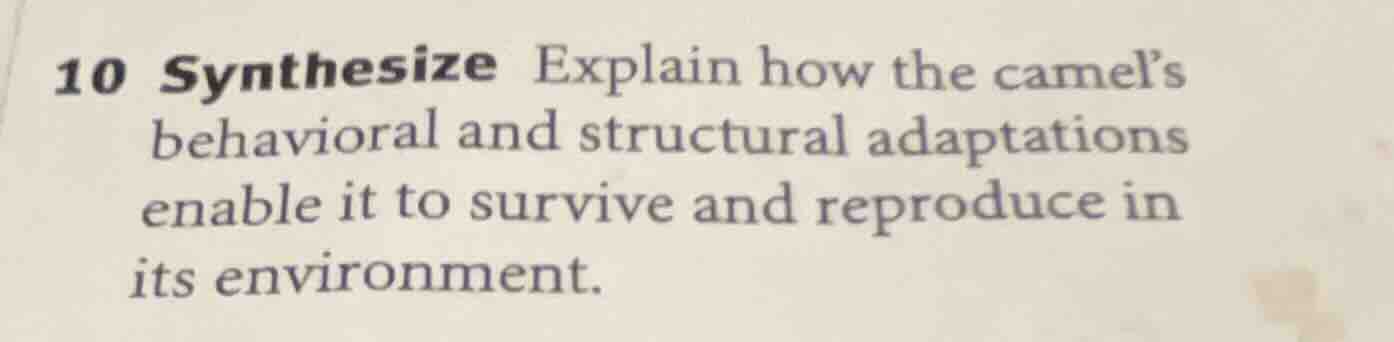
10 synthesize explain how the camel’s behavioral and structural adaptations enable it to survive and reproduce in its environment.
Camels have structural adaptations that help them survive arid, hot environments: humps store fat (not water) for energy when food is scarce; thick fur and skin insulate against extreme heat and cold; wide, padded feet prevent sinking in sand; and specialized kidneys and intestines conserve water by producing concentrated urine and dry feces. Behavioral adaptations include being crepuscular (active at dawn/dusk) to avoid midday heat, and grouping in herds for protection from predators and to share resources, which supports survival and mating opportunities. These traits let camels access limited resources, avoid environmental stressors, and successfully find mates to reproduce in harsh desert habitats.

Snap & solve any problem in the app
Get step-by-step solutions on Sovi AI
Photo-based solutions with guided steps
Explore more problems and detailed explanations
Camels survive and reproduce in arid environments through a combination of structural and behavioral adaptations:
- Structural adaptations:
- Humps store fat for energy during food scarcity, allowing long periods without eating.
- Thick skin/fur insulates against extreme hot and cold temperatures, reducing water loss via sweating.
- Wide, padded feet distribute weight to avoid sinking in sand, enabling travel to find food/water.
- Specialized excretory systems produce concentrated urine and dry feces, minimizing water loss.
- Behavioral adaptations:
- They are active at dawn/dusk (crepuscular) to avoid the hottest midday temperatures, reducing water and energy expenditure.
- Living in herds provides protection from predators, and increases access to mating partners, supporting successful reproduction.
These combined traits let camels efficiently use limited resources, withstand harsh conditions, and maintain reproductive success in desert habitats.