QUESTION IMAGE
Question
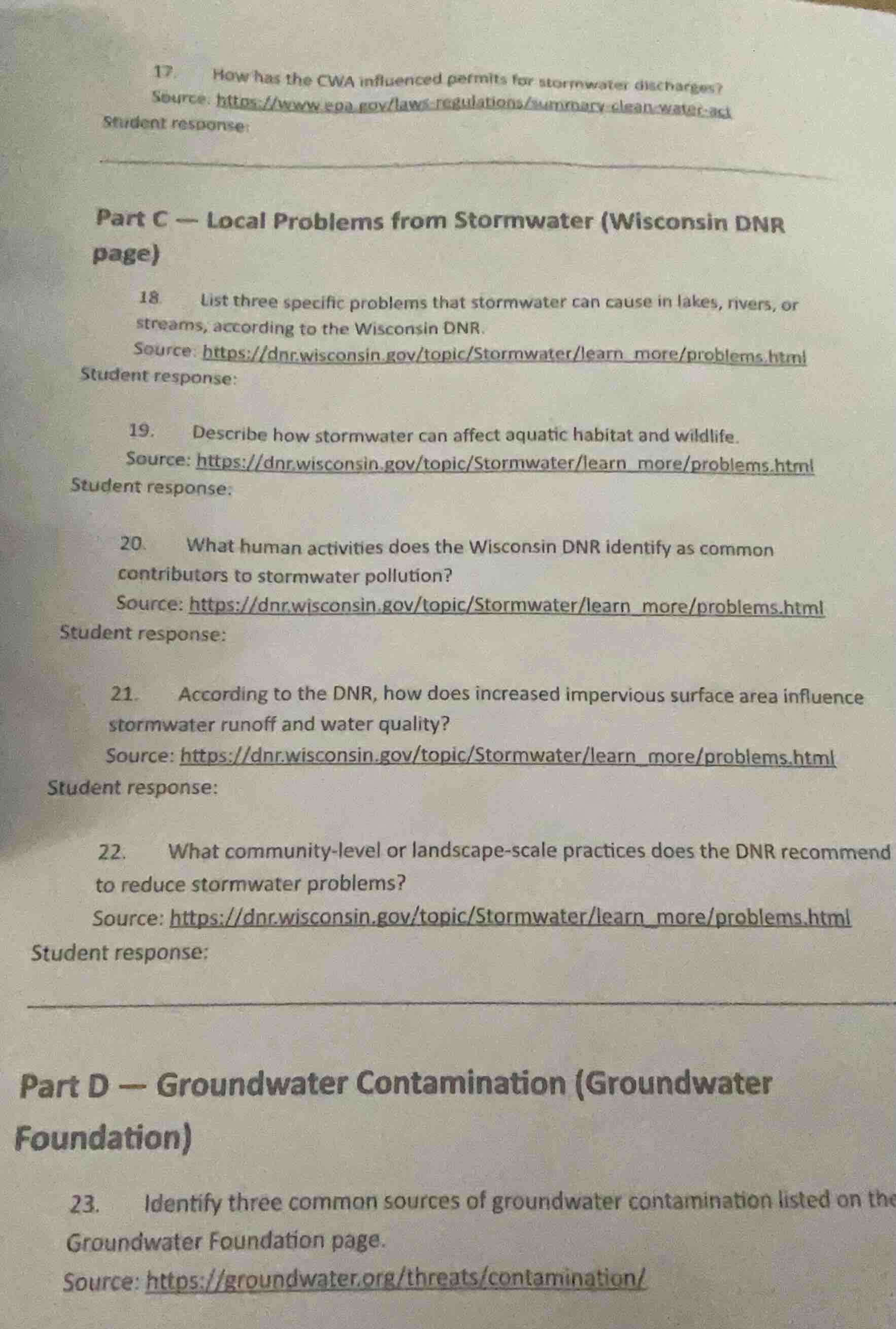
- how has the cwa influenced permits for stormwater discharges?
source: https://www.epa.gov/laws-regulations/summary-clean-water-act
student response:
part c — local problems from stormwater (wisconsin dnr page)
- list three specific problems that stormwater can cause in lakes, rivers, or streams, according to the wisconsin dnr.
source: https://dnr.wisconsin.gov/topic/stormwater/learn_more/problems.html
student response:
- describe how stormwater can affect aquatic habitat and wildlife.
source: https://dnr.wisconsin.gov/topic/stormwater/learn_more/problems.html
student response:
- what human activities does the wisconsin dnr identify as common contributors to stormwater pollution?
source: https://dnr.wisconsin.gov/topic/stormwater/learn_more/problems.html
student response:
- according to the dnr, how does increased impervious surface area influence stormwater runoff and water quality?
source: https://dnr.wisconsin.gov/topic/stormwater/learn_more/problems.html
student response:
- what community - level or landscape - scale practices does the dnr recommend to reduce stormwater problems?
source: https://dnr.wisconsin.gov/topic/stormwater/learn_more/problems.html
student response:
part d — groundwater contamination (groundwater foundation)
- identify three common sources of groundwater contamination listed on the groundwater foundation page.
source: https://groundwater.org/threats/contamination/
To answer these questions, you would need to visit the provided URLs and extract the relevant information:
Question 17: How has the CWA influenced permits for stormwater discharges?
Visit the EPA’s Clean Water Act summary page (https://www.epa.gov/laws-regulations/summary-clean-water-act) to find how the CWA (Clean Water Act) regulates stormwater discharge permits (e.g., requiring permits for certain stormwater discharges to protect water quality).
Question 18: List three specific problems stormwater causes in lakes/rivers/streams (Wisconsin DNR).
Visit the Wisconsin DNR stormwater problems page (https://dnr.wisconsin.gov/topic/Stormwater/learn_more/problems.html). Common issues include:
- Erosion/Sedimentation: Stormwater runoff can erode soil, depositing sediment that clouds water, smothers aquatic life, and clogs habitats.
- Pollution (Nutrients/Contaminants): Runoff carries fertilizers (nitrogen/phosphorus), pesticides, oil, or chemicals into water, causing algal blooms, oxygen depletion, or toxic conditions.
- Habitat Destruction: Increased flow/erosion can alter stream channels, destroy aquatic vegetation, and displace wildlife.
Question 19: How does stormwater affect aquatic habitat/wildlife?
From the same DNR page:
- Sedimentation from runoff buries spawning beds, clogs gills of fish, and reduces light for aquatic plants.
- Pollutants (e.g., nutrients, chemicals) cause algal blooms, which deplete oxygen (killing fish) or release toxins (harming wildlife).
- Altered flow (from impervious surfaces) can dry out habitats, increase flooding, or change water temperature (stressing species adapted to stable conditions).
Question 20: Human activities contributing to stormwater pollution (Wisconsin DNR).
From the DNR page, common activities include:
- Urban Development (Impervious Surfaces): Roads, parking lots, and buildings increase runoff (reducing infiltration) and carry oil, heavy metals, or debris.
- Agriculture: Fertilizer/pesticide use, livestock waste, and soil erosion from fields.
- Industrial/Commercial Activities: Chemical spills, improper waste disposal, or industrial runoff.
- Residential Practices: Lawn fertilizers, pet waste, or improper disposal of household chemicals.
Question 21: How does increased impervious surface area influence stormwater runoff and water quality?
From the DNR page:
- Runoff: Impervious surfaces (e.g., pavement) prevent water from soaking into the ground, increasing the volume and speed of stormwater runoff (leading to flooding, erosion, and faster transport of pollutants).
- Water Quality: Faster runoff picks up more pollutants (sediment, chemicals, nutrients) and delivers them to water bodies, degrading quality (e.g., algal blooms, sedimentation, toxic contamination).
Question 22: Community/landscape practices to reduce stormwater problems (Wisconsin DNR).
From the DNR page, recommended practices include:
- Green Infrastructure: Rain gardens, bioswales, and permeable pavement to capture/filter runoff.
- Land Use Planning: Preserving natural areas (wetlands, forests) that absorb runoff, and limiting impervious surfaces in development.
- Erosion Control: Planting native vegetation, stabilizing stream banks, or using sediment basins during construction.
- Public Education/Outreach: Encouraging residents to reduce fertilizer use, pick up pet waste, and maintain rain barrels/rain gardens.
Question 23: Three common sources of groundwater contamination (Groundwater Foundation).
Visit the Groundwater Foundation page…

Snap & solve any problem in the app
Get step-by-step solutions on Sovi AI
Photo-based solutions with guided steps
Explore more problems and detailed explanations
To answer these questions, you would need to visit the provided URLs and extract the relevant information:
Question 17: How has the CWA influenced permits for stormwater discharges?
Visit the EPA’s Clean Water Act summary page (https://www.epa.gov/laws-regulations/summary-clean-water-act) to find how the CWA (Clean Water Act) regulates stormwater discharge permits (e.g., requiring permits for certain stormwater discharges to protect water quality).
Question 18: List three specific problems stormwater causes in lakes/rivers/streams (Wisconsin DNR).
Visit the Wisconsin DNR stormwater problems page (https://dnr.wisconsin.gov/topic/Stormwater/learn_more/problems.html). Common issues include:
- Erosion/Sedimentation: Stormwater runoff can erode soil, depositing sediment that clouds water, smothers aquatic life, and clogs habitats.
- Pollution (Nutrients/Contaminants): Runoff carries fertilizers (nitrogen/phosphorus), pesticides, oil, or chemicals into water, causing algal blooms, oxygen depletion, or toxic conditions.
- Habitat Destruction: Increased flow/erosion can alter stream channels, destroy aquatic vegetation, and displace wildlife.
Question 19: How does stormwater affect aquatic habitat/wildlife?
From the same DNR page:
- Sedimentation from runoff buries spawning beds, clogs gills of fish, and reduces light for aquatic plants.
- Pollutants (e.g., nutrients, chemicals) cause algal blooms, which deplete oxygen (killing fish) or release toxins (harming wildlife).
- Altered flow (from impervious surfaces) can dry out habitats, increase flooding, or change water temperature (stressing species adapted to stable conditions).
Question 20: Human activities contributing to stormwater pollution (Wisconsin DNR).
From the DNR page, common activities include:
- Urban Development (Impervious Surfaces): Roads, parking lots, and buildings increase runoff (reducing infiltration) and carry oil, heavy metals, or debris.
- Agriculture: Fertilizer/pesticide use, livestock waste, and soil erosion from fields.
- Industrial/Commercial Activities: Chemical spills, improper waste disposal, or industrial runoff.
- Residential Practices: Lawn fertilizers, pet waste, or improper disposal of household chemicals.
Question 21: How does increased impervious surface area influence stormwater runoff and water quality?
From the DNR page:
- Runoff: Impervious surfaces (e.g., pavement) prevent water from soaking into the ground, increasing the volume and speed of stormwater runoff (leading to flooding, erosion, and faster transport of pollutants).
- Water Quality: Faster runoff picks up more pollutants (sediment, chemicals, nutrients) and delivers them to water bodies, degrading quality (e.g., algal blooms, sedimentation, toxic contamination).
Question 22: Community/landscape practices to reduce stormwater problems (Wisconsin DNR).
From the DNR page, recommended practices include:
- Green Infrastructure: Rain gardens, bioswales, and permeable pavement to capture/filter runoff.
- Land Use Planning: Preserving natural areas (wetlands, forests) that absorb runoff, and limiting impervious surfaces in development.
- Erosion Control: Planting native vegetation, stabilizing stream banks, or using sediment basins during construction.
- Public Education/Outreach: Encouraging residents to reduce fertilizer use, pick up pet waste, and maintain rain barrels/rain gardens.
Question 23: Three common sources of groundwater contamination (Groundwater Foundation).
Visit the Groundwater Foundation page (https://groundwater.org/threats/contamination/). Common sources:
- Septic Systems: Leaking septic tanks release bacteria, viruses, or nutrients into groundwater.
- Agricultural Chemicals: Fertilizers, pesticides, or manure seep into aquifers (especially with poor soil infiltration).
- Industrial/Commercial Waste: Leaking storage tanks (oil, chemicals), landfills, or improper disposal of hazardous materials.
To complete these, follow the links, read the content, and summarize the DNR/Groundwater Foundation’s specific recommendations/information.