QUESTION IMAGE
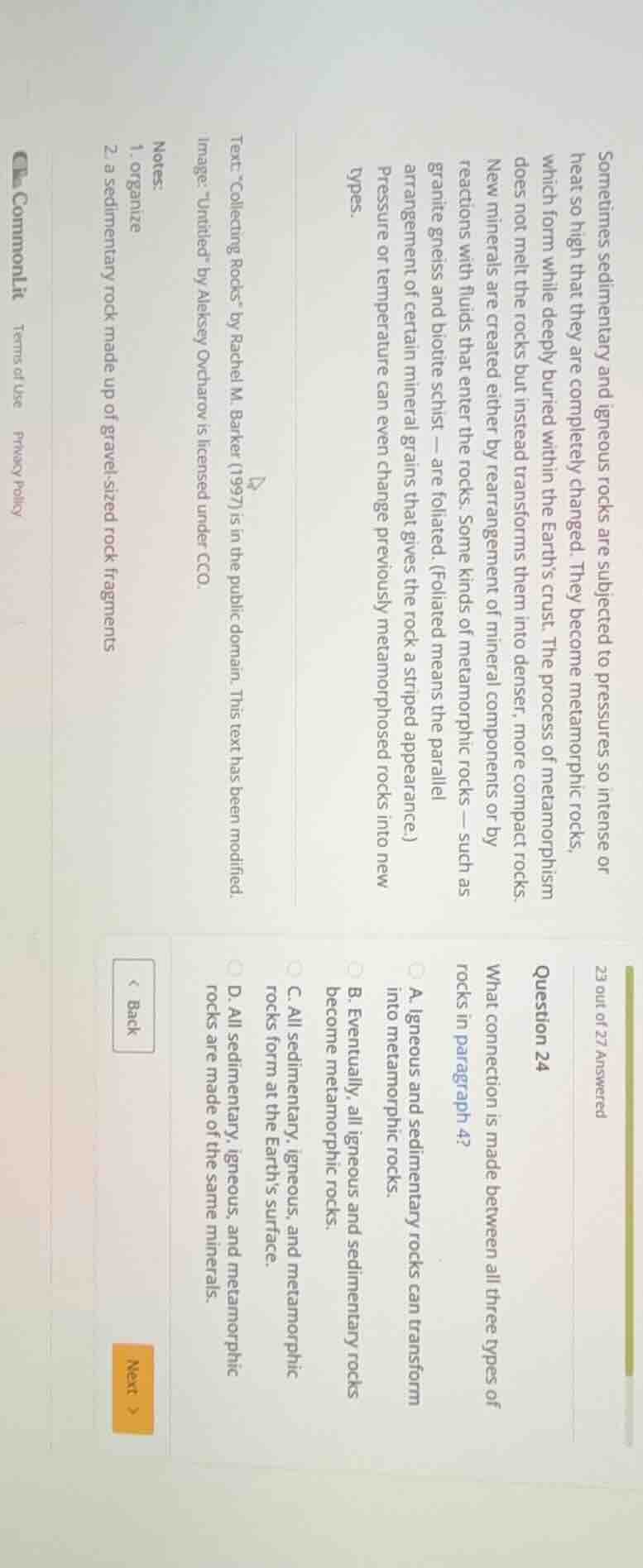
Question
23 out of 27 answered
question 24
what connection is made between all three types of
rocks in paragraph 4?
a. igneous and sedimentary rocks can transform
into metamorphic rocks.
b. eventually, all igneous and sedimentary rocks
become metamorphic rocks.
c. all sedimentary, igneous, and metamorphic
rocks form at the earth’s surface.
d. all sedimentary, igneous, and metamorphic
rocks are made of the same minerals.
sometimes sedimentary and igneous rocks are subjected to pressures so intense or
heat so high that they are completely changed. they become metamorphic rocks,
which form while deeply buried within the earth’s crust. the process of metamorphism
does not melt the rocks but instead transforms them into denser, more compact rocks.
new minerals are created either by rearrangement of mineral components or by
reactions with fluids that enter the rocks. some kinds of metamorphic rocks — such as
granite gneiss and biotite schist — are foliated. (foliated means the parallel
arrangement of certain mineral grains that gives the rock a striped appearance.)
pressure or temperature can even change previously metamorphosed rocks into new
types.
text “collecting rocks” by rachel m barker (1997) is in the public domain. this text has been modified.
image: “untitled” by aleksey ovcharov is licensed under cc0
notes:
- organize
- a sedimentary rock made up of gravel - sized rock fragments
To solve this, we analyze each option:
- Option A: The text says "Sometimes sedimentary and igneous rocks are subjected to pressures... they are completely changed... become metamorphic rocks" and also "pressure or temperature can even change previously metamorphosed rocks into new types". This shows igneous and sedimentary can become metamorphic, and metamorphic can also change into new types (implying a cycle where all three can transform into each other).
- Option B: The text doesn't state all igneous and sedimentary will eventually become metamorphic; it's about when subjected to certain conditions, not an inevitability.
- Option C: The text says metamorphism happens "while deeply buried within the Earth’s crust", not at the surface.
- Option D: The text talks about rearrangement of mineral components and new minerals being created, so they aren't made of the same minerals.

Snap & solve any problem in the app
Get step-by-step solutions on Sovi AI
Photo-based solutions with guided steps
Explore more problems and detailed explanations
A. Igneous and sedimentary rocks can transform into metamorphic rocks.