QUESTION IMAGE
Question
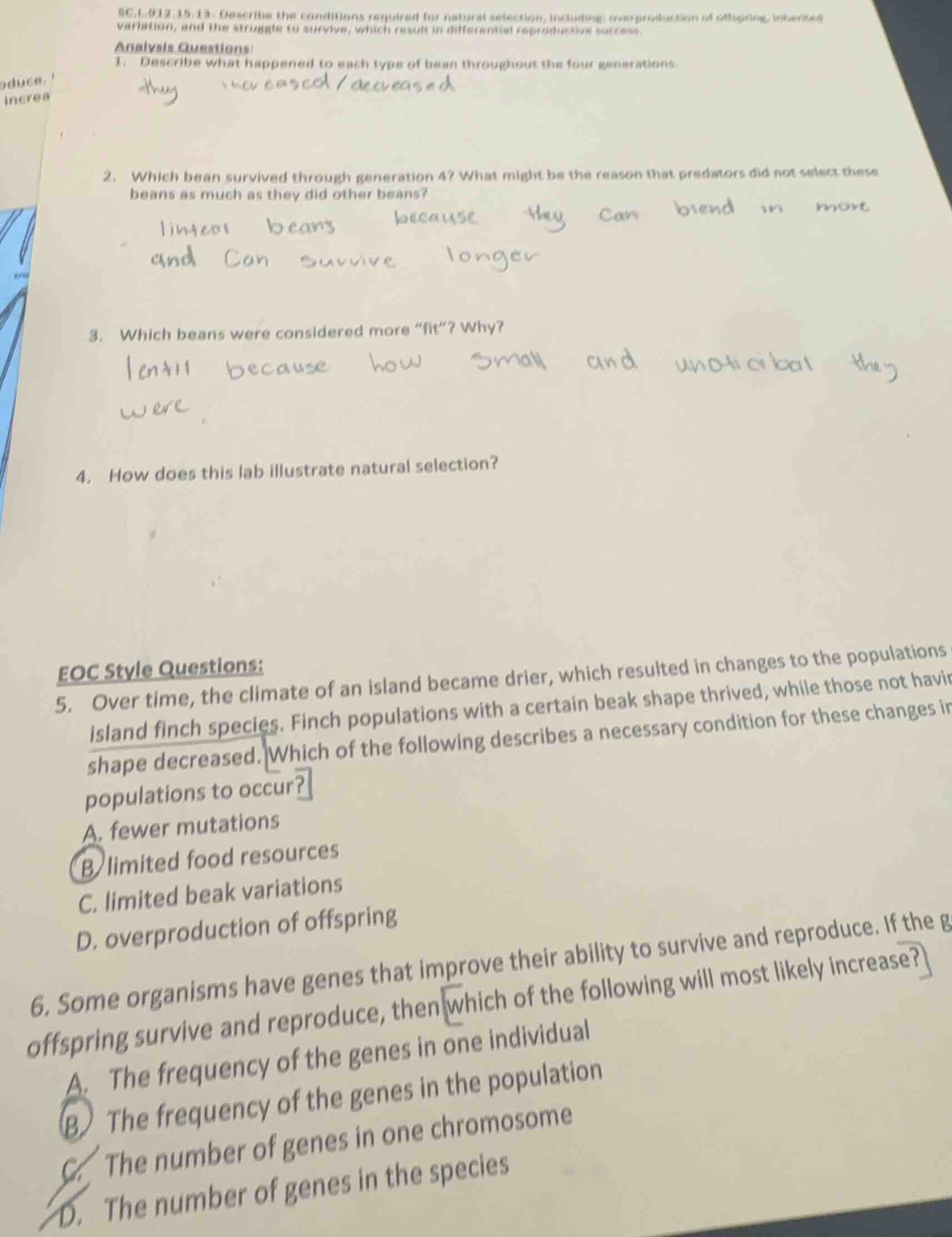
5c.l.912.15.13: describe the conditions required for natural selection, including: overproduction of offspring, inherited variation, and the struggle to survive, which result in differential reproduction success.
analysis questions:
- describe what happened to each type of bean throughout the four generations.
- which bean survived through generation 4? what might be the reason that predators did not select these beans as much as they did other beans?
- which beans were considered more \fit\? why?
- how does this lab illustrate natural selection?
eoc style questions:
- over time, the climate of an island became drier, which resulted in changes to the populations of island finch species. finch populations with a certain beak shape thrived, while those not having that beak shape decreased. which of the following describes a necessary condition for these changes in populations to occur?
a. fewer mutations
b. limited food resources
c. limited beak variations
d. overproduction of offspring
- some organisms have genes that improve their ability to survive and reproduce. if the offspring survive and reproduce, then which of the following will most likely increase?
a. the frequency of the genes in one individual
b. the frequency of the genes in the population
c. the number of genes in one chromosome
d. the number of genes in the species
Brief Explanations
- For question 4: The bean lab shows natural selection by having variation in bean traits, a "struggle" where predators (simulated selection) pick beans, and differential survival/reproduction—beans with traits that made them harder to find (like small lentils) survived and became more common over generations, matching natural selection's core mechanisms.
- For question 5: Natural selection leading to population changes requires selective pressure; limited food resources mean finches with beaks suited to available food survive, driving population shifts.
- For question 6: Genes that boost survival/reproduction will be passed to more offspring, so their frequency in the whole population rises over time.

Snap & solve any problem in the app
Get step-by-step solutions on Sovi AI
Photo-based solutions with guided steps
Explore more problems and detailed explanations
- This lab illustrates natural selection by demonstrating the key conditions: variation in bean traits (size, visibility), a struggle for survival (predator "selection" of beans), and differential reproductive success—beans with traits that made them less likely to be selected (like small, hard-to-see lentils) survived in greater numbers, increased in population over generations, while more visible bean types decreased, mirroring how favorable traits become more common in natural populations.
- B. limited food resources
- B. The frequency of the genes in the population