QUESTION IMAGE
Question
americans see the future of space exploration, 50 years after the first moon landing
how americans see the future of space exploration, 50 years after the first moon landing
by courtney johnson
before you read, take note of text features, genre characteristics, and text structures.
highlight examples of text features in yellow and evidence of text structures in pink.
use sticky notes to record notes about genre characteristics.
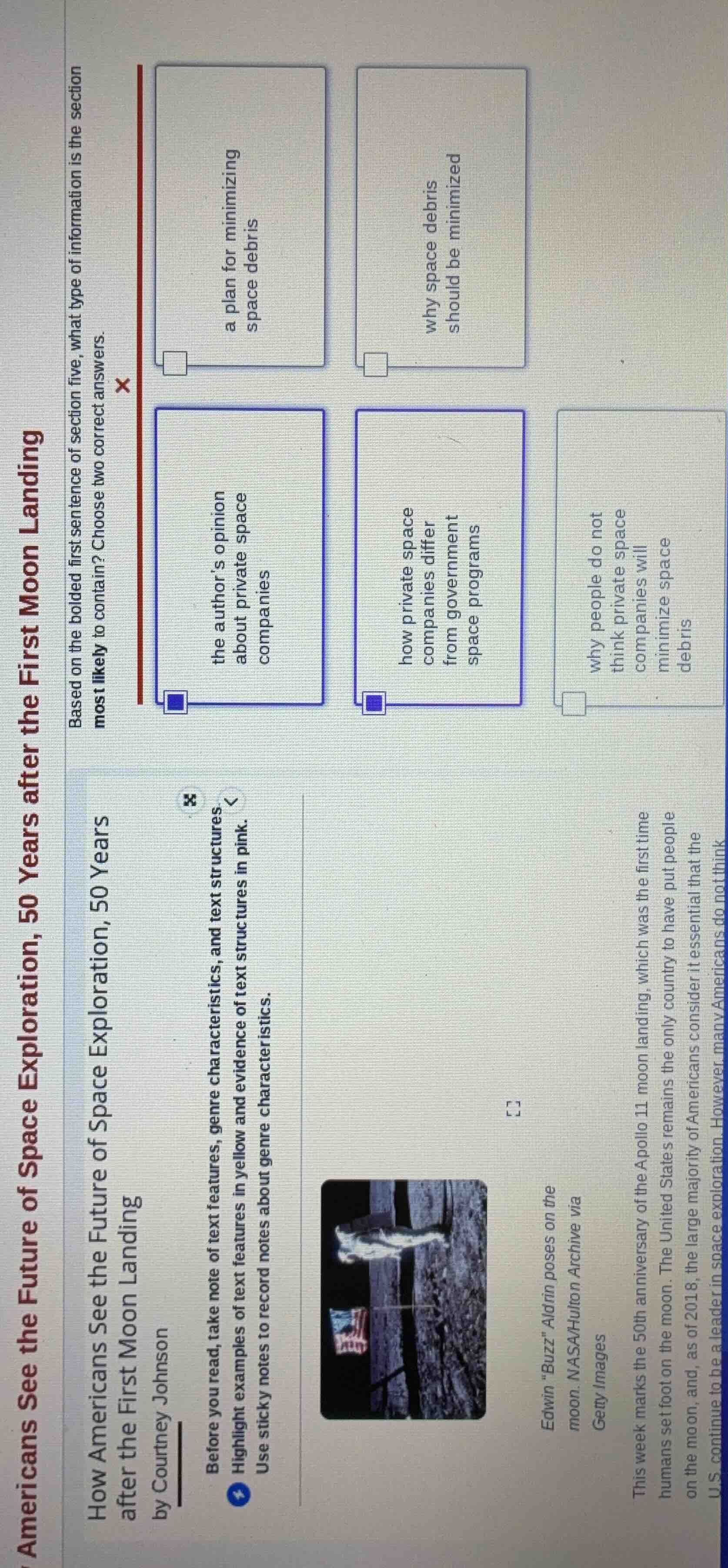
edwin \buzz\ aldrin poses on the moon. nasa/hulton archive via getty images
this week marks the 50th anniversary of the apollo 11 moon landing, which was the first time humans set foot on the moon. the united states remains the only country to have put people on the moon, and, as of 2018, the large majority of americans consider it essential that the u.s. continue to be a leader in space exploration. however, many americans do not think
based on the bolded first sentence of section five, what type of information is the section most likely to contain? choose two correct answers.
□ a plan for minimizing space debris
□ why space debris should be minimized
■ the author’s opinion about private space companies
■ how private space companies differ from government space programs
□ why people do not think private space companies will minimize space debris
To solve this question, we analyze the context of the article titled "How Americans See the Future of Space Exploration, 50 Years after the First Moon Landing" and the options provided:
- Option 1: "the author’s opinion about private space companies"
Articles about public perception (how Americans see space exploration) and the future of space exploration often include the author’s perspective on key players like private space companies. This is relevant to the article’s theme.
- Option 2: "how private space companies differ from government space programs"
Comparing private and government space programs is a common topic in discussions about the future of space exploration (especially as private companies play a growing role). This aligns with the article’s focus.
- Option 3: "a plan for minimizing space debris"
The article’s title and visible text focus on public perception and the future of space exploration, not specific plans for space debris. This is less relevant.
- Option 4: "why space debris should be minimized"
Similar to Option 3, the article’s theme (public perception of space exploration’s future) does not center on space debris justification.
- Option 5: "why people do not think private companies will minimize space debris"
The article’s focus is on broader public views of space exploration’s future, not specifically on opinions about private companies and space debris. This is too narrow.
The article focuses on public perception of space exploration’s future and the role of private companies. The two most relevant options are those discussing the author’s opinion on private space companies (aligning with thematic analysis) and comparing private vs. government space programs (a key topic in space exploration discourse).

Snap & solve any problem in the app
Get step-by-step solutions on Sovi AI
Photo-based solutions with guided steps
Explore more problems and detailed explanations
- the author’s opinion about private space companies
- how private space companies differ from government space programs