QUESTION IMAGE
Question
analyzing electric charge
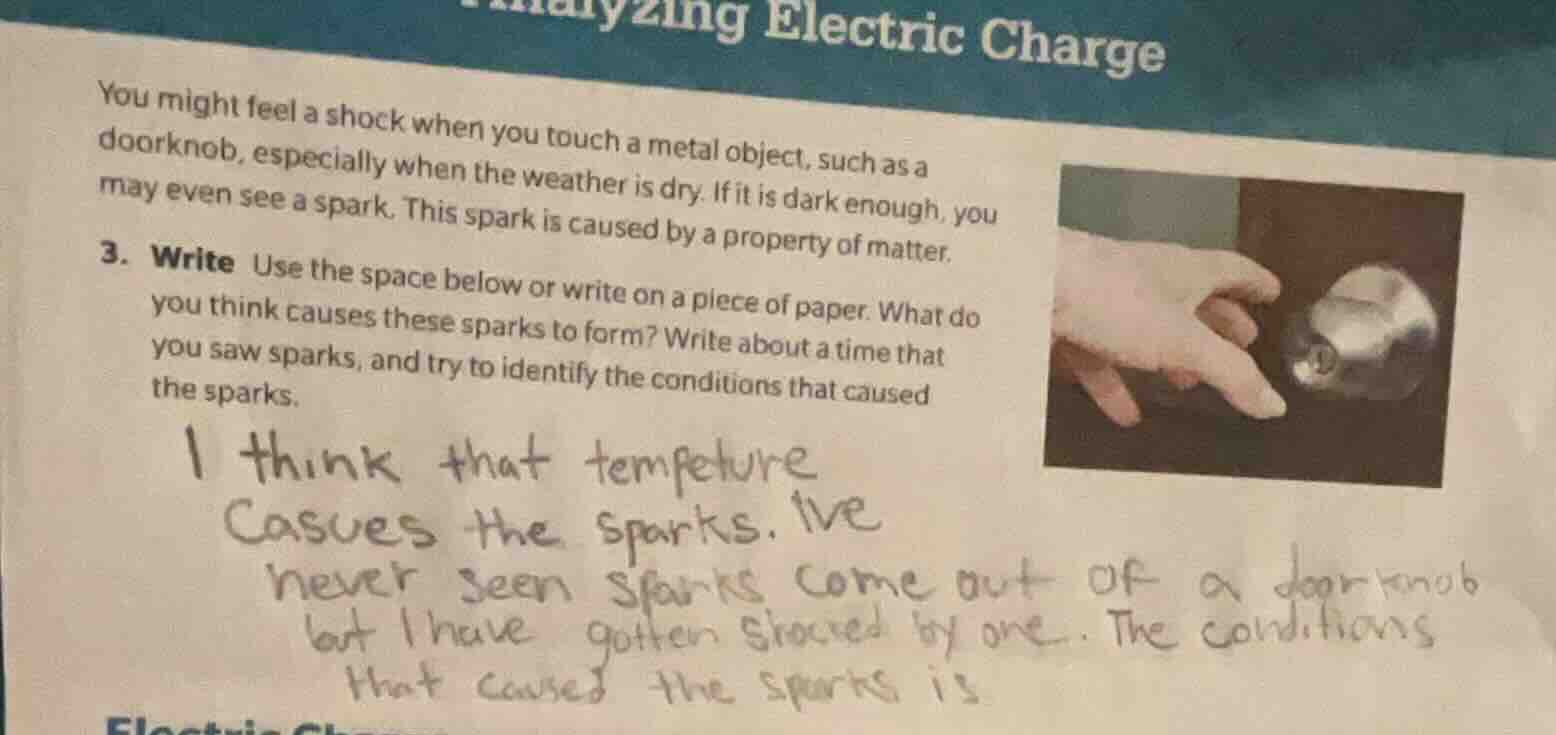
you might feel a shock when you touch a metal object, such as a
doorknob, especially when the weather is dry. if it is dark enough, you
may even see a spark. this spark is caused by a property of matter.
- write use the space below or write on a piece of paper. what do
you think causes these sparks to form? write about a time that
you saw sparks, and try to identify the conditions that caused
the sparks.
i think that tempeture
casues the sparks. ive
never seen sparks come out of a doorknob
but i have gotten shocked by one. the conditions
that caused the sparks is
The sparks are caused by static electric discharge, not temperature. When two materials rub together (like your clothes and skin), static electric charge builds up on your body. When you touch a conductive metal doorknob, the built-up charge rapidly flows to the doorknob, creating a spark. This is more likely in dry weather because dry air does not conduct electricity well, so charge can build up instead of leaking away.
A personal example: On a cold, dry winter day, after walking across a wool carpet in socks, I touched a metal light switch and felt a small shock, and in the dark, I could see a tiny spark. The conditions were low humidity (dry air) and the friction between my socks and the carpet that built up static charge.

Snap & solve any problem in the app
Get step-by-step solutions on Sovi AI
Photo-based solutions with guided steps
Explore more problems and detailed explanations
The sparks are caused by static electric discharge, not temperature. When static charge builds up on the body (from friction like clothes rubbing against skin), touching a conductive metal object like a doorknob allows the charge to rapidly flow, creating a spark. Dry weather enables this because dry air does not let charge leak away easily.
Personal example: On a dry winter day, after walking on a wool carpet in socks, I touched a metal light switch and felt a shock, with a small spark visible in the dark. The key conditions were low humidity (dry air) and friction that built up static charge.