QUESTION IMAGE
Question
answer attempt 2 out of 2
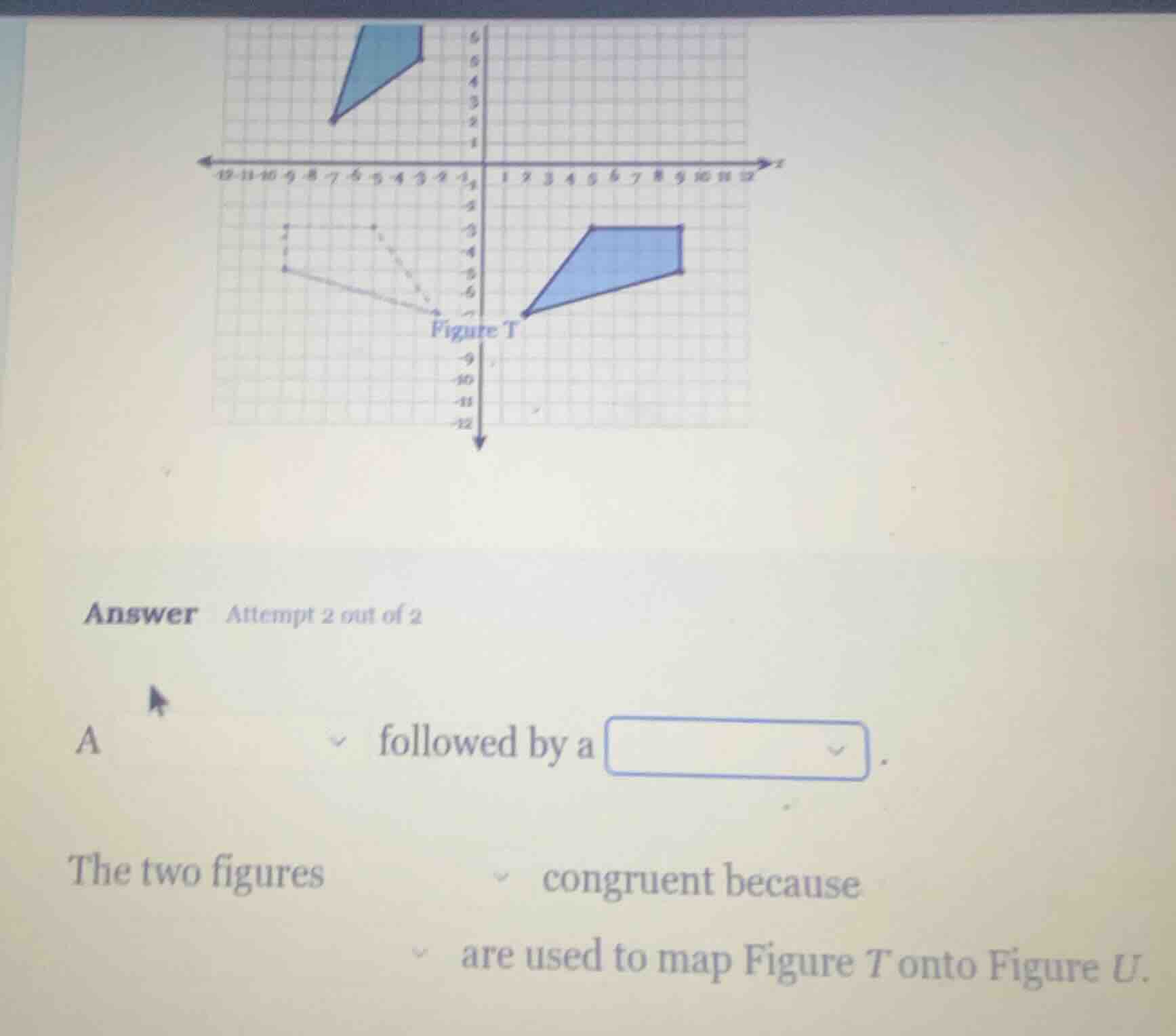
a followed by a
the two figures congruent because
are used to map figure t onto figure u.
To solve this problem, we analyze the transformations between the two figures (Figure T and Figure U) and their congruence:
Step 1: Identify Transformations
First, observe the movement of Figure T. From the grid, we can see a translation (shifting) and a rotation or reflection? Wait, actually, looking at the coordinates (even partially visible), the key is:
- Translation: Moving the figure (e.g., shifting horizontally/vertically).
- Rotation/Reflection: But since the figures are congruent, the transformations preserve size/shape.
Step 2: Congruence Check
Congruent figures have the same size and shape. Transformations like translation, rotation, or reflection (rigid transformations) preserve congruence.
For the dropdowns (assuming typical options):
- First transformation: Likely a translation (moving the figure).
- Second transformation: Likely a rotation or reflection (to align the shape).
- The two figures are congruent because rigid transformations (translation + rotation/reflection) preserve size and shape.
Final Answers (Filling the Blanks):
- First dropdown (after "followed by a"): e.g., rotation (or reflection, depending on the grid).
- "The two figures" dropdown: are (since rigid transformations preserve congruence).
- "because" dropdown: rigid transformations (translation and rotation/reflection) (or specific terms like "translation and rotation" if applicable).
(Note: The exact options depend on the dropdown choices, but the logic is about rigid transformations preserving congruence.)
If we assume the standard options:
- First blank (after "followed by a"): rotation (or reflection).
- "The two figures" → are
- "because" → rigid transformations (like translation and rotation) are used...
For example, a complete answer might be:
- "followed by a rotation"
- "The two figures are congruent because rigid transformations are used to map Figure T onto Figure U."
(Adjust based on the actual dropdown options provided in the original problem, but the core idea is rigid transformations preserve congruence.)

Snap & solve any problem in the app
Get step-by-step solutions on Sovi AI
Photo-based solutions with guided steps
Explore more problems and detailed explanations
To solve this problem, we analyze the transformations between the two figures (Figure T and Figure U) and their congruence:
Step 1: Identify Transformations
First, observe the movement of Figure T. From the grid, we can see a translation (shifting) and a rotation or reflection? Wait, actually, looking at the coordinates (even partially visible), the key is:
- Translation: Moving the figure (e.g., shifting horizontally/vertically).
- Rotation/Reflection: But since the figures are congruent, the transformations preserve size/shape.
Step 2: Congruence Check
Congruent figures have the same size and shape. Transformations like translation, rotation, or reflection (rigid transformations) preserve congruence.
For the dropdowns (assuming typical options):
- First transformation: Likely a translation (moving the figure).
- Second transformation: Likely a rotation or reflection (to align the shape).
- The two figures are congruent because rigid transformations (translation + rotation/reflection) preserve size and shape.
Final Answers (Filling the Blanks):
- First dropdown (after "followed by a"): e.g., rotation (or reflection, depending on the grid).
- "The two figures" dropdown: are (since rigid transformations preserve congruence).
- "because" dropdown: rigid transformations (translation and rotation/reflection) (or specific terms like "translation and rotation" if applicable).
(Note: The exact options depend on the dropdown choices, but the logic is about rigid transformations preserving congruence.)
If we assume the standard options:
- First blank (after "followed by a"): rotation (or reflection).
- "The two figures" → are
- "because" → rigid transformations (like translation and rotation) are used...
For example, a complete answer might be:
- "followed by a rotation"
- "The two figures are congruent because rigid transformations are used to map Figure T onto Figure U."
(Adjust based on the actual dropdown options provided in the original problem, but the core idea is rigid transformations preserve congruence.)