QUESTION IMAGE
Question
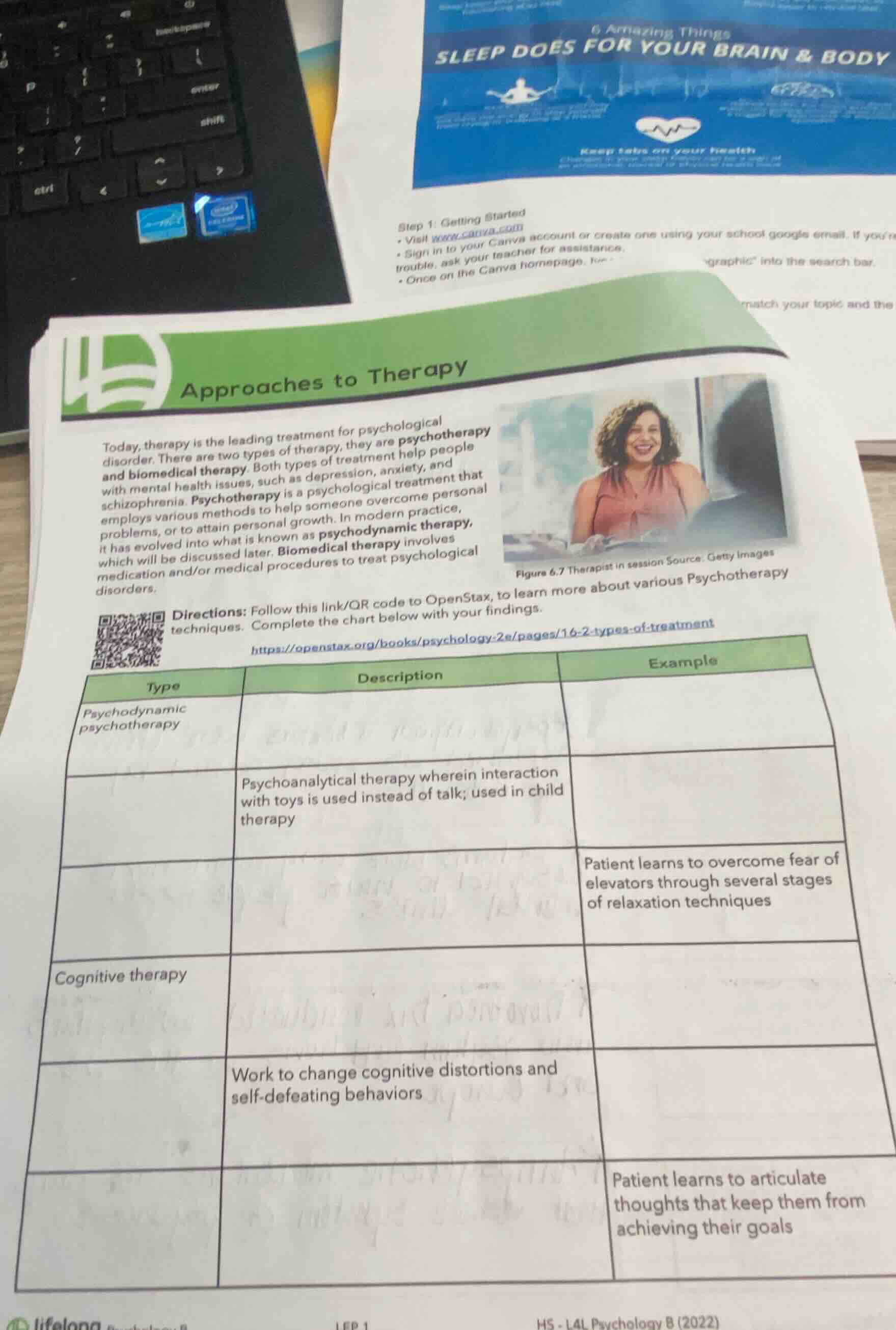
approaches to therapy
today, therapy is the leading treatment for psychological
disorder. there are two types of therapy, they are psychotherapy
and biomedical therapy. both types of treatment help people
with mental health issues, such as depression, anxiety, and
schizophrenia. psychotherapy is a psychological treatment that
employs various methods to help someone overcome personal
problems, or to attain personal growth. in modern practice,
it has evolved into what is known as psychodynamic therapy,
which will be discussed later. biomedical therapy involves
medication and/or medical procedures to treat psychological
disorders.
figure 6.7 therapist in session source: getty images
directions: follow this link/qr code to openstax, to learn more about various psychotherapy
techniques. complete the chart below with your findings.
https://openstax.org/books/psychology-2e/pages/16-2-types-of-treatment
| type | description | example |
|---|
| | psychoanalytical therapy wherein interaction
with toys is used instead of talk; used in child
therapy | |
| patient learns to overcome fear of |
elevators through several stages
of relaxation techniques |
| cognitive therapy |
| | work to change cognitive distortions and
self - defeating behaviors | |
| patient learns to articulate |
thoughts that keep them from
achieving their goals |
To solve this, we refer to the OpenStax Psychology textbook (link provided) and psychological therapy concepts:
1. Psychodynamic psychotherapy
- Description: Based on psychodynamic theory (e.g., Freud), focuses on unconscious conflicts, early childhood experiences, and how they shape current behavior. Aims to make the unconscious conscious to resolve issues.
- Example: A patient explores childhood trauma in therapy to understand current relationship patterns.
2. Play therapy (matches the description)
- Type: Play therapy (a form of psychodynamic/psychoanalytic therapy for children)
- Example: A child uses dolls to reenact a stressful event (e.g., parents’ divorce) in therapy.
3. Systematic desensitization (matches the example)
- Type: Systematic desensitization (a behavioral therapy technique)
- Description: Uses relaxation and gradual exposure to fear - inducing stimuli to reduce anxiety. Patients learn to associate relaxation with the feared object/situation.
4. Cognitive therapy
- Description: Focuses on identifying and changing distorted thought patterns (cognitive distortions) that lead to negative emotions and behaviors. Challenges irrational beliefs.
- Example: A patient with social anxiety learns to reframe “Everyone is judging me” to “Most people are focused on themselves.”
5. Cognitive - behavioral therapy (CBT, matches the description)
- Type: Cognitive - behavioral therapy (combines cognitive and behavioral approaches)
- Example: A patient with depression practices new coping behaviors (e.g., daily walks) and challenges thoughts like “I’m a failure.”
6. Gestalt therapy (matches the example)
- Type: Gestalt therapy
- Description: Focuses on the present moment and “unfinished business.” Encourages patients to take responsibility for their thoughts, feelings, and actions.
- Example: A patient says, “I can’t achieve my goals because of my boss” and is guided to rephrase it as “I let my boss’s opinion stop me from pursuing my goals.”
Now, filling the chart:
| Type | Description | Example |
|---|---|---|
| Play therapy | Psychoanalytical therapy with toys (for children) | Child uses dolls to reenact a stressful event in therapy |
| Systematic desensitization | Uses relaxation + gradual exposure to reduce anxiety | Patient overcomes fear of elevators via relaxation/staged exposure |
| Cognitive therapy | Identifies + changes distorted thought patterns | Patient with social anxiety reframes “Everyone judges me” to a rational thought |
| Cognitive - behavioral therapy | Changes cognitive distortions + self - defeating behaviors | Patient with depression practices new behaviors and challenges negative thoughts |
| Gestalt therapy | Focuses on present moment and taking responsibility for thoughts/actions | Patient articulates thoughts blocking goals (e.g., “I let my boss stop me”) |
If we assume the task is to fil…

Snap & solve any problem in the app
Get step-by-step solutions on Sovi AI
Photo-based solutions with guided steps
Explore more problems and detailed explanations
To solve this, we refer to the OpenStax Psychology textbook (link provided) and psychological therapy concepts:
1. Psychodynamic psychotherapy
- Description: Based on psychodynamic theory (e.g., Freud), focuses on unconscious conflicts, early childhood experiences, and how they shape current behavior. Aims to make the unconscious conscious to resolve issues.
- Example: A patient explores childhood trauma in therapy to understand current relationship patterns.
2. Play therapy (matches the description)
- Type: Play therapy (a form of psychodynamic/psychoanalytic therapy for children)
- Example: A child uses dolls to reenact a stressful event (e.g., parents’ divorce) in therapy.
3. Systematic desensitization (matches the example)
- Type: Systematic desensitization (a behavioral therapy technique)
- Description: Uses relaxation and gradual exposure to fear - inducing stimuli to reduce anxiety. Patients learn to associate relaxation with the feared object/situation.
4. Cognitive therapy
- Description: Focuses on identifying and changing distorted thought patterns (cognitive distortions) that lead to negative emotions and behaviors. Challenges irrational beliefs.
- Example: A patient with social anxiety learns to reframe “Everyone is judging me” to “Most people are focused on themselves.”
5. Cognitive - behavioral therapy (CBT, matches the description)
- Type: Cognitive - behavioral therapy (combines cognitive and behavioral approaches)
- Example: A patient with depression practices new coping behaviors (e.g., daily walks) and challenges thoughts like “I’m a failure.”
6. Gestalt therapy (matches the example)
- Type: Gestalt therapy
- Description: Focuses on the present moment and “unfinished business.” Encourages patients to take responsibility for their thoughts, feelings, and actions.
- Example: A patient says, “I can’t achieve my goals because of my boss” and is guided to rephrase it as “I let my boss’s opinion stop me from pursuing my goals.”
Now, filling the chart:
| Type | Description | Example |
|---|---|---|
| Play therapy | Psychoanalytical therapy with toys (for children) | Child uses dolls to reenact a stressful event in therapy |
| Systematic desensitization | Uses relaxation + gradual exposure to reduce anxiety | Patient overcomes fear of elevators via relaxation/staged exposure |
| Cognitive therapy | Identifies + changes distorted thought patterns | Patient with social anxiety reframes “Everyone judges me” to a rational thought |
| Cognitive - behavioral therapy | Changes cognitive distortions + self - defeating behaviors | Patient with depression practices new behaviors and challenges negative thoughts |
| Gestalt therapy | Focuses on present moment and taking responsibility for thoughts/actions | Patient articulates thoughts blocking goals (e.g., “I let my boss stop me”) |
If we assume the task is to fill the chart with correct labels and details, here's the concise version for each row:
- Psychodynamic psychotherapy
- Description: Explores unconscious conflicts/childhood experiences to resolve psychological issues.
- Example: Patient discusses childhood separation anxiety to understand adult relationship fears.
- Play therapy
- Type: Play therapy
- Example: Child uses toy cars to express feelings about a move to a new city.
- Systematic desensitization
- Type: Systematic desensitization
- Description: Uses relaxation and gradual exposure to reduce anxiety toward a feared stimulus.
- Cognitive therapy
- Description: Identifies and modifies distorted thought patterns (cognitive distortions) causing distress.
- Example: Patient with panic disorder reframes “I’m having a heart attack” to “This is a panic attack, and it will pass.”
- Cognitive - Behavioral Therapy (CBT)
- Type: Cognitive - Behavioral Therapy (CBT)
- Example: Patient with OCD learns to challenge “I must check the stove 10 times” and practices reducing checks.
- Gestalt Therapy
- Type: Gestalt Therapy
- Description: Focuses on the present moment and resolving “unfinished business” by taking responsibility for thoughts/actions.