QUESTION IMAGE
Question
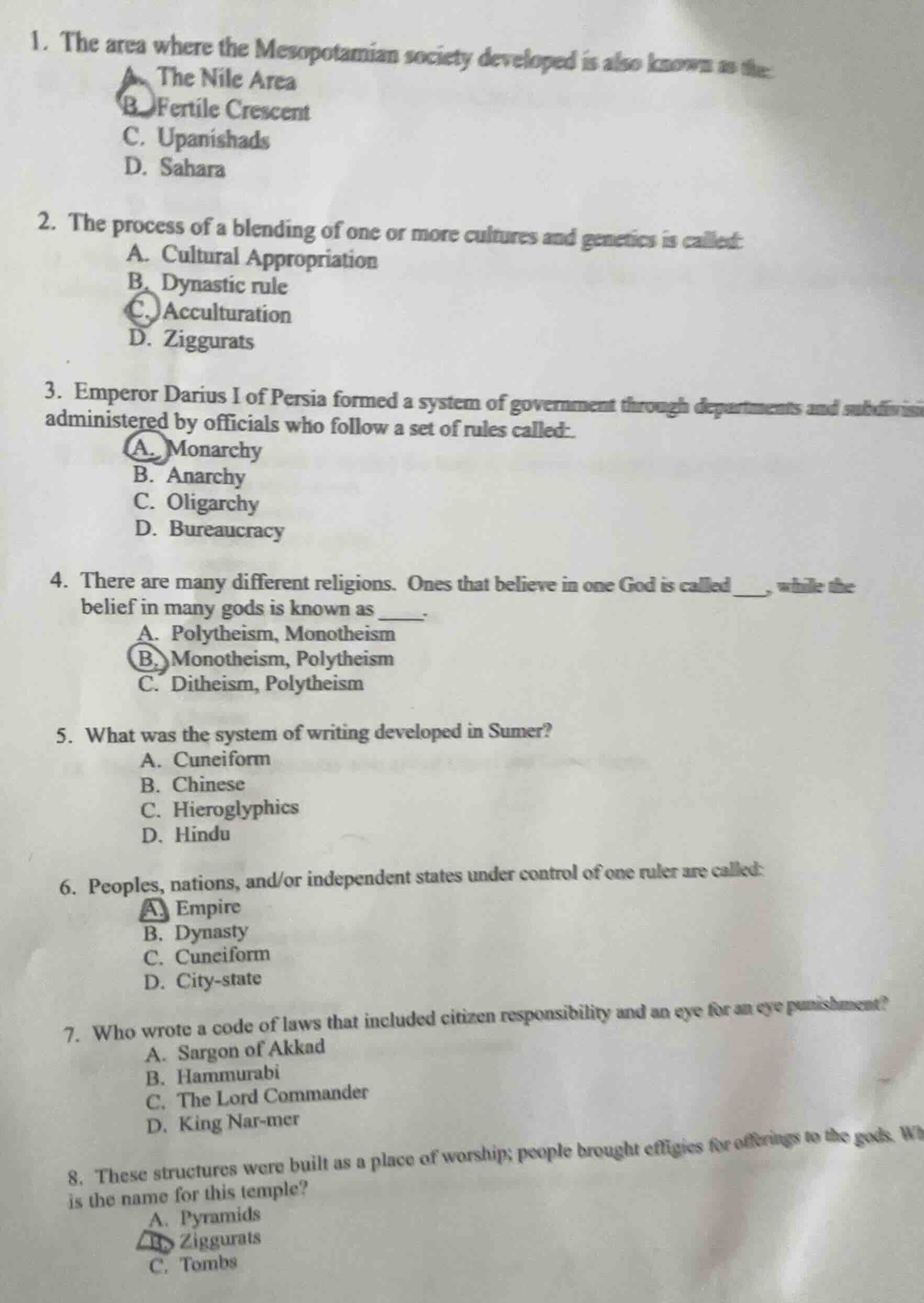
- the area where the mesopotamian society developed is also known as the: a. the nile area b. fertile crescent c. upanishads d. sahara 2. the process of a blending of one or more cultures and genetics is called: a. cultural appropriation b. dynastic rule c. acculturation d. ziggurats 3. emperor darius i of persia formed a system of government through departments and subdivisions administered by officials who follow a set of rules called: a. monarchy b. anarchy c. oligarchy d. bureaucracy 4. there are many different religions. ones that believe in one god is called _, while the belief in many gods is known as __. a. polytheism, monotheism b. monotheism, polytheism c. ditheism, polytheism 5. what was the system of writing developed in sumer? a. cuneiform b. chinese c. hieroglyphics d. hindu 6. peoples, nations, and/or independent states under control of one ruler are called: a. empire b. dynasty c. cuneiform d. city - state 7. who wrote a code of laws that included citizen responsibility and an eye for an eye punishment? a. sargon of akkad b. hammurabi c. the lord commander d. king nar - mer 8. these structures were built as a place of worship; people brought effigies for offerings to the gods. what is the name for this temple? a. pyramids b. ziggurats c. tombs
Question 1
Mesopotamian society developed in the Fertile Crescent. The Nile Area is for Egyptian civilization, Upanishads are Hindu texts, and Sahara is a desert. So the correct option is B.
Acculturation is the blending of cultures and genetics. Cultural Appropriation is using another culture's elements unethically, Dynastic rule is rule by a dynasty, and Ziggurats are Mesopotamian temples. So the correct option is C.
Darius I's government system with departments and officials following rules is Bureaucracy. Monarchy is rule by a single ruler, Anarchy is no government, and Oligarchy is rule by a few. So the correct option is D.

Snap & solve any problem in the app
Get step-by-step solutions on Sovi AI
Photo-based solutions with guided steps
Explore more problems and detailed explanations
B. Fertile Crescent