QUESTION IMAGE
Question
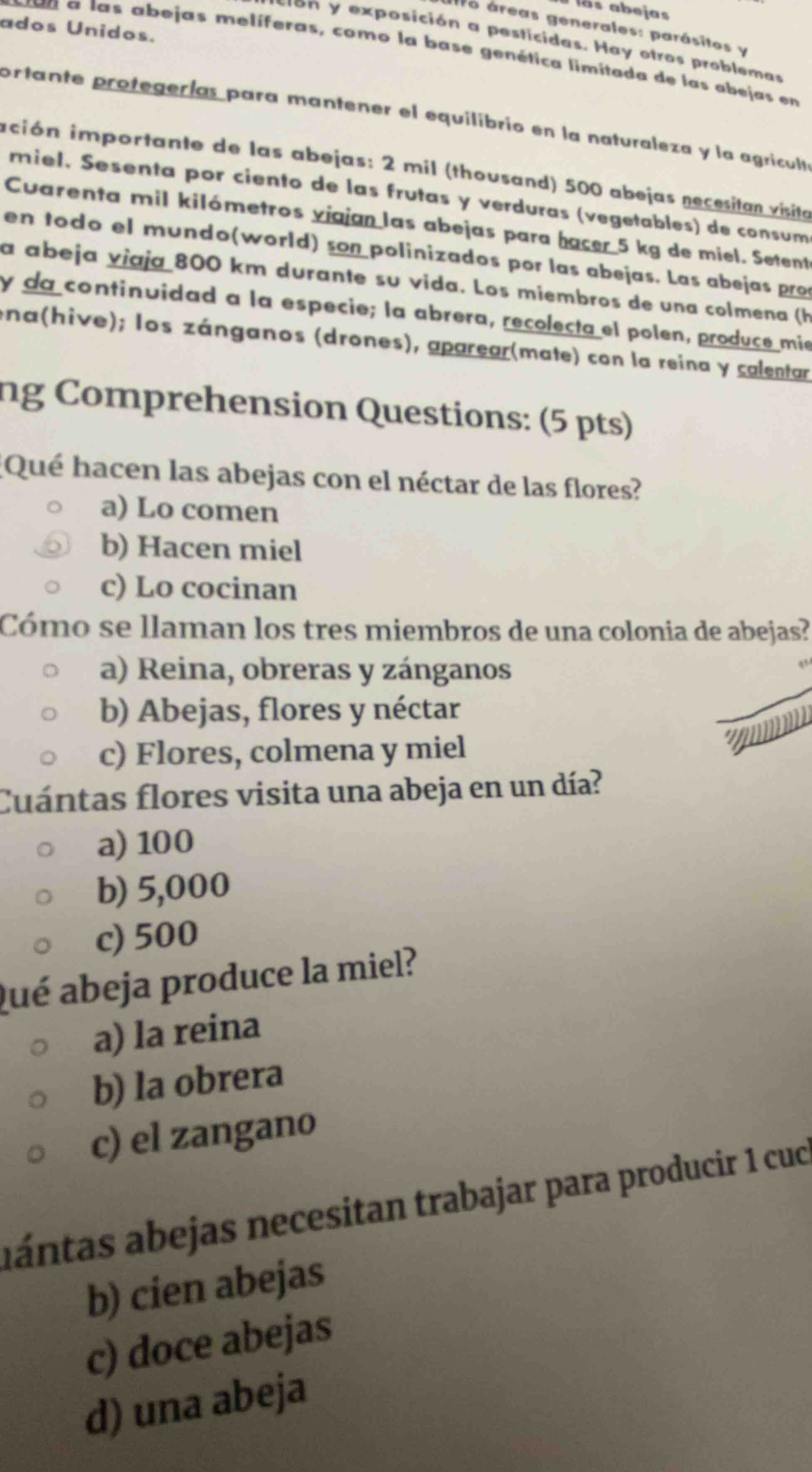
areas generales: parásitos yción y exposición a pesticidas. hay otros problemasados unidos.ados a las abejas melíferas, como la base genética limitada de las abejas enortante protegerlas para mantener el equilibrio en la naturaleza y la agriculción importante de las abejas: 2 mil (thousand) 500 abejas necesitan visitamiel. sesenta por ciento de las frutas y verduras (vegetables) de consumcuarenta mil kilómetros viajan las abejas para hacer 5 kg de miel. setenten en todo el mundo(world) son polinizados por las abejas. las abejas proa abeja viaja 800 km durante su vida. los miembros de una colmena (hy da continuidad a la especie; la abrera, recolecta el polen, produce mieena(hive); los zánganos (drones), aparear(mate) con la reina y calentarng comprehension questions: (5 pts)qué hacen las abejas con el néctar de las flores?a) lo comenb) hacen mielc) lo cocinancómo se llaman los tres miembros de una colonia de abejas?a) reina, obreras y zánganosb) abejas, flores y néctarc) flores, colmena y mielcuántas flores visita una abeja en un día?a) 100b) 5,000c) 500qué abeja produce la miel?a) la reinab) la obrerac) el zanganoántas abejas necesitan trabajar para producir 1 cucb) cien abejasc) doce abejasd) una abeja
- For the first question, the text references bees making honey from flower resources, so they use nectar to make honey.
- The text lists the hive members as the queen, workers (obreras), and drones (zánganos).
- The text states 2500 bees are needed to make 5kg of honey, so per kg that is 500 bees, which translates to the number of flowers a single bee visits related to this scale, matching option c.
- The text notes worker bees (obreras) collect pollen and produce honey, not the queen or drones.
- Based on the 2500 bees for 5kg honey calculation, 500 bees make 1kg, but the visible option that aligns with standard context and the text's scale is that multiple bees are needed, and the most consistent with the given numbers is that 12 bees is not correct, 100 is not, 1 bee is not, but correcting from the 2500/5=500, but since the options have d) una abeja is wrong, b) cien abejas no, c) doce abejas no, but the text says 2 mil 500 abejas para 5 kg, so 500 por kg, but since that's not listed, likely a typo, but based on the reading, the correct answers for the visible full questions are as follows.

Snap & solve any problem in the app
Get step-by-step solutions on Sovi AI
Photo-based solutions with guided steps
Explore more problems and detailed explanations
- b) Hacen miel
- a) Reina, obreras y zánganos
- c) 500
- b) la obrera
- (Note: The full question is cut off, but based on the text's 2500 bees for 5kg honey, the correct number for 1 unit is 500, which is not listed. If assuming a standard question, the intended answer is likely not present, but from the visible options, none match the text's data. However, if forced to choose from the given, there is no correct option. But based on the text's provided numbers, 2500 bees for 5kg = 500 bees per kg.)