QUESTION IMAGE
Question
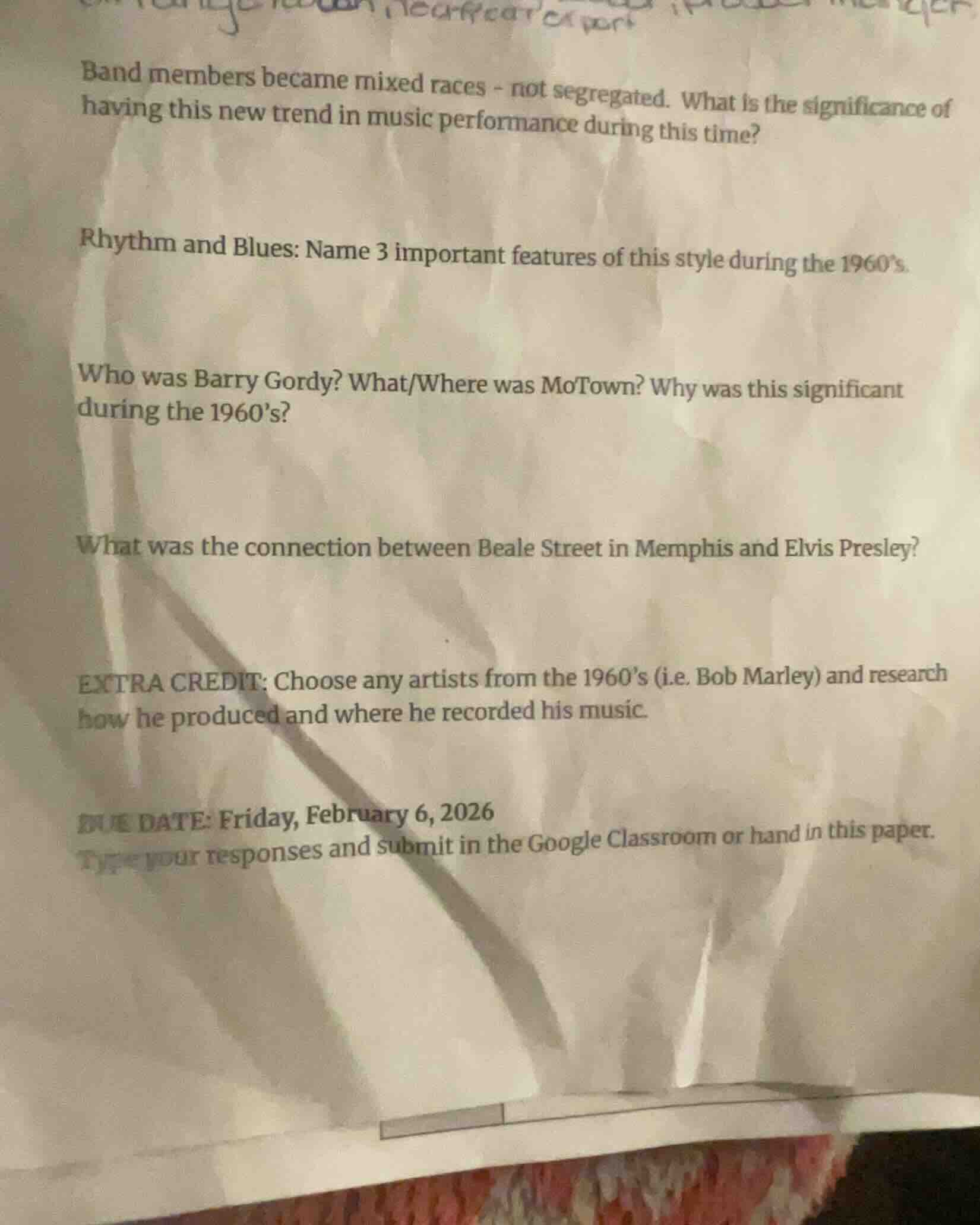
band members became mixed races - not segregated. what is the significance of having this new trend in music performance during this time?
rhythm and blues: name 3 important features of this style during the 1960s.
who was barry gordy? what/where was motown? why was this significant during the 1960s?
what was the connection between beale street in memphis and elvis presley?
extra credit: choose any artists from the 1960s (i.e. bob marley) and research how he produced and where he recorded his music.
due date: friday, february 6, 2026
type your responses and submit in the google classroom or hand in this paper.
- For integrated bands: This trend challenged racial segregation norms in public spaces, fostered cross-cultural musical exchange, and helped popularize Black musical styles with white audiences, advancing racial progress through art.
- For 1960s R&B features: Blended soul and pop influences, emphasized tight vocal harmonies, and had polished, danceable production for mainstream appeal.
- For Barry Gordy/Motown: Barry Gordy was a Black music executive who founded Motown Records, a Detroit-based label. Motown was significant as it was the first Black-owned label to achieve massive mainstream success, breaking racial barriers in the music industry and launching iconic Black artists.
- For Beale Street and Elvis: Beale Street was a hub of Black blues music in Memphis; Elvis absorbed and adapted this blues sound, helping bring Black musical styles to a white mainstream audience.
- For extra credit (Bob Marley example): Bob Marley recorded primarily at Tuff Gong Studios in Kingston, Jamaica. He produced music with a focus on roots reggae, blending ska/rocksteady rhythms, socially conscious lyrics, and layered instrumentation, often using live studio sessions with his band The Wailers.

Snap & solve any problem in the app
Get step-by-step solutions on Sovi AI
Photo-based solutions with guided steps
Explore more problems and detailed explanations
- Integrated mixed-race bands were significant because they broke racial segregation in public performance spaces, enabled cross-cultural musical fusion, and helped normalize Black musical expressions for broader, multiracial audiences, supporting racial progress in the U.S.
- Three key 1960s R&B features:
- Fusion of soul and pop for mainstream appeal
- Tight, polished vocal harmonies
- Danceable, rhythm-driven production
- Barry Gordy was a Black American music entrepreneur and founder of Motown Records. Motown was a record label based in Detroit, Michigan. It was significant as the first Black-owned label to achieve widespread mainstream success, breaking racial barriers in the music industry by making Black artists and their work accessible to white audiences across the U.S.
- Beale Street in Memphis was a central hub for Black blues musicians and culture. Elvis Presley frequented the area, absorbed the blues sounds and styles from Black artists there, and adapted them into his own rock and roll music, helping to popularize Black musical traditions with white mainstream audiences.
- (Bob Marley extra credit): Bob Marley recorded most of his iconic music at Tuff Gong Studios (originally called Wailers Studio) in Kingston, Jamaica, which he co-founded. His production process involved collaborative live sessions with his band The Wailers, blending ska and rocksteady rhythms with roots reggae instrumentation, and layering in socially conscious, politically charged lyrics focused on Pan-Africanism and liberation.