QUESTION IMAGE
Question
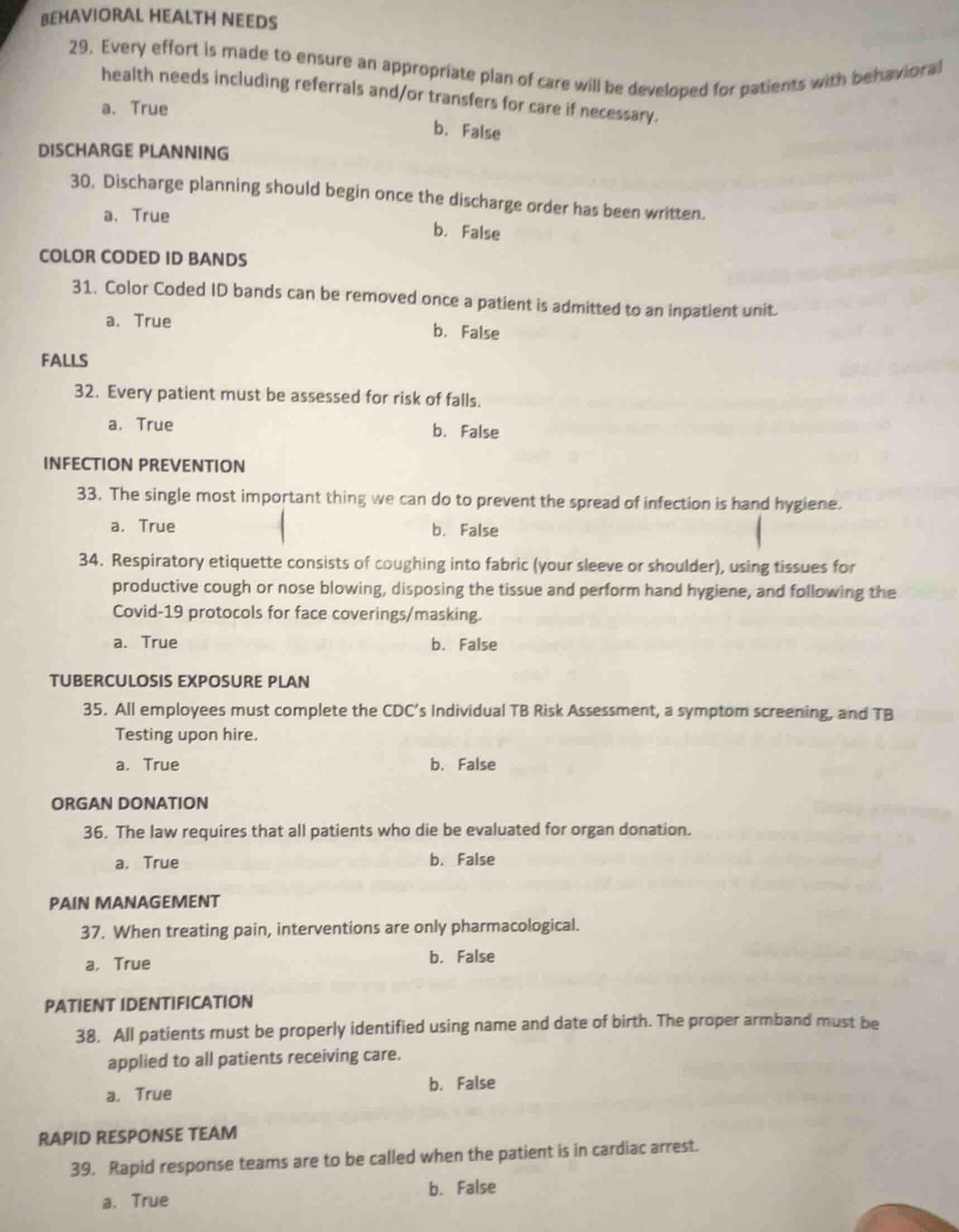
behavioral health needs
- every effort is made to ensure an appropriate plan of care will be developed for patients with behavioral health needs including referrals and/or transfers for care if necessary.
a. true
b. false
discharge planning
- discharge planning should begin once the discharge order has been written.
a. true
b. false
color coded id bands
- color coded id bands can be removed once a patient is admitted to an inpatient unit.
a. true
b. false
falls
- every patient must be assessed for risk of falls.
a. true
b. false
infection prevention
- the single most important thing we can do to prevent the spread of infection is hand hygiene.
a. true
b. false
- respiratory etiquette consists of coughing into fabric (your sleeve or shoulder), using tissues for productive cough or nose blowing, disposing the tissue and perform hand hygiene, and following the covid - 19 protocols for face coverings/masking.
a. true
b. false
tuberculosis exposure plan
- all employees must complete the cdc’s individual tb risk assessment, a symptom screening, and tb testing upon hire.
a. true
b. false
organ donation
- the law requires that all patients who die be evaluated for organ donation.
a. true
b. false
pain management
- when treating pain, interventions are only pharmacological.
a. true
b. false
patient identification
- all patients must be properly identified using name and date of birth. the proper armband must be applied to all patients receiving care.
a. true
b. false
rapid response team
- rapid response teams are to be called when the patient is in cardiac arrest.
a. true
b. false
Brief Explanations
- Standard care involves tailored plans for behavioral health needs, including referrals/transfers.
- Discharge planning begins on admission, not just when the order is written.
- Color-coded ID bands (e.g., for allergies) are kept on during admission for safety.
- Universal fall risk assessment is a core patient safety practice.
- Hand hygiene is the most critical infection prevention measure.
- Respiratory etiquette includes the listed practices to reduce disease spread.
- Pre-employment TB screening (risk assessment, symptom check, testing) is required for healthcare employees.
- Laws mandate organ donation evaluation for all deceased patients.
- Pain management includes non-pharmacological (e.g., physical therapy) and pharmacological interventions.
- Two identifiers (name, DOB) and armbands ensure accurate patient identification.
- Rapid response teams address worsening conditions before cardiac arrest; code teams handle arrests.

Snap & solve any problem in the app
Get step-by-step solutions on Sovi AI
Photo-based solutions with guided steps
Explore more problems and detailed explanations
- a. True
- b. False
- b. False
- a. True
- a. True
- a. True
- a. True
- a. True
- b. False
- a. True
- b. False