QUESTION IMAGE
Question
bell work - friday, jan. 9, 2026
write the letters of the correct answers on the lines at left
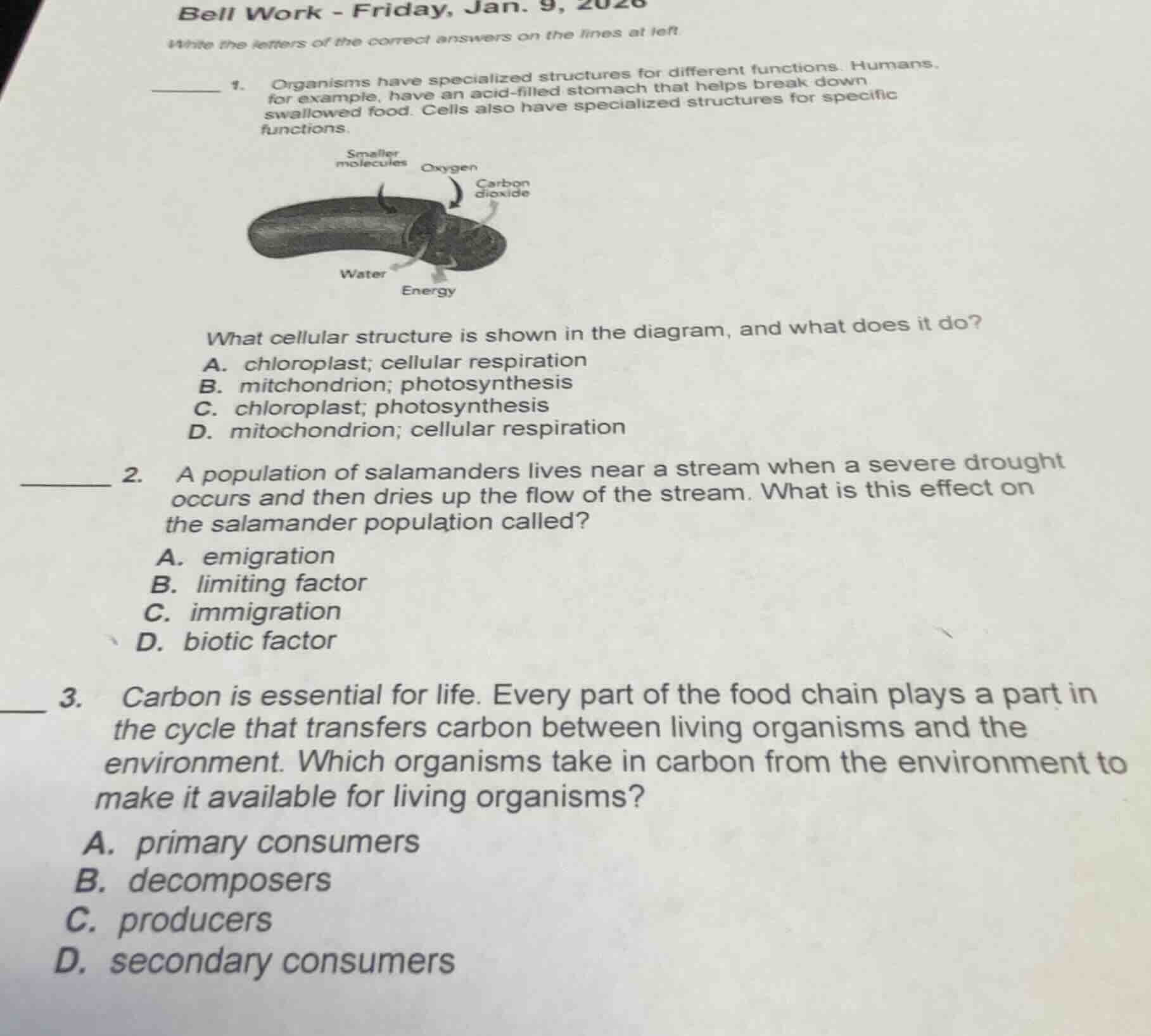
- organisms have specialized structures for different functions. humans, for example, have an acid - filled stomach that helps break down swallowed food. cells also have specialized structures for specific functions.
image of a cellular structure with labels: smaller molecules, oxygen, carbon dioxide, water, energy
what cellular structure is shown in the diagram, and what does it do?
a. chloroplast; cellular respiration
b. mitochondrion; photosynthesis
c. chloroplast; photosynthesis
d. mitochondrion; cellular respiration
- a population of salamanders lives near a stream when a severe drought occurs and then dries up the flow of the stream. what is this effect on the salamander population called?
a. emigration
b. limiting factor
c. immigration
d. biotic factor
- carbon is essential for life. every part of the food chain plays a part in the cycle that transfers carbon between living organisms and the environment. which organisms take in carbon from the environment to make it available for living organisms?
a. primary consumers
b. decomposers
c. producers
d. secondary consumers
Brief Explanations
- The diagram shows a structure that uses oxygen, breaks down molecules, releases carbon dioxide, water, and energy—this matches the function of a mitochondrion, which performs cellular respiration. Chloroplasts do photosynthesis, which uses carbon dioxide and produces oxygen, so they do not match the diagram.
- A drought drying up a stream is an environmental condition that restricts the salamander population's survival and growth, which defines a limiting factor. Emigration/immigration are movement of individuals, and a drought is an abiotic (not biotic) factor.
- Producers (like plants, algae) take in carbon dioxide from the environment during photosynthesis, converting it into organic carbon that becomes available to all other organisms in the food chain. Consumers get carbon by eating other organisms, and decomposers release carbon back to the environment.

Snap & solve any problem in the app
Get step-by-step solutions on Sovi AI
Photo-based solutions with guided steps
Explore more problems and detailed explanations
- D. mitochondrion; cellular respiration
- B. limiting factor
- C. producers