QUESTION IMAGE
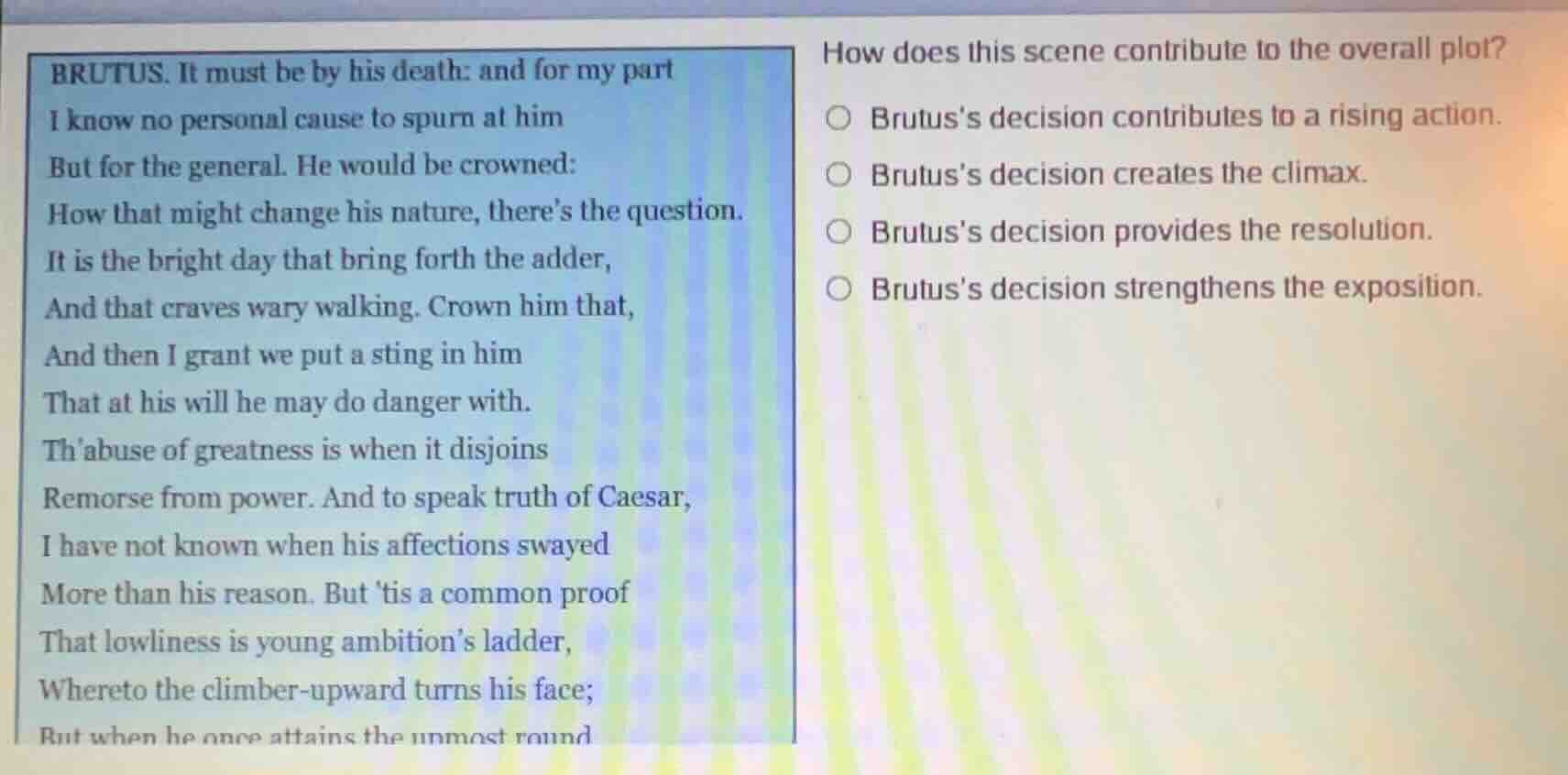
Question
brutus. it must be by his death: and for my part
i know no personal cause to spurn at him
but for the general. he would be crowned:
how that might change his nature, theres the question.
it is the bright day that bring forth the adder,
and that craves wary walking. crown him that,
and then i grant we put a sting in him
that at his will he may do danger with.
thabuse of greatness is when it disjoins
remorse from power. and to speak truth of caesar,
i have not known when his affections swayed
more than his reason. but tis a common proof
that lowliness is young ambitions ladder,
whereto the climber-upward turns his face;
but when he once attains the upmost round
how does this scene contribute to the overall plot?
○ brutuss decision contributes to a rising action.
○ brutuss decision creates the climax.
○ brutuss decision provides the resolution.
○ brutuss decision strengthens the exposition.
In a plot, rising action builds tension leading to climax. Brutus deciding Caesar must die (to prevent potential tyranny) increases tension, driving the plot toward the assassination (climax). The climax is the turning point (assassination), so Brutus’s decision here is part of rising action (not climax, resolution, or exposition—exposition introduces characters/setting, resolution resolves conflict).

Snap & solve any problem in the app
Get step-by-step solutions on Sovi AI
Photo-based solutions with guided steps
Explore more problems and detailed explanations
A. Brutus's decision contributes to a rising action.