QUESTION IMAGE
Question
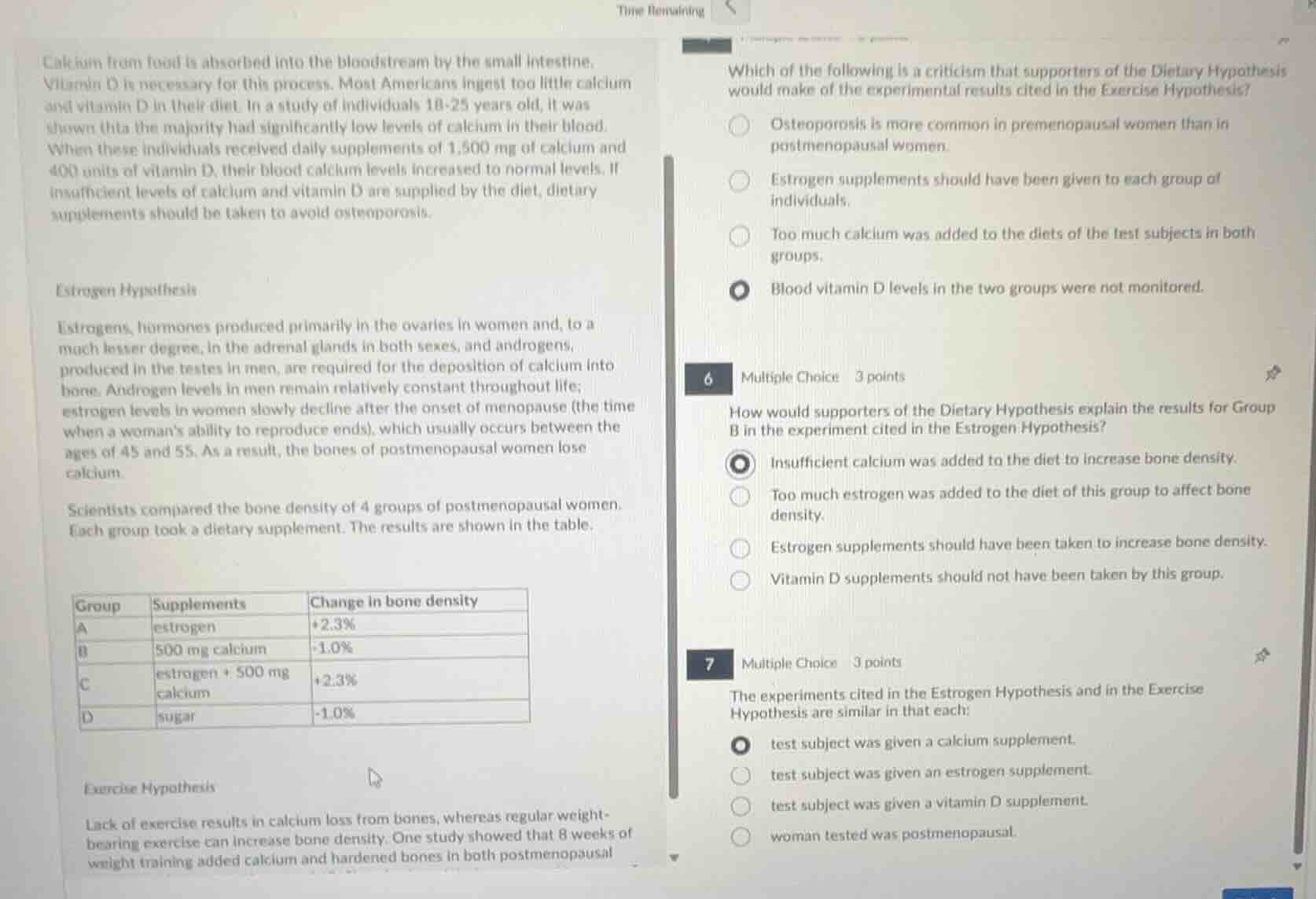
calcium from food is absorbed into the bloodstream by the small intestine. vitamin d is necessary for this process. most americans ingest too little calcium and vitamin d in their diet. in a study of individuals 18-25 years old, it was shown that the majority had significantly low levels of calcium in their blood. when these individuals received daily supplements of 1,500 mg of calcium and 400 units of vitamin d, their blood calcium levels increased to normal levels. if insufficient levels of calcium and vitamin d are supplied by the diet, dietary supplements should be taken to avoid osteoporosis.estrogen hypothesisestrogens, hormones produced primarily in the ovaries in women and, to a much lesser degree, in the adrenal glands in both sexes, and androgens, produced in the testes in men, are required for the deposition of calcium into bone. androgen levels in men remain relatively constant throughout life; estrogen levels in women slowly decline after the onset of menopause (the time when a womans ability to reproduce ends), which usually occurs between the ages of 45 and 55. as a result, the bones of postmenopausal women lose calcium.scientists compared the bone density of 4 groups of postmenopausal women. each group took a dietary supplement. the results are shown in the table.| group | supplements | change in bone density || ---- | ---- | ---- || a | estrogen | +2.3% || b | 500 mg calcium | -1.0% || c | estrogen + 500 mg calcium | +2.3% || d | sugar | -1.0% |exercise hypothesislack of exercise results in calcium loss from bones, whereas regular weight-bearing exercise can increase bone density. one study showed that 8 weeks of weight training added calcium and hardened bones in both postmenopausalwhich of the following is a criticism that supporters of the dietary hypothesis would make of the experimental results cited in the exercise hypothesis?osteoporosis is more common in premenopausal women than in postmenopausal women.estrogen supplements should have been given to each group of individuals.too much calcium was added to the diets of the test subjects in both groups.blood vitamin d levels in the two groups were not monitored.6 multiple choice 3 pointshow would supporters of the dietary hypothesis explain the results for group b in the experiment cited in the estrogen hypothesis?insufficient calcium was added to the diet to increase bone density.too much estrogen was added to the diet of this group to affect bone density.estrogen supplements should have been taken to increase bone density.vitamin d supplements should not have been taken by this group.7 multiple choice 3 pointsthe experiments cited in the estrogen hypothesis and in the exercise hypothesis are similar in that each:test subject was given a calcium supplement.test subject was given an estrogen supplement.test subject was given a vitamin d supplement.woman tested was postmenopausal.
- For the first question: The Dietary Hypothesis focuses on calcium and vitamin D intake/levels as key to bone health. If the Exercise Hypothesis's experiment didn't monitor blood vitamin D levels, supporters of the Dietary Hypothesis could argue the results are unreliable because vitamin D is critical for calcium absorption, a core part of their hypothesis.
- For question 6: The Dietary Hypothesis centers on sufficient calcium (and vitamin D) for bone health. Group B only took 500 mg calcium and lost bone density, so supporters would say this amount was too low to increase bone density.
- For question 7: Looking at the experiments, the Estrogen Hypothesis experiment had groups taking calcium supplements (Group B, C) and the Exercise Hypothesis's study involved calcium changes from exercise. The shared element is that test subjects in both received/had calcium-related supplementation or impact, matching the first option.

Snap & solve any problem in the app
Get step-by-step solutions on Sovi AI
Photo-based solutions with guided steps
Explore more problems and detailed explanations
First question: Blood vitamin D levels in the two groups were not monitored.
Question 6: Insufficient calcium was added to the diet to increase bone density.
Question 7: test subject was given a calcium supplement.