QUESTION IMAGE
Question
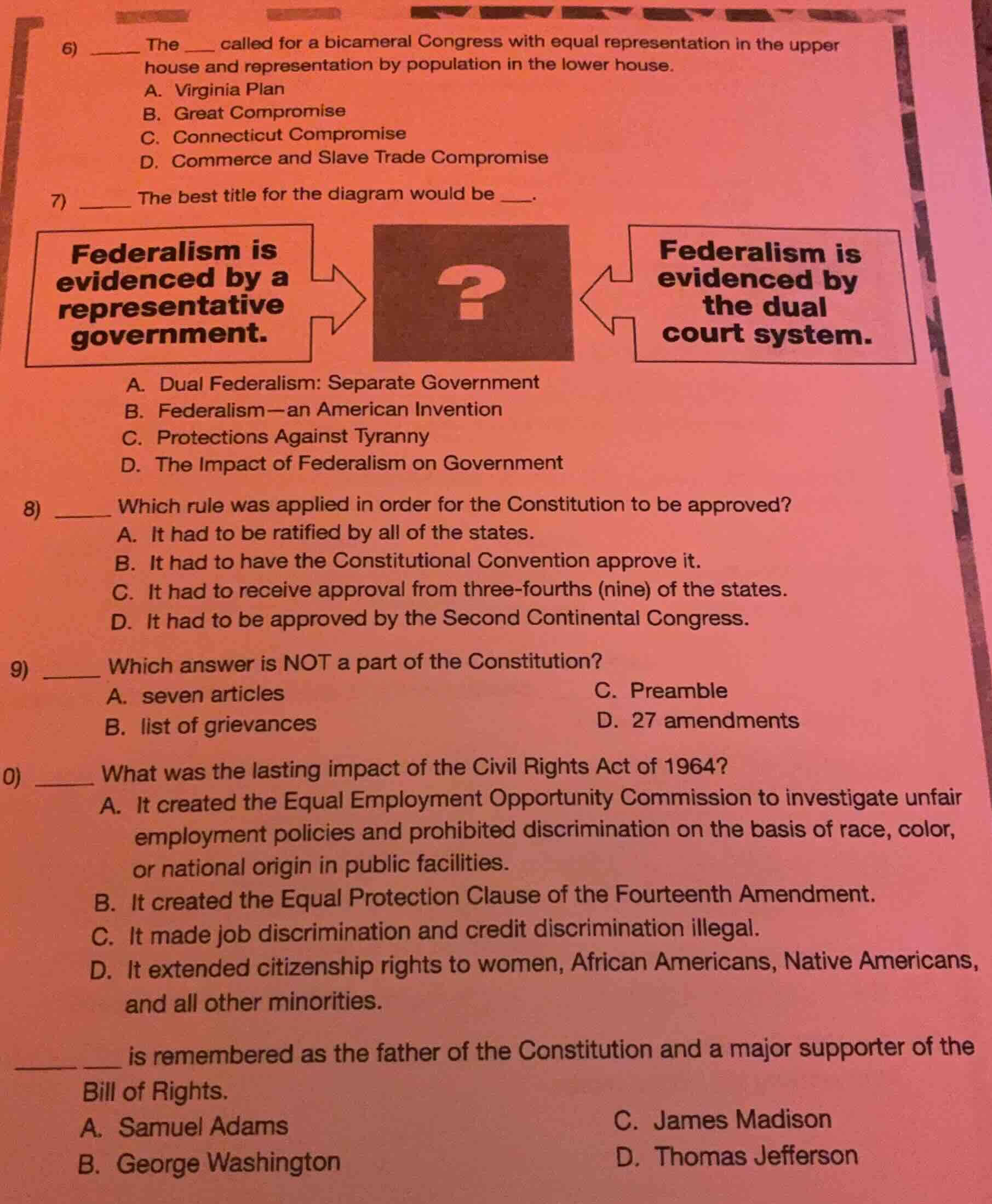
- __ the _ called for a bicameral congress with equal representation in the upper house and representation by population in the lower house. a. virginia plan b. great compromise c. connecticut compromise d. commerce and slave trade compromise 7) __ the best title for the diagram would be _. diagram: federalism is evidenced by a representative government. →? ← federalism is evidenced by the dual court system. a. dual federalism: separate government b. federalism—an american invention c. protections against tyranny d. the impact of federalism on government 8) __ which rule was applied in order for the constitution to be approved? a. it had to be ratified by all of the states. b. it had to have the constitutional convention approve it. c. it had to receive approval from three - fourths (nine) of the states. d. it had to be approved by the second continental congress. 9) which answer is not a part of the constitution? a. seven articles c. preamble b. list of grievances d. 27 amendments 0) what was the lasting impact of the civil rights act of 1964? a. it created the equal employment opportunity commission to investigate unfair employment policies and prohibited discrimination on the basis of race, color, or national origin in public facilities. b. it created the equal protection clause of the fourteenth amendment. c. it made job discrimination and credit discrimination illegal. d. it extended citizenship rights to women, african americans, native americans, and all other minorities. _ is remembered as the father of the constitution and a major supporter of the bill of rights. a. samuel adams c. james madison b. george washington d. thomas jefferson
Brief Explanations
- This compromise established the bicameral U.S. Congress with equal representation in the Senate (upper house) and population-based representation in the House of Representatives (lower house; it is also called the Connecticut Compromise).
- The diagram lists structural features of U.S. federalism, so the title should reflect how federalism shapes government structures.
- The ratification rule for the U.S. Constitution required approval from 3/4 of the states (nine total at the time).
- A list of grievances appears in the Declaration of Independence, not the U.S. Constitution, which includes a Preamble, seven articles, and 27 amendments.
- The Civil Rights Act of 1964 created the EEOC and banned public accommodation discrimination based on race, color, or national origin; other options reference earlier or unrelated policies.
The final question: James Madison is known as the "Father of the Constitution" for his role in drafting it and advocating for the Bill of Rights.

Snap & solve any problem in the app
Get step-by-step solutions on Sovi AI
Photo-based solutions with guided steps
Explore more problems and detailed explanations
- B. Great Compromise, C. Connecticut Compromise
- D. The Impact of Federalism on Government
- C. It had to receive approval from three-fourths (nine) of the states.
- B. list of grievances
- A. It created the Equal Employment Opportunity Commission to investigate unfair employment policies and prohibited discrimination on the basis of race, color, or national origin in public facilities.
Final question: C. James Madison