QUESTION IMAGE
Question
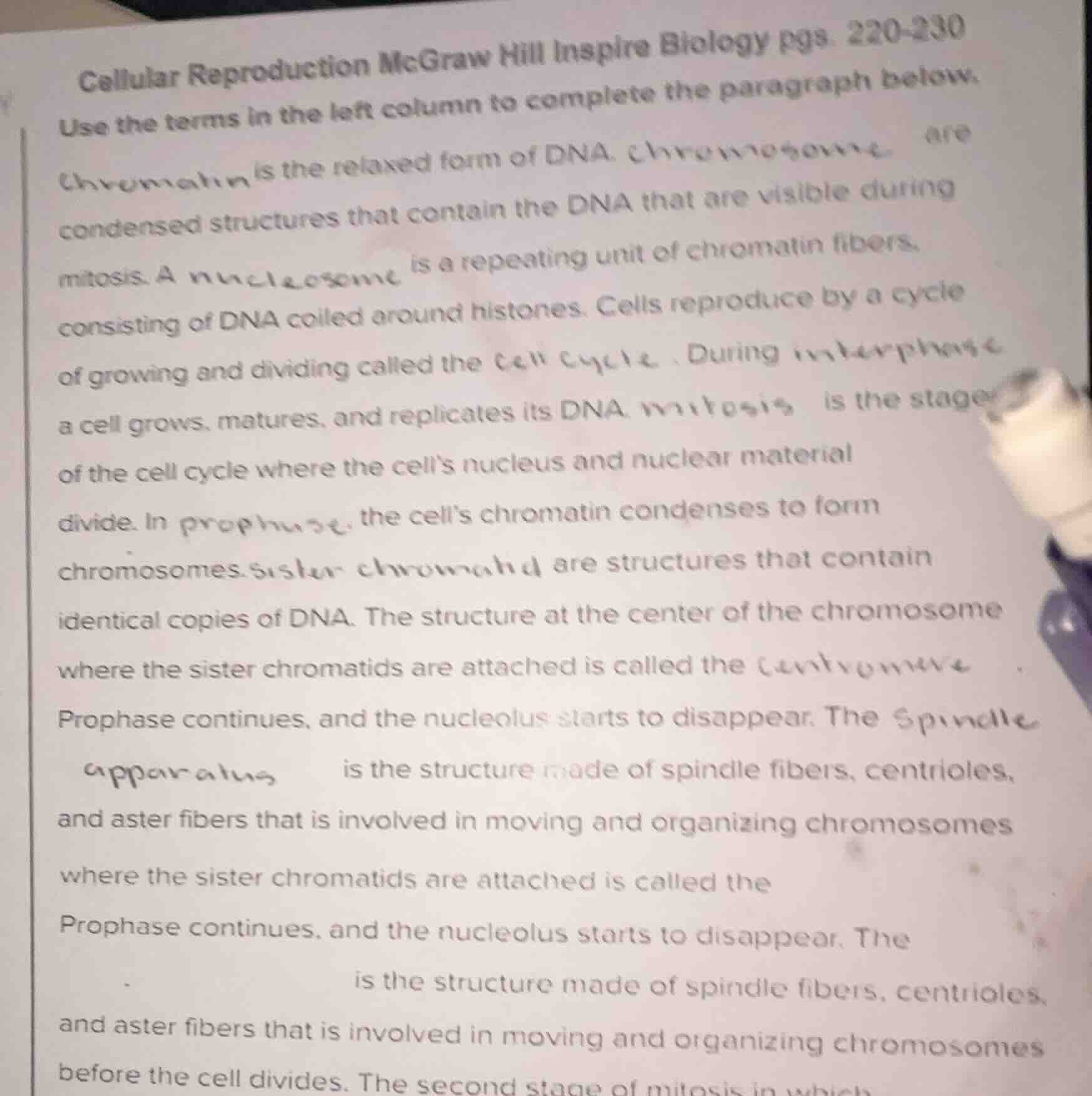
cellular reproduction mcgraw hill inspire biology pgs. 220-230
use the terms in the left column to complete the paragraph below.
chromatin is the relaxed form of dna. chromosomes are
condensed structures that contain the dna that are visible during
mitosis. a nucleosome is a repeating unit of chromatin fibers,
consisting of dna coiled around histones. cells reproduce by a cycle
of growing and dividing called the cell cycle. during interphase
a cell grows, matures, and replicates its dna. mitosis is the stage
of the cell cycle where the cell’s nucleus and nuclear material
divide. in prophase, the cell’s chromatin condenses to form
chromosomes. sister chromatids are structures that contain
identical copies of dna. the structure at the center of the chromosome
where the sister chromatids are attached is called the centromere.
prophase continues, and the nucleolus starts to disappear. the spindle
apparatus is the structure made of spindle fibers, centrioles,
and aster fibers that is involved in moving and organizing chromosomes
where the sister chromatids are attached is called the
prophase continues, and the nucleolus starts to disappear. the
is the structure made of spindle fibers, centrioles,
and aster fibers that is involved in moving and organizing chromosomes
before the cell divides. the second stage of mitosis in which
The paragraph covers key terms in cellular reproduction, with the missing/needed correct terms aligned to standard cell biology definitions:
- Relaxed DNA form: Chromatin
- Condensed visible DNA structures: Chromosomes
- Repeating chromatin unit: Nucleosome
- Cell growth/division cycle: Cell Cycle
- Growth/DNA replication stage: Interphase
- Nuclear division stage: Mitosis
- First mitosis stage (chromatin condenses): Prophase
- Identical DNA copies: Sister Chromatids
- Attachment point for chromatids: Centromere
- Structure for chromosome movement: Spindle Apparatus

Snap & solve any problem in the app
Get step-by-step solutions on Sovi AI
Photo-based solutions with guided steps
Explore more problems and detailed explanations
Completed paragraph with correct standardized terms:
Chromatin is the relaxed form of DNA. Chromosomes are condensed structures that contain the DNA that are visible during mitosis. A nucleosome is a repeating unit of chromatin fibers, consisting of DNA coiled around histones. Cells reproduce by a cycle of growing and dividing called the cell cycle. During interphase a cell grows, matures, and replicates its DNA. Mitosis is the stage of the cell cycle where the cell's nucleus and nuclear material divide. In prophase, the cell's chromatin condenses to form chromosomes. Sister chromatids are structures that contain identical copies of DNA. The structure at the center of the chromosome where the sister chromatids are attached is called the centromere. Prophase continues, and the nucleolus starts to disappear. The spindle apparatus is the structure made of spindle fibers, centrioles, and aster fibers that is involved in moving and organizing chromosomes before the cell divides.