QUESTION IMAGE
Question
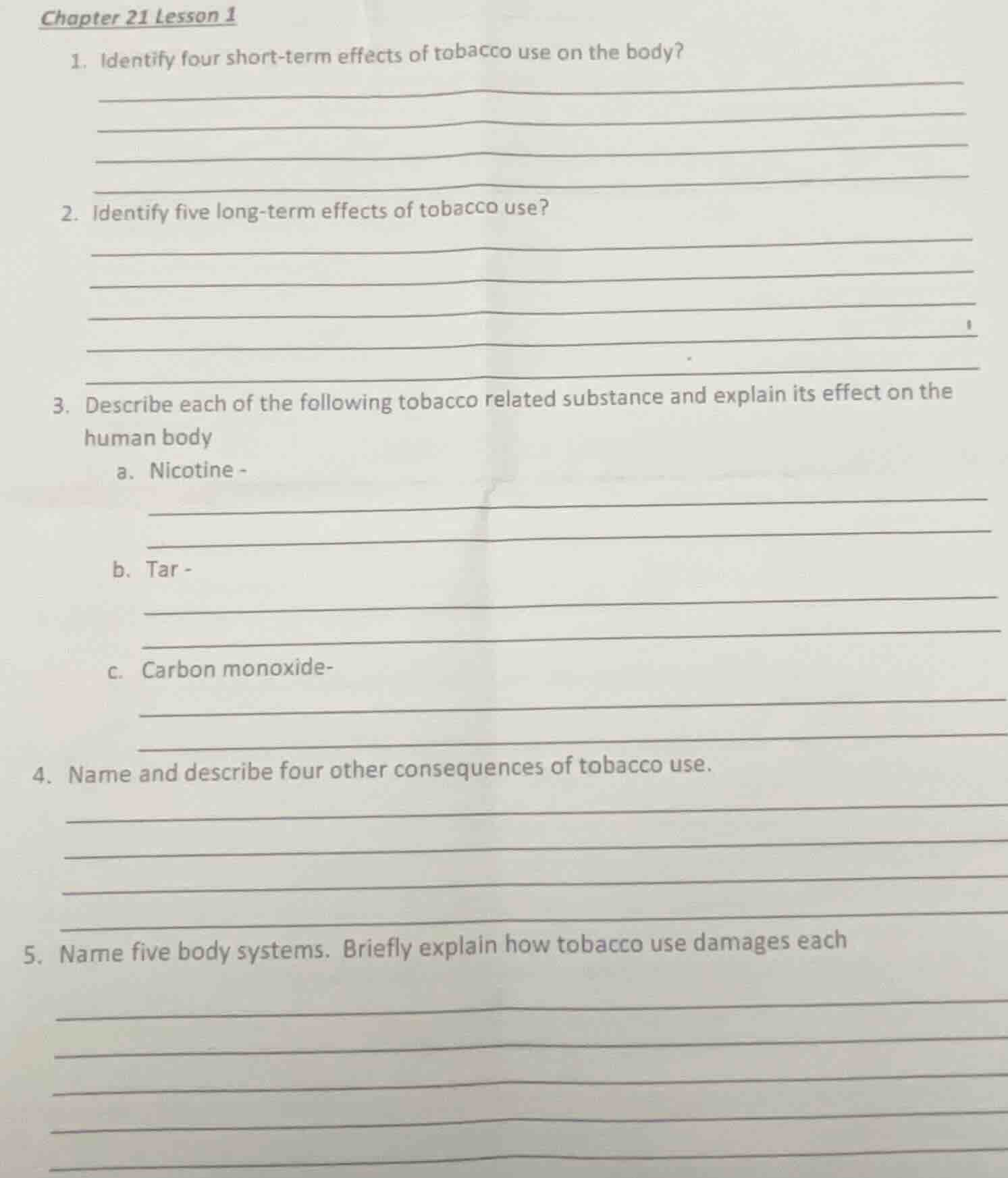
chapter 21 lesson 1
- identify four short-term effects of tobacco use on the body?
- identify five long-term effects of tobacco use?
- describe each of the following tobacco related substance and explain its effect on the human body
a. nicotine -
b. tar -
c. carbon monoxide-
- name and describe four other consequences of tobacco use.
- name five body systems. briefly explain how tobacco use damages each
Brief Explanations
- For short-term effects, these are immediate, reversible changes after tobacco use.
- Long-term effects develop over prolonged tobacco exposure and are often chronic.
- Each tobacco substance has a distinct composition and targeted bodily impact.
- Other consequences cover non-physical or broader life impacts of tobacco use.
- Body system damage links tobacco's chemical effects to organ system function impairment.

Snap & solve any problem in the app
Get step-by-step solutions on Sovi AI
Photo-based solutions with guided steps
Explore more problems and detailed explanations
- Four short-term effects of tobacco use:
- Increased heart rate and blood pressure
- Reduced sense of taste and smell
- Irritation of the throat and lungs
- Dizziness and lightheadedness
- Five long-term effects of tobacco use:
- Lung cancer and other respiratory cancers
- Chronic Obstructive Pulmonary Disease (COPD)
- Coronary artery disease and heart attacks
- Chronic bronchitis and emphysema
- Reduced immune system function
- Descriptions and effects of tobacco-related substances:
a. Nicotine: A highly addictive stimulant chemical; it increases heart rate, raises blood pressure, and triggers the release of dopamine, creating dependence.
b. Tar: A sticky, brown mixture of chemicals; it coats the lungs, damages air sacs, and accumulates over time to cause respiratory issues and cancer.
c. Carbon monoxide: A colorless, odorless gas; it binds to red blood cells more strongly than oxygen, reducing the blood's ability to carry oxygen to organs and tissues.
- Four other consequences of tobacco use:
- Financial strain: Tobacco products are costly, creating long-term financial burden.
- Social isolation: Secondhand smoke can make others uncomfortable, limiting social interactions.
- Poor dental health: Stained teeth, gum disease, and increased risk of tooth loss.
- Reduced athletic performance: Impaired oxygen uptake and lung function lower endurance and strength.
- Five body systems and tobacco-related damage:
- Respiratory system: Tar and chemicals irritate and inflame airways, destroy lung tissue, and increase infection risk.
- Cardiovascular system: Nicotine raises blood pressure/heart rate, and carbon monoxide reduces oxygen delivery, increasing heart disease risk.
- Nervous system: Nicotine disrupts neurotransmitters, causing addiction and impairing cognitive function over time.
- Digestive system: Chemicals damage the lining of the esophagus and stomach, increasing risk of ulcers and digestive cancers.
- Immune system: Tobacco suppresses immune cell function, making the body less able to fight off infections and diseases.