QUESTION IMAGE
Question
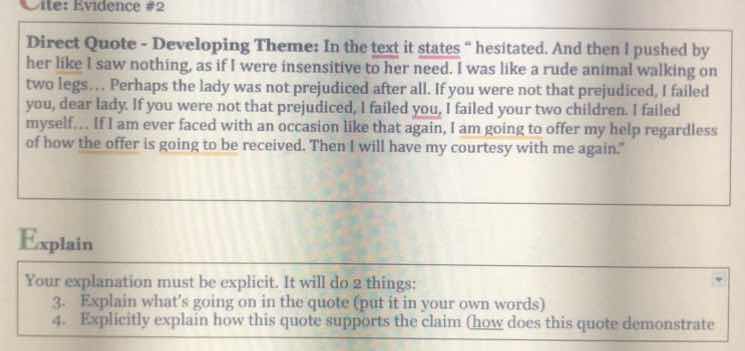
cite: evidence #2
direct quote - developing theme: in the text it states \ hesitated. and then i pushed by her like i saw nothing, as if i were insensitive to her need. i was like a rude animal walking on two legs... perhaps the lady was not prejudiced after all. if you were not that prejudiced, i failed you, dear lady. if you were not that prejudiced, i failed you, i failed your two children. i failed myself... if i am ever faced with an occasion like that again, i am going to offer my help regardless of how the offer is going to be received. then i will have my courtesy with me again.\
explain
your explanation must be explicit. it will do 2 things:
- explain whats going on in the quote (put it in your own words)
- explicitly explain how this quote supports the claim (how does this quote demonstrate
- Paraphrase of the quote: The speaker admits they acted thoughtlessly and insensitively toward a woman, ignoring her needs like a "rude animal." They apologize, acknowledging they failed her, her children, and themselves, and recognize she wasn't the prejudiced one. They resolve that in future similar situations, they will offer help regardless of how it might be received, to regain their courtesy.
- Support for a theme (e.g., growth through accountability/empathy): This quote demonstrates personal growth and accountability. The speaker moves from insensitive behavior to self-reflection, taking responsibility for their actions instead of blaming the woman. Their commitment to act with courtesy and offer help unconditionally in the future shows they have learned from their mistake, proving they can grow beyond their past thoughtlessness.

Snap & solve any problem in the app
Get step-by-step solutions on Sovi AI
Photo-based solutions with guided steps
Explore more problems and detailed explanations
- The speaker apologizes for acting insensitively and rudely toward a woman, realizing they were the one in the wrong, not her. They promise that in the future, they will offer help without worrying about how it is received, to recover their sense of courtesy.
- This quote supports a theme of personal growth and accountability: it shows the speaker reflecting on their harmful actions, taking full responsibility instead of deflecting blame, and committing to act with more empathy and courtesy moving forward, proving they can learn and change from their mistakes.