QUESTION IMAGE
Question
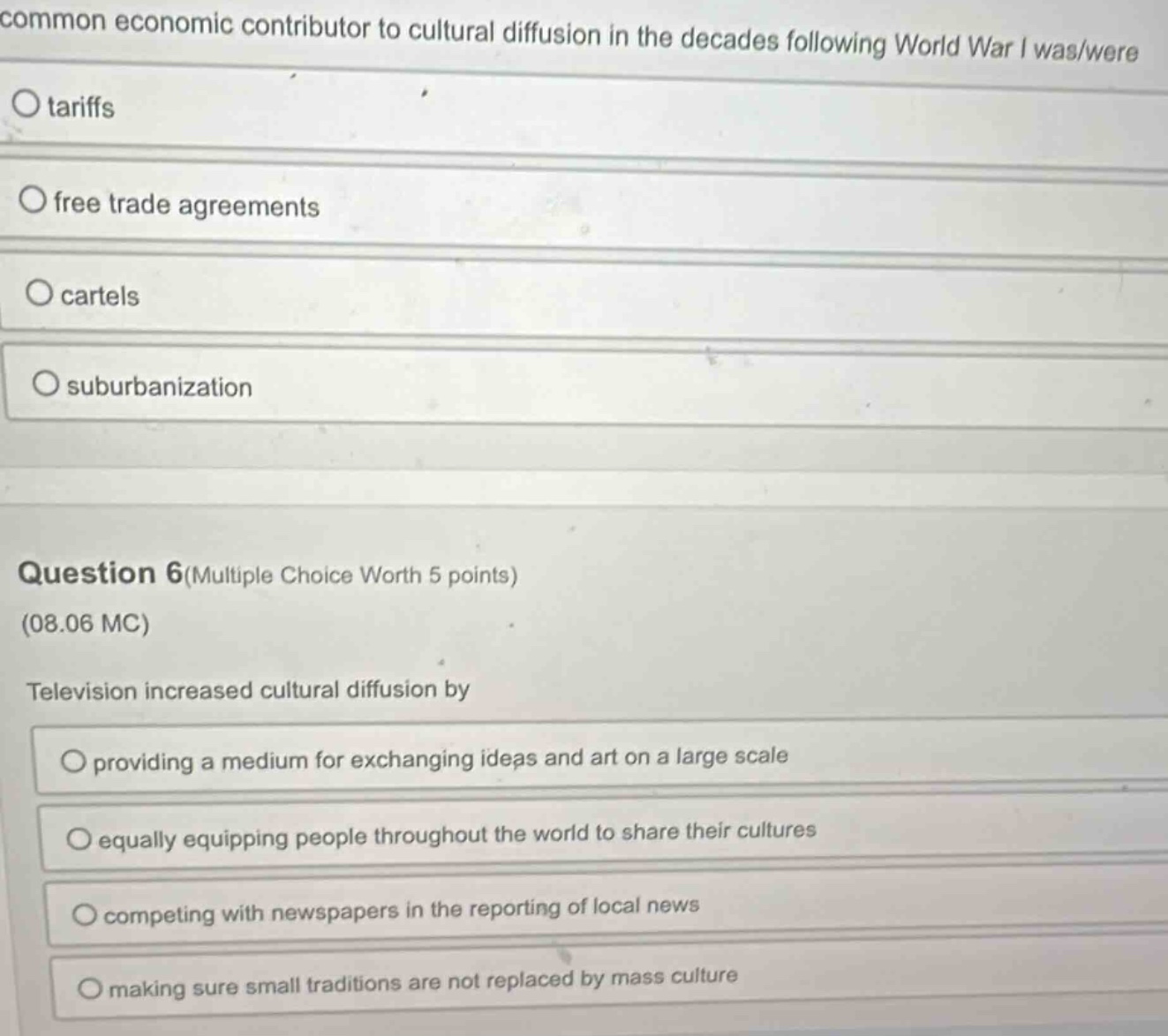
common economic contributor to cultural diffusion in the decades following world war i was/were
tariffs
free trade agreements
cartels
suburbanization
question 6(multiple choice worth 5 points)
(08.06 mc)
television increased cultural diffusion by
providing a medium for exchanging ideas and art on a large scale
equally equipping people throughout the world to share their cultures
competing with newspapers in the reporting of local news
making sure small traditions are not replaced by mass culture
First Question (about economic contributor to cultural diffusion post - WWI)
Tariffs are taxes on imports, which restrict trade and would hinder cultural diffusion. Cartels are groups of businesses that control production and prices, not a main economic contributor to cultural diffusion. Suburbanization is about residential movement to suburbs, not economic - cultural diffusion related. Free trade agreements promote international trade, which in turn facilitates the exchange of goods, services, and cultures across borders, so they are a common economic contributor to cultural diffusion.
Television is a mass medium that can reach a large audience. It allows for the widespread sharing of ideas, art, and cultural content. It does not equally equip all people worldwide to share cultures (access to TV is not uniform). It is not mainly about competing with newspapers for local news (its strength is in broader, often global or national content). And television often promotes mass culture which can replace small traditions. So the correct option is the one about providing a medium for large - scale exchange of ideas and art.

Snap & solve any problem in the app
Get step-by-step solutions on Sovi AI
Photo-based solutions with guided steps
Explore more problems and detailed explanations
B. free trade agreements