QUESTION IMAGE
Question
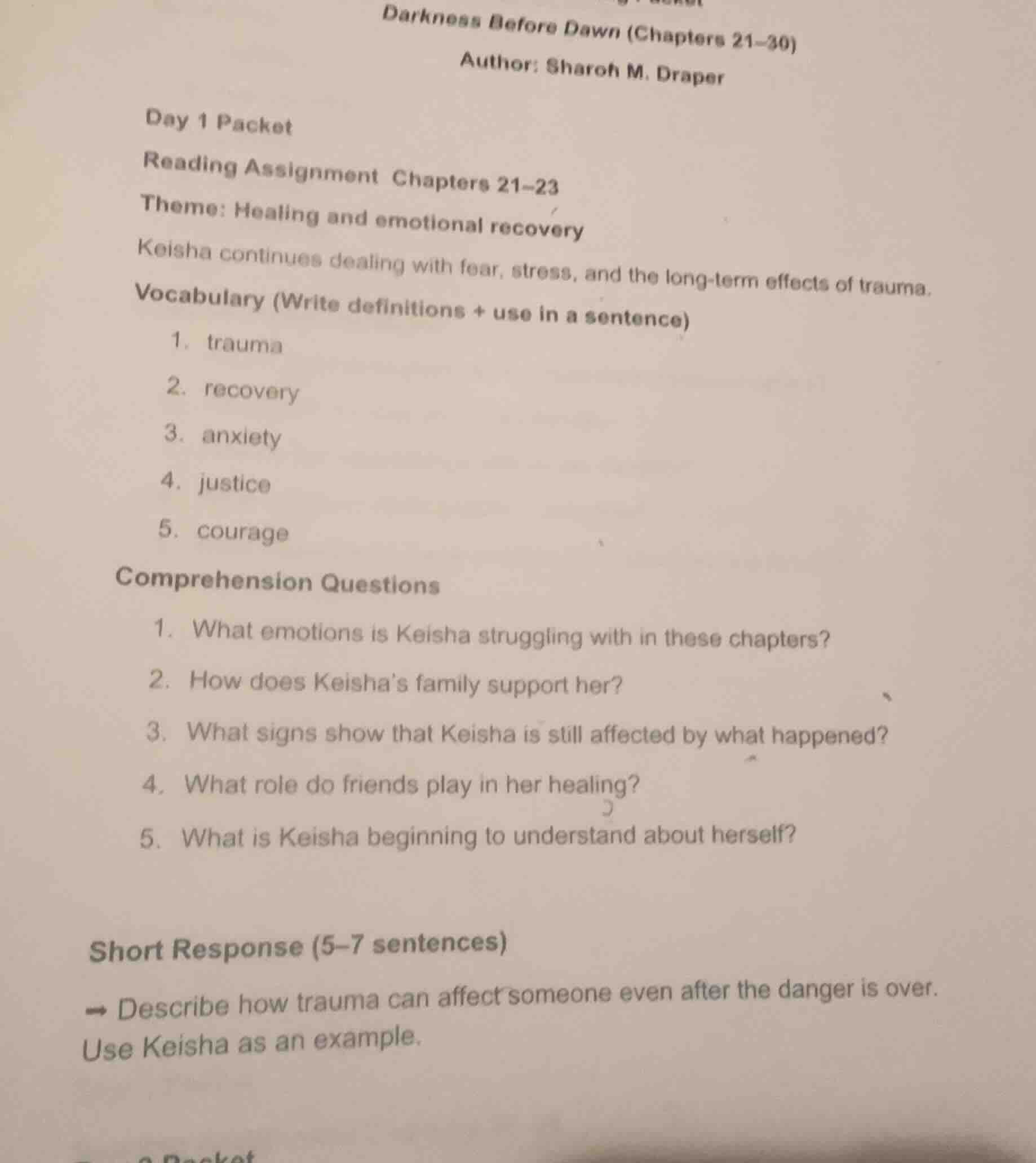
darkness before dawn (chapters 21–30)
author: sharon m. draper
day 1 packet
reading assignment chapters 21–23
theme: healing and emotional recovery
keisha continues dealing with fear, stress, and the long - term effects of trauma.
vocabulary (write definitions + use in a sentence)
- trauma
- recovery
- anxiety
- justice
- courage
comprehension questions
- what emotions is keisha struggling with in these chapters?
- how does keisha’s family support her?
- what signs show that keisha is still affected by what happened?
- what role do friends play in her healing?
- what is keisha beginning to understand about herself?
short response (5–7 sentences)
→ describe how trauma can affect someone even after the danger is over.
use keisha as an example.
Comprehension Questions
- What emotions is Keisha struggling with in these chapters?
Keisha is struggling with fear, stress, anxiety, and the lingering effects of trauma. She also likely experiences feelings related to trying to recover emotionally, such as uncertainty or vulnerability as she deals with the aftermath of her traumatic experience.
- How does Keisha’s family support her?
While the text doesn't give explicit details (since this is a reading packet expecting analysis based on the chapters), typically in such narratives, family might offer emotional support like listening to her, providing a safe space, encouraging her to talk about her feelings, and being present to help her through difficult moments. They may also help with practical aspects of her life to reduce stress as she heals.
- What signs show that Keisha is still affected by what happened?
Signs could include her ongoing struggle with fear and stress (as mentioned in the packet's theme and context), possibly having anxiety - related behaviors like being overly cautious, having trouble sleeping, or being easily triggered by reminders of the traumatic event. She may also have emotional outbursts or withdrawal as she processes the trauma.
- What role do friends play in her healing?
Friends can provide a sense of normalcy, distraction from her trauma - related thoughts, and emotional support. They can offer a different perspective, encourage her to engage in activities she enjoys, and be a source of comfort and companionship as she navigates her healing process. Friends may also validate her feelings and help her feel less alone.
- What is Keisha beginning to understand about herself?
Keisha is likely beginning to understand her own resilience and her capacity to heal. She may be realizing that she has the strength to face her trauma, that it's okay to feel the emotions she's experiencing, and that she can move forward while still acknowledging the impact of what happened to her. She might also be understanding her own needs in terms of support (from family, friends) and self - care as she recovers.
Short Response
Trauma can have long - lasting effects on a person even after the immediate danger has passed. For Keisha, even though the source of her trauma may no longer be an immediate threat, she still struggles with fear, stress, and anxiety. These emotional struggles can impact her daily life, making it difficult for her to feel safe or at ease. She may have trouble trusting others or engaging in activities she once enjoyed. The trauma also affects her emotional well - being, as she has to work through the pain and confusion it has caused. However, Keisha's journey also shows that healing is possible. With the support of her family and friends, and as she begins to understand her own strength, she is on a path towards emotional recovery. Even so, the effects of trauma are not easily erased, and she will likely continue to feel its impact as she learns to cope and heal over time.

Snap & solve any problem in the app
Get step-by-step solutions on Sovi AI
Photo-based solutions with guided steps
Explore more problems and detailed explanations
Comprehension Questions
- What emotions is Keisha struggling with in these chapters?
Keisha is struggling with fear, stress, anxiety, and the lingering effects of trauma. She also likely experiences feelings related to trying to recover emotionally, such as uncertainty or vulnerability as she deals with the aftermath of her traumatic experience.
- How does Keisha’s family support her?
While the text doesn't give explicit details (since this is a reading packet expecting analysis based on the chapters), typically in such narratives, family might offer emotional support like listening to her, providing a safe space, encouraging her to talk about her feelings, and being present to help her through difficult moments. They may also help with practical aspects of her life to reduce stress as she heals.
- What signs show that Keisha is still affected by what happened?
Signs could include her ongoing struggle with fear and stress (as mentioned in the packet's theme and context), possibly having anxiety - related behaviors like being overly cautious, having trouble sleeping, or being easily triggered by reminders of the traumatic event. She may also have emotional outbursts or withdrawal as she processes the trauma.
- What role do friends play in her healing?
Friends can provide a sense of normalcy, distraction from her trauma - related thoughts, and emotional support. They can offer a different perspective, encourage her to engage in activities she enjoys, and be a source of comfort and companionship as she navigates her healing process. Friends may also validate her feelings and help her feel less alone.
- What is Keisha beginning to understand about herself?
Keisha is likely beginning to understand her own resilience and her capacity to heal. She may be realizing that she has the strength to face her trauma, that it's okay to feel the emotions she's experiencing, and that she can move forward while still acknowledging the impact of what happened to her. She might also be understanding her own needs in terms of support (from family, friends) and self - care as she recovers.
Short Response
Trauma can have long - lasting effects on a person even after the immediate danger has passed. For Keisha, even though the source of her trauma may no longer be an immediate threat, she still struggles with fear, stress, and anxiety. These emotional struggles can impact her daily life, making it difficult for her to feel safe or at ease. She may have trouble trusting others or engaging in activities she once enjoyed. The trauma also affects her emotional well - being, as she has to work through the pain and confusion it has caused. However, Keisha's journey also shows that healing is possible. With the support of her family and friends, and as she begins to understand her own strength, she is on a path towards emotional recovery. Even so, the effects of trauma are not easily erased, and she will likely continue to feel its impact as she learns to cope and heal over time.