QUESTION IMAGE
Question
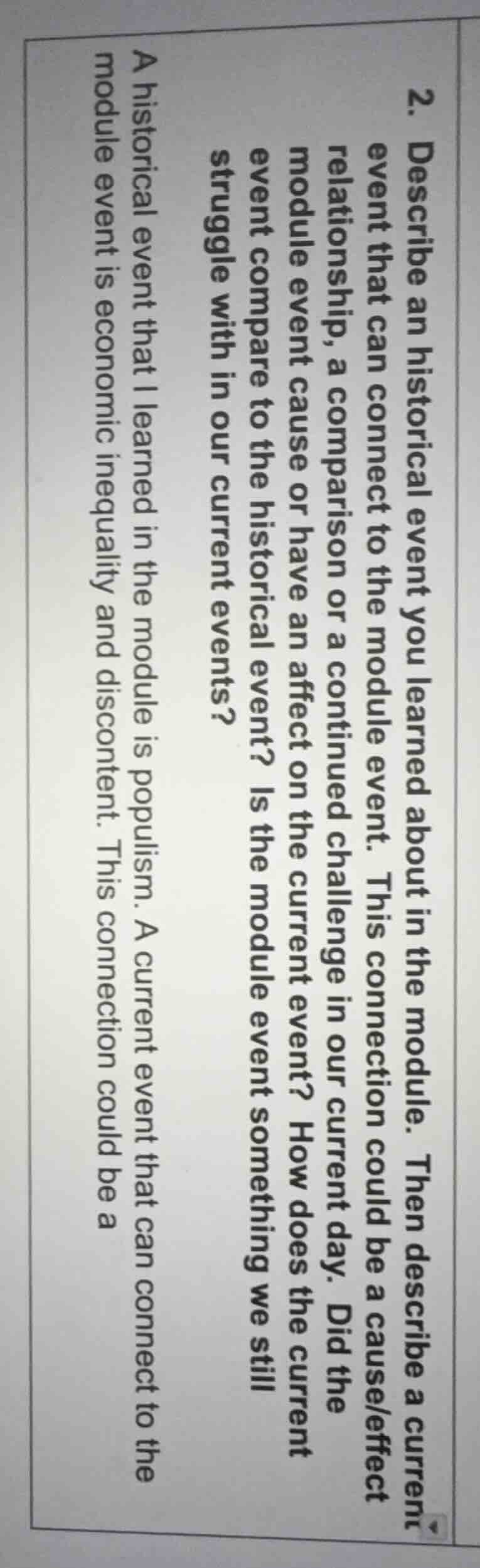
- describe an historical event you learned about in the module. then describe a current event that can connect to the module event. this connection could be a cause/effect relationship, a comparison or a continued challenge in our current day. did the module event cause or have an affect on the current event? how does the current event compare to the historical event? is the module event something we still struggle with in our current events?
a historical event that i learned in the module is populism. a current event that can connect to the module event is economic inequality and discontent. this connection could be a
Brief Explanations
- Historical Event (Populism): Populism in the late 19th - early 20th century (e.g., US Populist Movement) arose from farmers’ economic struggles (low crop prices, debt, monopolistic railroads), demanding economic reforms (e.g., free silver, graduated income tax) to address inequality between rural workers and corporate/elite interests.
- Current Event (Economic Inequality): Modern economic inequality (e.g., wealth gap between top 1% and rest, stagnant wages for low - income workers, high costs of housing/healthcare) mirrors the Populist era’s tensions. The cause - effect link: Historical populist grievances (economic exploitation, lack of fair representation) stemmed from inequality, and today’s inequality rekindles similar “us vs. them” populist rhetoric (e.g., support for policies targeting corporate power, tax reform) as a response to perceived unfair economic systems.
- Comparison/Continued Challenge: Both eras face struggles over economic fairness. Then, it was agrarian vs. industrial/capitalist power; now, it’s workers vs. globalized corporate/financial elites. The challenge persists: systemic economic inequality (rooted in unequal distribution of wealth, power, and opportunity) continues to fuel populist - style demands for change, showing the issue is still unresolved.

Snap & solve any problem in the app
Get step-by-step solutions on Sovi AI
Photo-based solutions with guided steps
Explore more problems and detailed explanations
- Historical Event: The late 19th - century US Populist Movement, driven by farmers’ economic hardships (low crop prices, debt, railroad monopolies) and demands for economic reforms (e.g., free silver, income tax) to combat inequality between rural workers and elites.
- Current Event Connection: Modern economic inequality (e.g., wealth gap, stagnant wages) causes similar populist - style responses (e.g., calls for tax reform, corporate regulation) as a reaction to unfair economic systems, mirroring the Populist era’s “us vs. them” tensions.
- Comparison/Challenge: Both eras struggle with economic inequality - then, agrarian vs. industrial power; now, workers vs. global corporate/financial elites. The challenge of systemic inequality (unresolved fair wealth distribution) persists, driving populist - like demands for change.