QUESTION IMAGE
Question
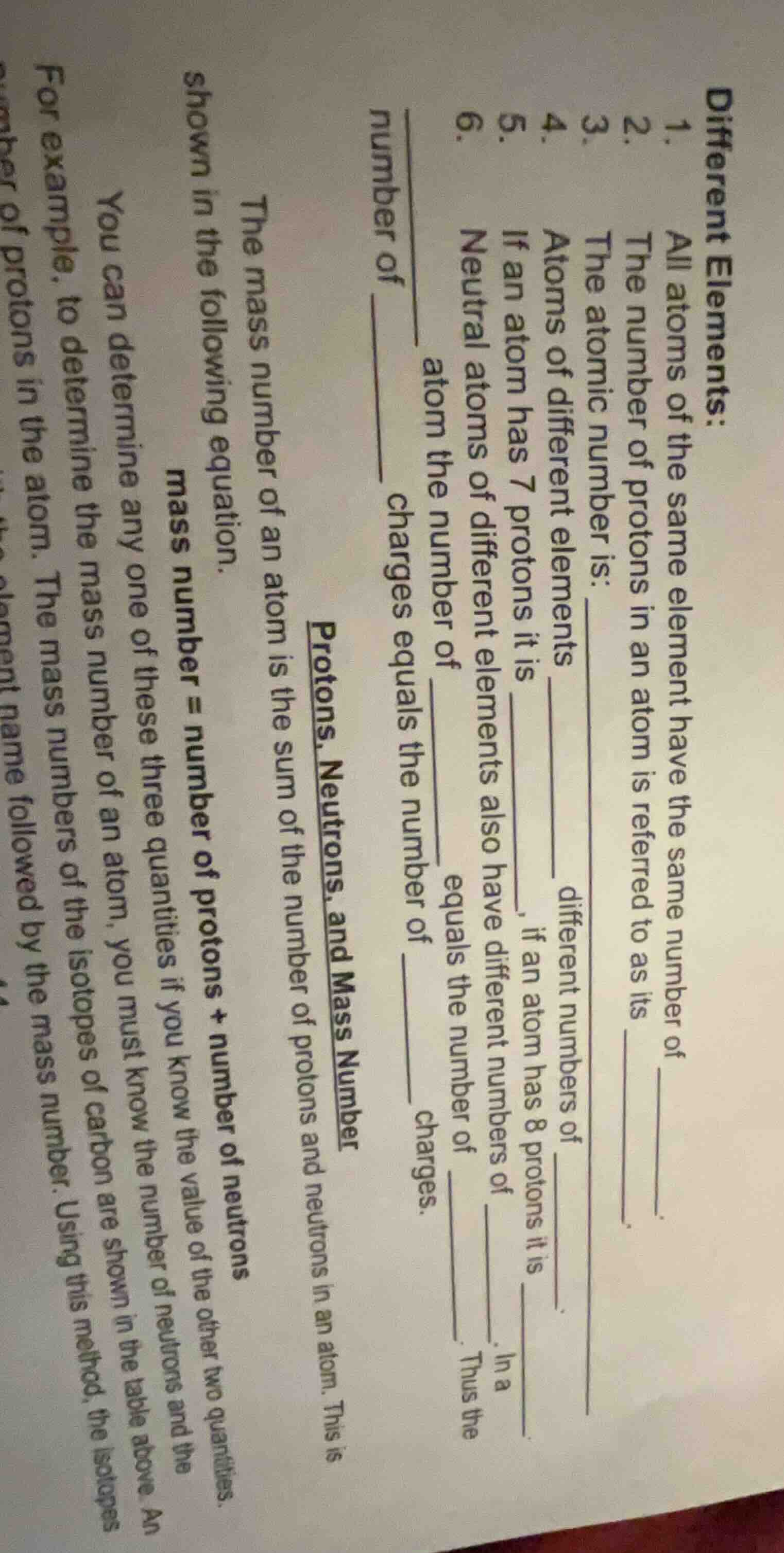
different elements:
- all atoms of the same element have the same number of
- the number of protons in an atom is referred to as its
- the atomic number is:
- atoms of different elements different numbers of
- if an atom has 7 protons it is, if an atom has 8 protons it is
- neutral atoms of different elements also have different numbers of. in a atom the number of equals the number of. thus the number of charges equals the number of charges.
protons, neutrons, and mass number
the mass number of an atom is the sum of the number of protons and neutrons in an atom. this is shown in the following equation.
mass number = number of protons + number of neutrons
you can determine any one of these three quantities if you know the value of the other two quantities.
for example, to determine the mass number of an atom, you must know the number of neutrons and the number of protons in the atom. the mass numbers of the isotopes of carbon are shown in the table above. an element name followed by the mass number. using this method, the isotopes
- Defining a key trait of atoms of the same element: they share the same proton count.
- The number of protons in an atom is its defining atomic number.
- The atomic number is defined as the count of protons in an atom.
- Atoms of different elements have distinct proton counts, which is what makes them different elements.
- Matching proton counts to element identities: 7 protons = nitrogen, 8 protons = oxygen.
- Neutral atoms have equal positive (proton) and negative (electron) charges, so their charges cancel out.

Snap & solve any problem in the app
Get step-by-step solutions on Sovi AI
Photo-based solutions with guided steps
Explore more problems and detailed explanations
- protons
- atomic number
- the number of protons in an atom
- have; protons
- nitrogen; oxygen; protons
- protons; electrons; positive; negative