QUESTION IMAGE
Question
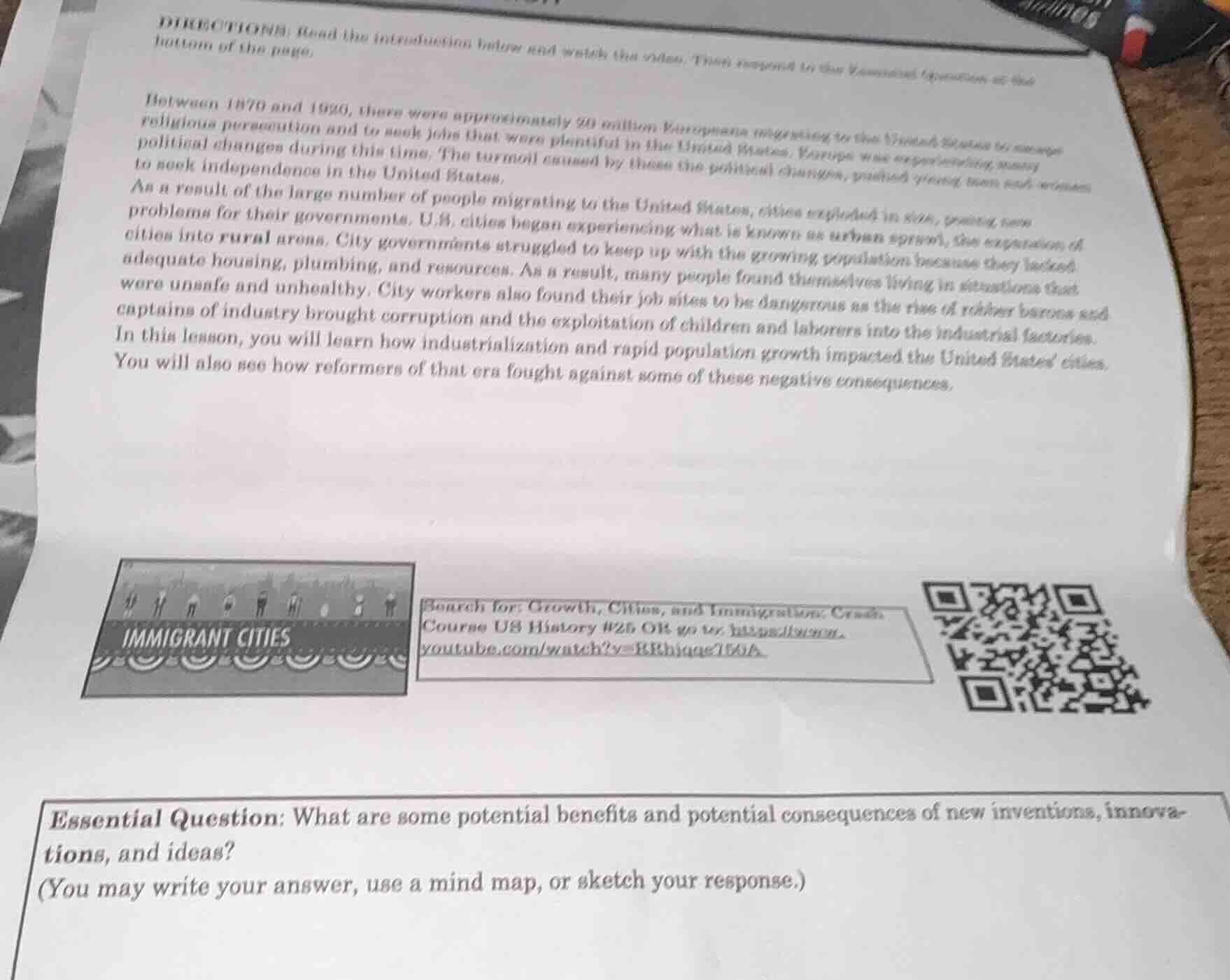
directions: read the introduction below and watch the video. then respond to the essential question at the bottom of the page.between 1870 and 1920, there were approximately 20 million europeans migrating to the united states to escape religious persecution and to seek jobs that were plentiful in the united states. europe was experiencing many political changes during this time. the turmoil caused by these the political changes, pushed young men and women to seek independence in the united states.as a result of the large number of people migrating to the united states, cities exploded in size, posing new problems for their governments. u.s. cities began experiencing what is known as urban sprawl, the expansion of cities into rural areas. city governments struggled to keep up with the growing population because they lacked adequate housing, plumbing, and resources. as a result, many people found themselves living in situations that were unsafe and unhealthy. city workers also found their job sites to be dangerous as the rise of robber barons and captains of industry brought corruption and the exploitation of children and laborers into the industrial factories.in this lesson, you will learn how industrialization and rapid population growth impacted the united states cities. you will also see how reformers of that era fought against some of these negative consequences.search for: growth, cities, and immigration: crash course us history #25 or go to: https://www.youtube.com/watch?v=rrhjqne150aessential question: what are some potential benefits and potential consequences of new inventions, innovations, and ideas?(you may write your answer, use a mind map, or sketch your response.)
New inventions, innovations, and ideas tied to 19th-century U.S. industrialization brought key benefits, while also creating severe negative consequences. Benefits included new job opportunities that drew millions of immigrants, and technological advances that enabled urban and economic growth. Consequences included unsafe, overcrowded living conditions from urban sprawl, dangerous factory work (including child labor exploitation), political corruption from powerful industrialists, and strained urban infrastructure lacking adequate housing, plumbing, and resources.

Snap & solve any problem in the app
Get step-by-step solutions on Sovi AI
Photo-based solutions with guided steps
Explore more problems and detailed explanations
Potential Benefits:
- Created abundant job opportunities that attracted immigrant labor, fueling U.S. economic growth.
- Drove technological and industrial progress that expanded urban development and national productivity.
- Enabled new systems and infrastructure (over time) to support growing urban populations.
Potential Consequences:
- Spurred unplanned urban sprawl, leading to overcrowded, unsanitary, unsafe living conditions for working-class people.
- Led to dangerous factory environments, exploitation of labor (including child labor), and poor workplace protections.
- Fostered political corruption as powerful industrialists ("robber barons") exerted undue influence over governments.
- Strained urban infrastructure, leaving cities without adequate housing, plumbing, or public resources for their growing populations.